
Beginner: build your first clean reps
If a full push-up isn't there yet, shorten the lever instead of cutting depth. Wall and incline push-ups keep the same movement pattern at a lighter load, and negatives build the strength for the way up.
Push-up variations
Push-ups scale further than almost any exercise: regress them to a wall when you're starting out, or load them until a single rep is a feat. This is the map — pick your level and follow the guides.

If a full push-up isn't there yet, shorten the lever instead of cutting depth. Wall and incline push-ups keep the same movement pattern at a lighter load, and negatives build the strength for the way up.
Once standard reps are comfortable, hand position and body angle let you bias different muscles — triceps with a narrow grip, upper chest with decline, shoulders with pike.
At the top end, push-ups become a strength and power discipline of their own: explosive variations for speed, weighted reps for load, and long progressions toward the one-arm push-up and planche.
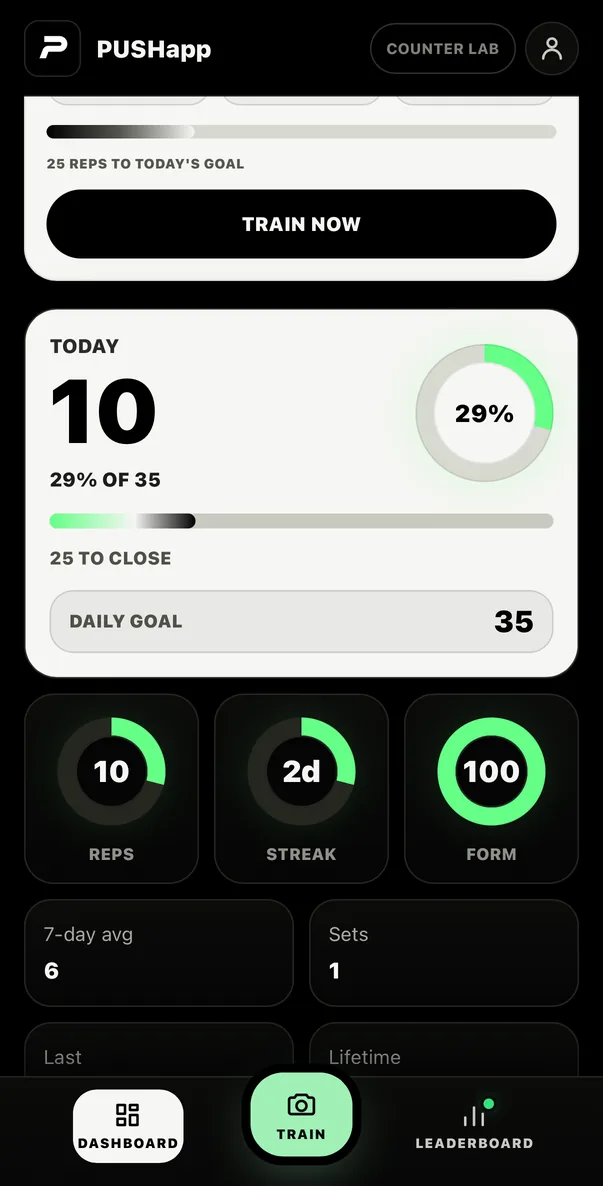
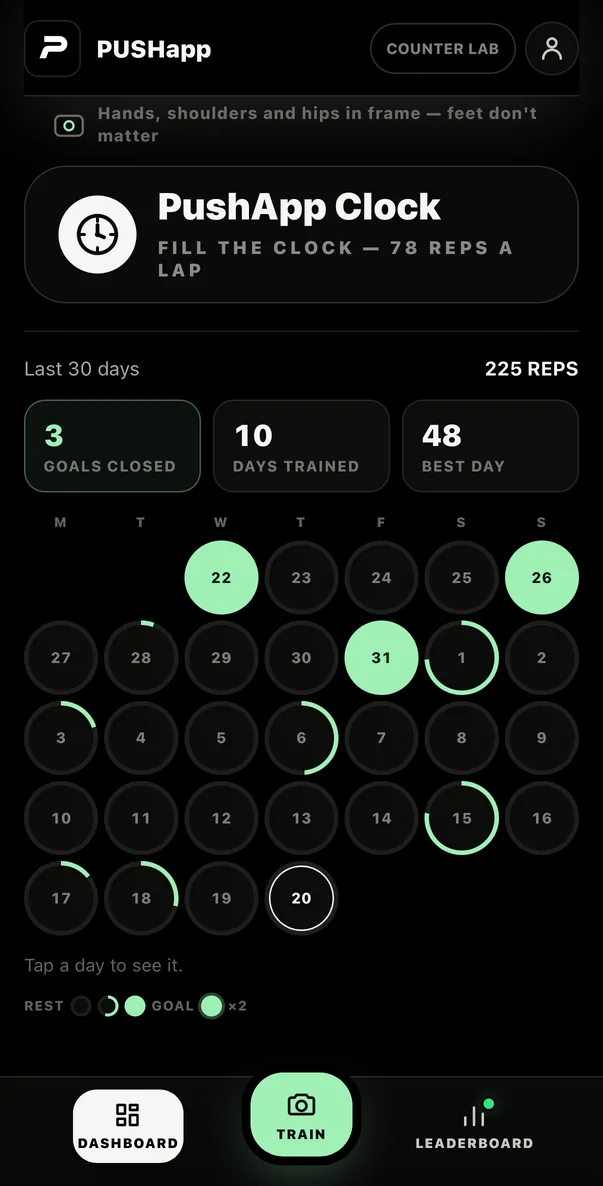
Whichever variation you train, PUSHapp's camera counts the reps and keeps your totals, streaks, and records in one place — so progressions are measured, not guessed.
Start with the hardest variation you can do for clean sets of five or more. For most beginners that's incline push-ups; if those are too hard, start at the wall.
One-arm and planche push-up progressions are generally the hardest — both demand strength well beyond the standard push-up and take months of structured progression.
Yes. Narrow grips bias the triceps, decline angles bias the upper chest and shoulders, pike push-ups target the shoulders, and standard reps train the chest, triceps, and core together.