
Variations & Types
Explosive Pushups: Variations to Build Upper-Body Power
Master explosive pushups with technique, safety, and variations to boost upper-body power and rate of force development.


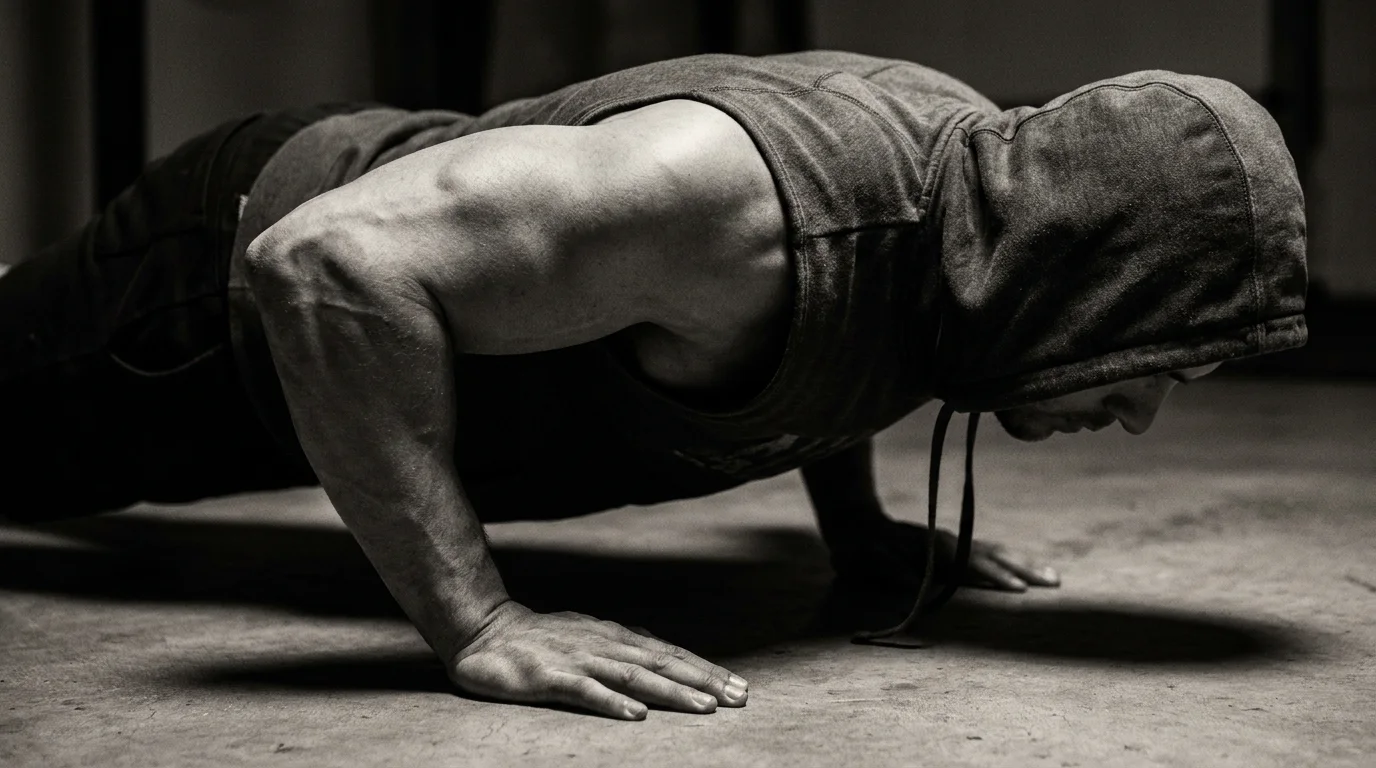
Foundations: Readiness, Technique, and Safe Landing Mechanics
Prerequisites and readiness tests
- Master 8–12 strict push-ups with clean form and pain-free shoulders to establish base strength.
- Hold a solid plank or hollow position for 30 seconds to verify core and spine control.
- Ensure shoulders are stable and wrists move without pain during pushing movements.
- Readiness test: perform 3 sets of 5 explosive push-ups onto a soft mat, focusing on safe landings and full recovery between sets. If technique breaks or pain appears, pause and rebuild base.
Landing mechanics cues
- Land softly with knees slightly bent, hips level, and hands under shoulders.
- Absorb impact by bending elbows and ankles while bracing the core.
- Keep a neutral spine, gaze forward, and exhale through the press to support rate of force development.
- Reset for the next rep before attempting more height or speed.
Common mistakes to avoid
- Elbows flare out and shoulders shrug during take-off.
- Core and glutes sag or hips pike, hurting landing mechanics.
- Bouncing off the ground or rushing reps harms form and safety.
- Skipping progression leads to joint stress and poor rate of force development.
Variations and Progressions for Explosive Power: Depth-Drop, Archer, Pike
Depth-drop push-up: setup, cues, and progression
- Setup: Stand on a sturdy box or bench at a height that allows a controlled landing. Step off and land softly with knees slightly bent.
- Cues: absorb the impact, then drive explosively through the floor to elevate your hands, landing back into a push-up position. Aim for a quick, controlled rep.
- Progression: lower the platform as you get stronger; advance to depth-drop push-ups with a clap or a small jump off the floor.
Archer and Pike: power-focused variants
- Archer push-up: hands wider than shoulders, shift weight toward one arm while the other reaches out. Lower with control, then press back to center. Progress by elevating the feet or increasing range of motion toward a full single-arm variation.
- Pike push-up: hips high, hands under shoulders. Bend elbows wide to lower head toward the floor, then press up. Progress by lowering height (feet on the ground) and advancing to stiffer pike or handstand-ready drills.
Choosing the right variation for your level
- Beginner: depth-drop push-up from a higher box; masteral form before height drops.
- Moderate: Archer push-up with solid control; add a slight elevation for progression.
- Advanced: Pike push-up and its progressions for higher shoulder demand and power.
Programming, Readiness Testing, and Athletic Application: From Drills to Real-World Power
- Programming guidelines: Match sets, reps, rest intervals, and frequency to your level, and plan how many explosive push-ups you’ll perform per workout to balance quality with adaptation. Expect higher quality reps when rest is ample and fatigue is controlled, not just grinding out volume. Track progression in speed of force application and carryover to athletic tasks.
Programming schemes by level (novice/intermediate/advanced)
- Novice: 3-4 sets of 3-5 explosive push-ups, 2x/week. Rest 2-3 minutes between sets. Total reps per session: ~9-20.
- Intermediate: 4-5 sets of 4-6 reps, 2-3x/week. Rest 2-4 minutes. Total reps per session: ~16-30.
- Advanced: 5-7 sets of 6-8 reps, 2x/week or 3x if paired with complementary plyos, rest 3-5 minutes. Total reps per session: ~30-56.
Self-checks and readiness protocols before workouts
- Warm up dynamically, check shoulders and elbows for pain, perform 2 submaximal reps to feel explosive quality, and skip if pain or sharp discomfort is present.
Measuring progress: rate of force development and athletic transfer
- Note rep speed, jump or sprint improvements, and how explosive push-ups feel when integrated with total-body plyometrics and sport drills.
Frequently asked questions
What is a plyometric push-up and what are its benefits?
A plyometric push-up is an explosive upper-body push that blends speed with control to build power. It trains rate of force development and athletic power while emphasizing safe technique and gradual progression.
How do you perform a plyometric push-up correctly?
Set up with hands under shoulders, fingers splayed, feet hip-width apart, and a tight core. Lower with control, then drive through the chest and shoulders to push off the floor with a short impulse; land softly, reset for the next rep, and breathe—inhale on the way down, exhale on the push.
What prerequisites should I have before starting plyometric push-ups?
Build base strength by mastering 8–12 strict push-ups and a 30-second plank to verify core and shoulder control. Ensure shoulders move pain-free during pushing movements and, if ready, perform the readiness test: 3 sets of 5 explosive push-ups onto a soft mat with full recovery between sets; stop if form fails or pain appears.
What variations should beginners start with and how do I progress?
Begin with depth-drop push-ups from a higher box to master soft landings and control. As you gain control, progress to Archer push-ups with weight shift, then Pike push-ups, adjusting height or range to match your level.
About the authors

Goran Huskić
Co-founder · Professional basketball player
Goran Huskić is a Serbian professional basketball player — a 6'11" center currently playing for Monbus Obradoiro in Spain's Primera FEB. He won the 2019–20 Basketball Champions League with San Pablo Burgos and has competed professionally across Spain, Germany, Lithuania, Serbia and the United States. He co-founded PUSHapp to bring pro-level training discipline to everyday workouts.

Nikola Janković
Co-founder · Former professional basketball player
Nikola Janković is a former professional basketball player — a 6'9" forward and the 2016–17 ABA League MVP — who played for Partizan, Union Olimpija and Mega, among others. Today he runs a pilates studio and gym focused on strength, mobility and overall wellbeing. He co-founded PUSHapp to make consistent, measurable training simple for everyone.