
Variations & Types
Best pushup variations: Safe progressions
Discover the best pushup variations to progress safely, from knee and incline to TRX and stability ball, with technique tips and programming.


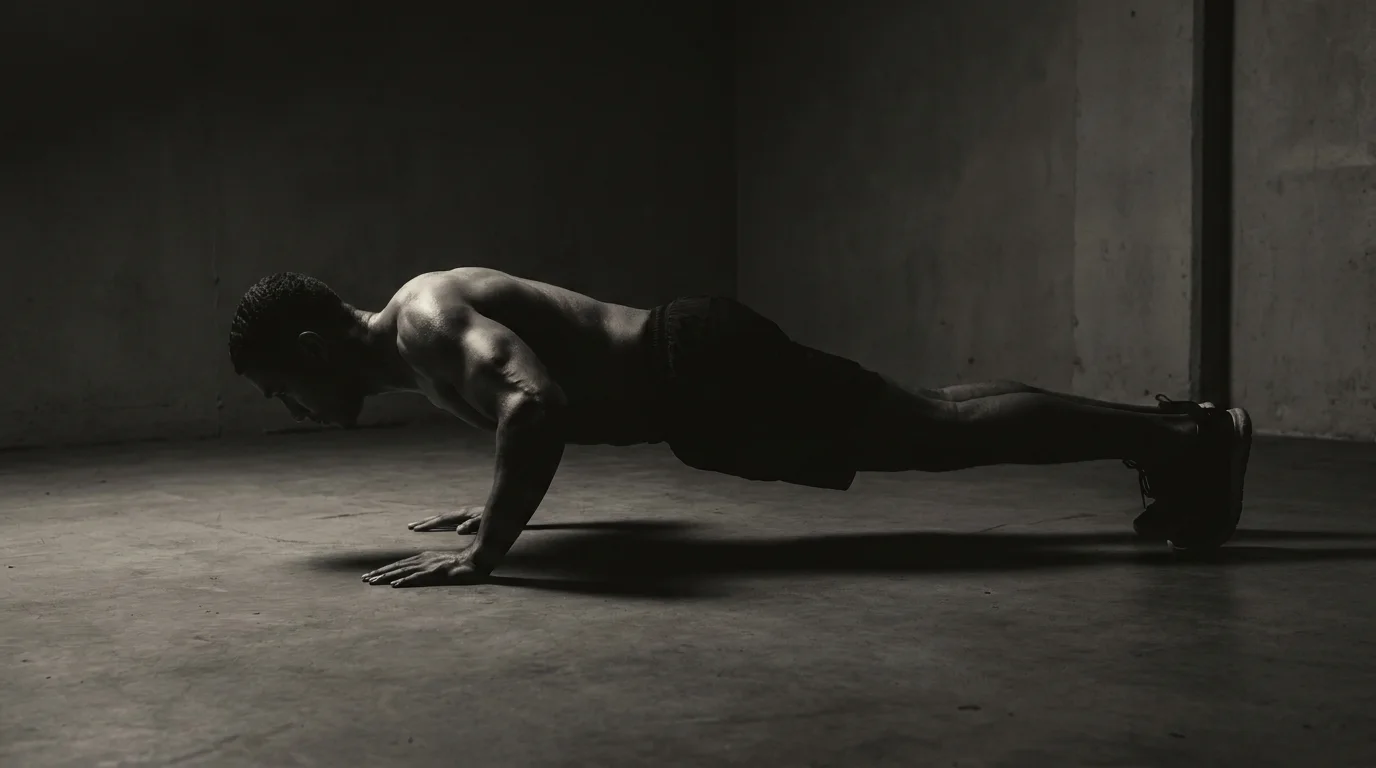
Push-up fundamentals and safe progression framework
Push-up anatomy: muscles worked, tempo, and range of motion
- Primary: pectoralis major, triceps, and anterior deltoids. Stabilizers include the serratus anterior and the core.
- Range of motion: full chest to floor when possible; scale to incline or shorter ROM as needed.
- Tempo: controlled descent (about 2 seconds), brief chest contact or pause, then a steady ascent (1–2 seconds).
Elbow position and hand spacing: 45-degree rule and grip options
- Elbows track roughly 45 degrees from the torso during the rep.
- Hand spacing influences emphasis: shoulder-width for balanced load, wider to bias the chest, narrower for triceps emphasis.
- Keep wrists solid and forearms vertical; avoid flaring or collapsing the elbows.
SAID and specificity: mapping variation to mechanical, neuromuscular, and metabolic goals
- SAID: training adaptations mirror imposed demands. Choose variations that match your goal.
- Mechanical: adjust elbow angle and incline/decline to load different segments.
- Neuromuscular/metabolic: vary tempo, reps, and rest to target endurance, strength, or hypertrophy.
- Progression: start easier (incline/knuckles on bench), then move to standard, then raise the feet or add tempo changes.
Common form mistakes and fixes: hips sag, excessive arch, and scapular control
- Hips sag: brace the core, tighten glutes, maintain a straight line; regress to incline.
- Excessive arch: lift ribcage, engage abs and glutes, keep midsection tight.
- Scapular control: let blades glide down and together softly; avoid shrugging. Use deliberate, steady presses.
Variation-by-variation progressions: from modified push-ups to advanced options
From knee push-up to full push-up: a safe progression ladder
- Start with a knee push-up: spine neutral, hips lifted in line with shoulders.
- Move to a modified push-up: hands on a stable elevated surface, elbows tracking 45 degrees.
- Progress to an incline push-up: gradually lower the incline so you work more ROM while maintaining control.
- Finish with a full push-up on the floor: strict form, controlled descent, powerful push.
Incline vs decline for progression: when to use each and how they change leverage
- Incline push-ups decrease load by elevating the hands; great for learning.
- Decline push-ups increase lever length and challenge core and shoulders.
- Use incline early, then introduce moderate declines as you gain strength, always prioritizing form over depth.
Equipment-assisted variations: TRX push-ups and stability-ball push-ups cues
- TRX push-ups: retract scapula, brace core, and keep hips in line with hands.
- Stability-ball push-ups: hips stabilized, elbows close to the body, avoid sagging.
- Use equipment to dial in proprioception and scapular control.
Spiderman push-ups and other transitional variations
- Add a knee tuck toward the same-side elbow as you descend.
- Maintain a hollow torso, flare-free ribs, and controlled hip rotation.
Phase-based programming: Stabilization, Strength, and Endurance with sample templates
- Stabilization: 2–3 sets of 6–8 with tempo 3-0-2.
- Strength: 3–4 sets of 4–6 with solid ROM.
- Endurance: 3–5 sets of 12–20 with consistent pace.
Core anti-rotation and scapular stability cues for all variations
- Brace midsection, avoid twisting, and keep shoulders square.
- Think ribs down, hips steady, and a slight chin tuck to protect the neck.
Safety, injury considerations and push-ups vs bench press: practical guidance
Shoulder and wrist-friendly progressions for common injuries
- Start with wall or incline push-ups, then progress to knee push-ups while keeping elbows at a comfortable angle.
- Use a neutral grip, control the range, and pause at mid-range to protect the shoulder.
Injury-specific modifications: depth, tempo, and hand position
- Stop depth at a pain-free point; use a tempo like 2 seconds down, 1–2 seconds up.
- Adjust hand width to shoulder-width or slightly narrower; consider fists or push-up bars for a neutral wrist.
Push-ups vs bench press: trade-offs for chest development and functional carryover
- Push-ups recruit core and shoulder stabilizers; bench press can load the chest more directly.
- Choose push-ups for functional carryover and fewer equipment needs; bench press when controlled progression with heavier loads is the goal.
Substitution map: when to swap to bench press or a safer push-up variation
- Shoulder or wrist pain? swap to incline push-ups or a light bench press; if pain persists, seek guidance.
4-week progression templates: beginner, intermediate, and goal-oriented paths
- Beginner: wall → incline → knee push-ups.
- Intermediate: incline → knee push-ups with tempo → standard knee push-ups.
- Goal-oriented: standard push-ups with controlled depth, then add tempo and higher reps.
Frequently asked questions
What is the proper depth for a push-up?
Aim for full chest-to-floor ROM when possible. If needed, scale with incline or a shorter ROM, and maintain a controlled descent of about 2 seconds to keep form solid.
How can a beginner progress from knee push-ups to full push-ups?
Begin with knee push-ups with a neutral spine, then move to a modified push-up on a higher surface, progress to incline push-ups with more ROM, and finish with a strict floor push-up, keeping elbows near 45 degrees and your core braced.
What are the best push-up variations for building chest and core strength?
Use incline push-ups to learn, progress to standard push-ups, then add difficulty with decline push-ups or tempo changes to load chest and core; TRX or stability-ball push-ups can dial in stability and proprioception.
What are common form mistakes in push-ups and how can I fix them?
Hips sag, excessive arch, and poor scapular control are common. Fix by bracing the core and glutes to straighten the line, lifting the ribcage to reduce arch, and letting the shoulder blades glide without shrugging.
About the authors

Goran Huskić
Co-founder · Professional basketball player
Goran Huskić is a Serbian professional basketball player — a 6'11" center currently playing for Monbus Obradoiro in Spain's Primera FEB. He won the 2019–20 Basketball Champions League with San Pablo Burgos and has competed professionally across Spain, Germany, Lithuania, Serbia and the United States. He co-founded PUSHapp to bring pro-level training discipline to everyday workouts.
Nikola Janković
Co-founder · Former professional basketball player
Nikola Janković is a former professional basketball player — a 6'9" forward and the 2016–17 ABA League MVP — who played for Partizan, Union Olimpija and Mega, among others. Today he runs a pilates studio and gym focused on strength, mobility and overall wellbeing. He co-founded PUSHapp to make consistent, measurable training simple for everyone.