
Variations & Types
resistance band pushups: Techniques & Variations
Master resistance band pushups with technique, variations, and progression strategies to build chest, shoulders, and core.


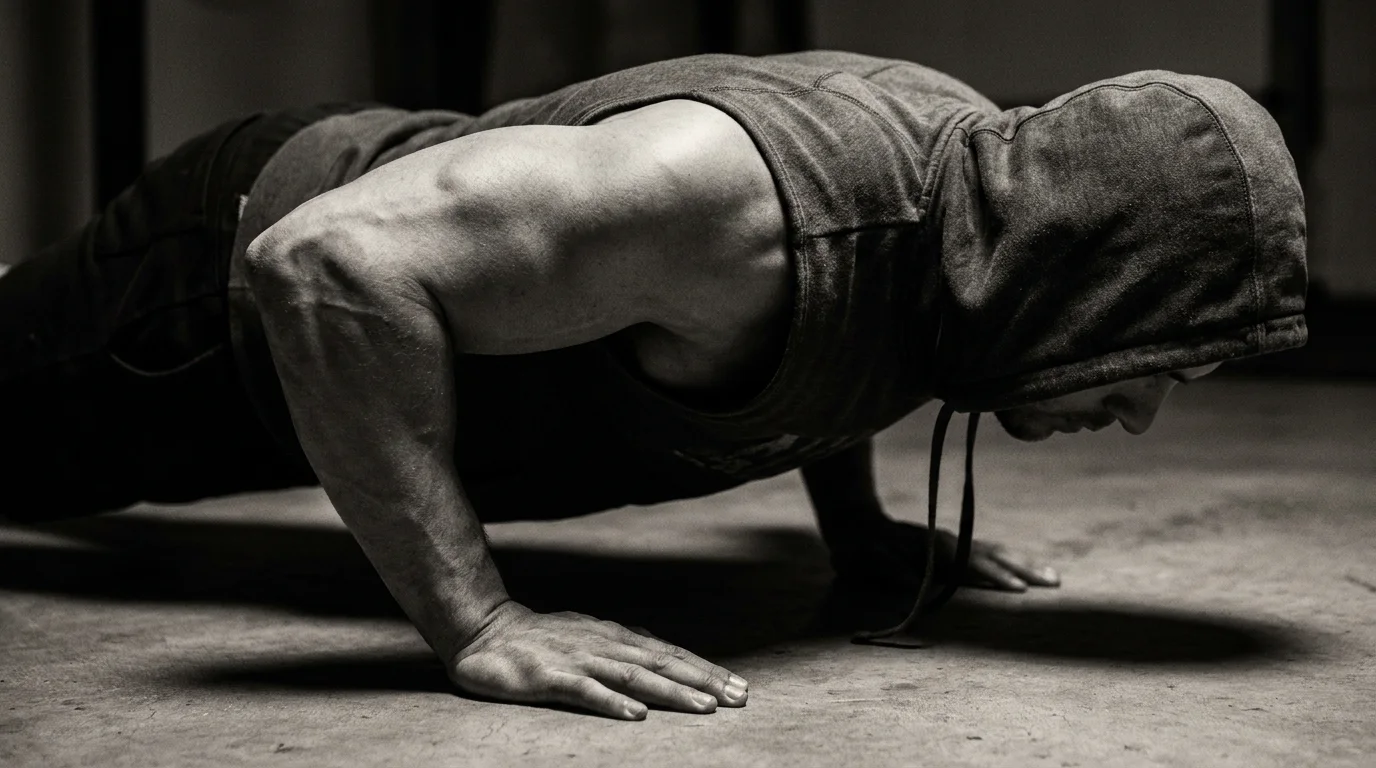
Technique, ROM, and Setup for Resistance Band Pushups
Band choice and anchoring basics
- This is a practical guide to how to perform resistance band pushups correctly.
- Choose a band with enough resistance to stay taut through the full ROM.
- Anchor points: sturdy pull-up bar, squat rack, or a stable low door anchor.
- Avoid cheap door hooks or loose anchors; test before every set.
- Double-check that the band cannot slip, snap, or recoil unexpectedly.
Hand position
- Hands just outside shoulder width; fingers forward or slightly outward.
- Grip the band handles or the band itself securely to prevent slipping.
Bracing and scapular control
- Brace core and glutes, keep a neutral spine.
- Pinch shoulder blades down and back; maintain that position as you press.
Range of motion and depth with resistance bands
- Lower until the chest nears the floor while the band remains taut.
- Keep elbows at about 45–60 degrees; don’t let them flare.
- Pause briefly at the bottom, then press up with controlled speed.
Common technique mistakes and fixes
- Hips sag: tighten glutes and hollow the torso.
- Hands slip: recheck length, grip, and anchor point.
- Bottom too shallow: use a thicker band or step closer to the anchor.
Progression Framework: Mechanical, Neuromuscular, and Metabolic Specificity (Phase 1 Stabilization Endurance)
In Phase 1, approach banded push-up progression through three linked lenses: mechanical, neuromuscular, and metabolic. Let control and scapular stability guide every step.
Mechanical progression cues (range, leverage, loading)
- Limit ROM with a higher anchor; deepen as scapular stability improves.
- Modulate loading by band thickness and stance; keep a neutral spine.
- Preserve a steady tempo and avoid compensations; prioritize clean, controlled reps.
Neuromuscular control and motor pattern development
- Scapular stability: draw the shoulder blades down and maintain smooth protraction as you press.
- Elbow path stays close to the torso; rib cage and torso remain solid with band tension.
- Practice a consistent tempo (for example, 3-0-2-0) to engrain reliable patterns.
Metabolic conditioning, density, and tempo
- Use short, focused density blocks (6–8 minutes) with 20–40 second rests.
- Descent should be slow (about 3 seconds); bottom pause, then press in 1–2 seconds.
- Keep effort moderate; stop if form breaks.
Phase 1 programming template and progression examples
- Template: 2–3 sessions/week, 3x6–8 reps with light-to-moderate band.
- Progression: Weeks 1–2 band light; Weeks 3–4 moderate; Weeks 5–6 heavy.
Band Selection, Safety, Accessory Movements, and Variations for Chest-Focused Training
Band types and tension guidelines
Choose loop mini-bands or resistance tubes with handles. Start with a medium tension that lets you complete 6–12 strict push-ups with clean form; you can stack bands or move to a heavier band as you progress. Expect tension to feel greater as you press and to shift through the range.
Anchoring safely and preventing snap or recoil
Secure a sturdy anchor at chest height or lower. Test the setup before sets, keep the band away from your face, and use a door or post anchor when available. Check for nicks or frays and control the band ends so it can’t snap back.
Accessory movements for scapular stability and serratus activation
Add banded scapular push-ups, wall slides, and light serratus punches. Include gentle pull-aparts to bolster posture and shoulder blade control.
Effective banded push-up variations (incline/decline, tempo, unilateral, paused)
Try incline (hands on a bench) and decline (feet elevated) to shift demand. Use a tempo like 3-0-3 or pause 2 seconds at the bottom. Explore unilateral or paused holds for stability.
TRX push-ups vs banded push-ups: when to choose each
Banded push-ups offer predictable resistance and easy progression; TRX adds instability and core demand. Choose TRX when you want more balance challenge, banded when you want scalable, linear load.
Frequently asked questions
Can you do push-ups with a resistance band?
Yes. The band adds tension through the full range of motion; anchor it securely and start with lighter resistance and a shorter ROM, progressing as you gain strength.
How do you progress a resistance band push-up?
Progression follows mechanical, neuromuscular, and metabolic cues: first improve scapular stability and elbow tracking, then increase loading by thicker bands or higher anchors, and finally add tempo, pauses, or brief bottom holds to challenge control.
What are the best resistance band push-up variations for beginners?
Begin with an incline setup or knee-supported band push-ups to learn the pattern with lighter resistance and shorter ROM; as you improve, move to a full push-up with a thicker band and increased range.
How should I structure a resistance band chest workout?
Use a Phase 1 stabilization-endurance approach: 3–4 sets of 6–12 reps with a slow descent (~3 seconds) and a 1–2 second press, plus brief bottom pauses; include short density blocks (6–8 minutes) with 20–40 second rests and gradually increase band tension and ROM.
About the authors

Goran Huskić
Co-founder · Professional basketball player
Goran Huskić is a Serbian professional basketball player — a 6'11" center currently playing for Monbus Obradoiro in Spain's Primera FEB. He won the 2019–20 Basketball Champions League with San Pablo Burgos and has competed professionally across Spain, Germany, Lithuania, Serbia and the United States. He co-founded PUSHapp to bring pro-level training discipline to everyday workouts.

Nikola Janković
Co-founder · Former professional basketball player
Nikola Janković is a former professional basketball player — a 6'9" forward and the 2016–17 ABA League MVP — who played for Partizan, Union Olimpija and Mega, among others. Today he runs a pilates studio and gym focused on strength, mobility and overall wellbeing. He co-founded PUSHapp to make consistent, measurable training simple for everyone.