
Variations & Types
All Pushup Variations: Beginner to Advanced Guide
Explore all pushup variations from beginner to advanced, with progressions, modifications, and form cues to boost chest, shoulders, and core.


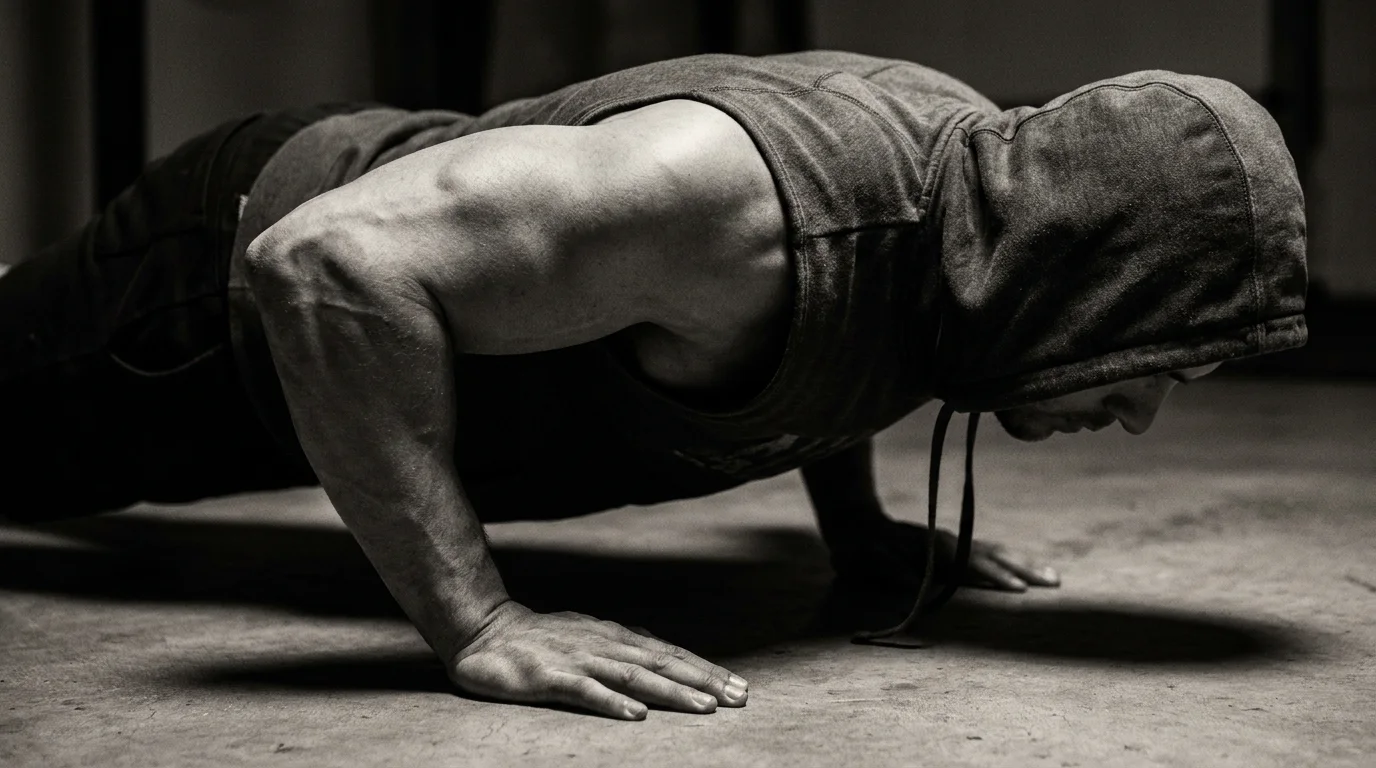
Foundations of push-up biomechanics and safe technique
biomechanics and specificity
Push-ups train the same movement patterns you use in daily pressing. The SAID principle means your body adapts to the demands you impose. Mechanical specificity means loading joints and muscles through the exact posture you want to improve. Neuromuscular specificity means the nerves and muscles learn the correct movement sequence. Metabolic specificity refers to the energy systems you develop as you train. Use progressions that match your aims and maintain control from start to finish.
elbow angle and scapular control
Keep the elbows near 45 degrees to the torso. This shares load across the chest, front shoulders, and triceps while protecting the shoulder joint. For scapular stability, brace the shoulder blades down and together as you descend, then press without letting the ribcage flare. Maintain a straight line from head to heels and breathe steadily.
common technique mistakes and fixes
- elbows flare out during descent; fix tuck toward pockets and keep elbows around 45 degrees
- hips sag or butt up; fix brace core and squeeze glutes
- head drops or neck twists; fix look slightly ahead, neck neutral
- incomplete range; fix lower until chest nearly touches floor
- breathing off; fix exhale on push, inhale on lowering
Progression framework: beginner to advanced push-ups and phase-based programming
Phase-based progression overview
- Phase 1 beginner: incline push-ups or knee push-ups. 3 sets of 6-8 reps. tempo 2-0-2.
- Phase 2 intermediate: full push-ups. 4 sets of 6-10 reps. tempo 2-0-2.
- Phase 3 advanced: full push-ups with bottom pause and tempo variations. 5 sets of 6-8 reps.
Sample weekly plan (Phase 1 to 3)
- Phase 1: three days per week, nonconsecutive. start with 5-10 minutes of warmup and finish with light mobility.
- Phase 2: three days per week, same rest between sets. aim for 4x6-10 reps.
- Phase 3: three days per week, add a 1 second bottom pause on each rep. 5x6-8.
Programming cues and common mistakes
- Cues: keep core braced, hips level, elbows at about 45 degrees, control the descent.
- Mistakes: hips sagging, elbows flaring, bouncing at the bottom.
Variations by goal and equipment: TRX, stability ball, spiderman, decline, and safety
Equipment variations: TRX and stability ball
- TRX push-ups technique: set the straps at chest height, walk your feet back to create a gentle incline, brace your core and keep a straight line from head to heels. Elbows stay near 45 degrees as you press up and return. Adjust your angle to increase or decrease load.
- Stability ball push-up: hands on the ball, feet back, body in a straight line. Keep hips level, wrists neutral, and elbows close to the body as you lower and push up. To progress, loosen the grip on the ball or move your hands closer to your chest.
Dynamic variations and spiderman push-up
- Spiderman push-up benefits: you train a bit of hip flexion and anti rotation while challenging shoulder stability.
- How to perform: start in a push-up position, as you lower bring one knee toward the same elbow, return, and switch sides. Keep hips steady and move slowly.
Decline push-ups: form cues and benefits
- Form cues: place feet on a stable elevated surface, hands shoulder width apart, keep a straight line, elbows about 45 degrees. Lower until the chest nears the platform, then push up.
- Benefits and safety considerations: higher load on upper chest and front shoulders. If you feel pinching or pain, reduce height or revert to a simpler variation.
Choosing variations by goal and safety tips
- Hypertrophy you'll use moderate load with controlled tempo and 6 to 12 reps. Endurance favors higher reps with steady sets. For power, add controlled tempo changes and explosive finishes within comfort.
- Best push-up variations for beginners are incline, TRX, or stability ball options. Always warm up, check equipment, and prioritize shoulder health. Safety considerations mean scale load and ROM to stay pain free. This is a push-up progression guide you can follow.
Frequently asked questions
What are the best push-up variations for beginners?
Begin with incline push-ups or knee push-ups to build control and strength. Use 3 sets of 6-8 reps with tempo 2-0-2.
How do you progress push-ups from beginner to advanced?
Follow a phase-based ladder: Phase 1 incline or knee push-ups, Phase 2 full push-ups, Phase 3 advanced with bottom pause and tempo variations. Typical plan is 3 sessions per week with progressive reps (Phase 1 3x6-8, Phase 2 4x6-10, Phase 3 5x6-8).
Which push-up variation targets the core the most?
Spiderman push-ups engage the core through anti rotation and hip flexion, making them a standout core challenge among variations.
What are common mistakes in push-ups and how can I fix them?
Common mistakes include elbows flaring, hips sagging, head dropping, incomplete range, and breathing off. Fix them by tucking elbows to about 45 degrees, bracing the core, keeping the neck neutral, lowering until the chest nearly touches, and exhaling on the way up.
About the authors

Goran Huskić
Co-founder · Professional basketball player
Goran Huskić is a Serbian professional basketball player — a 6'11" center currently playing for Monbus Obradoiro in Spain's Primera FEB. He won the 2019–20 Basketball Champions League with San Pablo Burgos and has competed professionally across Spain, Germany, Lithuania, Serbia and the United States. He co-founded PUSHapp to bring pro-level training discipline to everyday workouts.

Nikola Janković
Co-founder · Former professional basketball player
Nikola Janković is a former professional basketball player — a 6'9" forward and the 2016–17 ABA League MVP — who played for Partizan, Union Olimpija and Mega, among others. Today he runs a pilates studio and gym focused on strength, mobility and overall wellbeing. He co-founded PUSHapp to make consistent, measurable training simple for everyone.