
Variations & Types
Banded Pushups: Variations & Progressions
Learn banded pushups: setup, variations, progressions, and workouts to maximize chest strength with resistance bands.


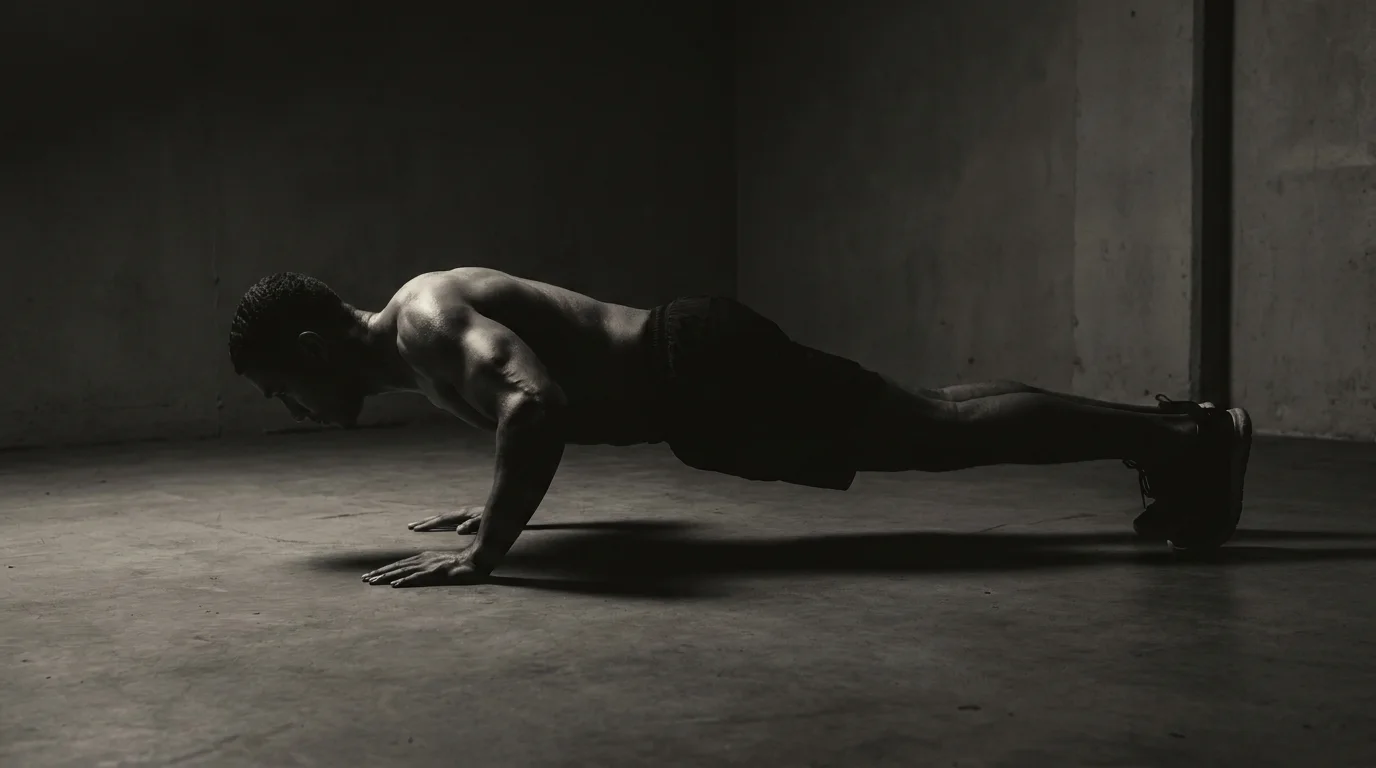
Foundations, setup, and the step-by-step progression roadmap
Technique starts with a braced core and a neutral spine. Shoulders stay down and away from the ears, ribs stay quiet, and the chest leads the way.
Band placements: across the upper back vs overhead across the shoulders
- Across the upper back: step on the band with feet hip width, pull the band tight across the traps, and hold handles at chest level. Elbows track about 45 degrees as you descend.
- Overhead across the shoulders: anchor the band high behind you, loop it across the shoulders, and hold the ends in front. The band pulls downward as you descend, so keep hips stacked and ribs quiet.
Starting progressions: wall pushups → incline → knee-assisted banded pushups
- Wall pushups: hands on the wall, feet close, push with control through the full range.
- Incline pushups: hands on a sturdy elevated surface, maintain a straight line.
- Knee-assisted banded pushups: knees on the floor, choose a band that provides light resistance, progress to toes as control improves.
Safety-first anchors, band tension management, and overhead-use precautions
- Anchor points: use a solid door frame, rack, or dedicated anchor; test before each set.
- Band tension: pick a band you can move with clean form; avoid snapping back.
- Overhead use: ensure the anchor is secure and your shoulders stay safe throughout the movement.
Baseline activation: cue the chest and shoulder stabilizers before each rep, then press up with a deliberate, controlled tempo.
Variations, tempo, and EMG activation: maximizing chest engagement with banded pushups
Standard banded pushups (across-back setup) and tempo cues
Set a band across your upper back and grip the floor with your hands under your shoulders. If you are new, this is a solid way to learn how to do banded pushups with control. Tempo: two seconds down, two seconds up, no rest. Keep hips level and chest tracking between the hands.
Incline/Decline banded pushups and their chest emphasis
Incline variations shift emphasis to the lower chest, while decline increases overall load. Tempo: incline three seconds down, one second up; decline three seconds down, two seconds up. Stay smooth through the movement and avoid letting the torso wobble.
Archer and pseudo-planche progressions with bands
Archer or pseudo-planche with bands adds unilateral load and control requirements. Tempo: three seconds down, two seconds up. Keep the elbow tight and the core braced as you press.
Overhead band across back push-up technique and stability considerations
Band across the upper back adds resistance through the press. Tempo: two seconds down, two seconds up. Maintain a neutral spine and steady shoulder blades.
Interpreting EMG activation data by variation and choosing the right variation
EMG activation resistance band push-ups varies with torso angle and band tension. When the torso stays horizontal, chest activation stays high. Start with standard across-back, then progress to incline, then to archer or pseudo-planche as form holds.
Programming: workouts, 7-exercise plan, and band tension analysis
Two quick workouts: beginner-friendly and progressive
- Beginner-friendly: 2 rounds, 6-8 reps per set with a light band across the upper back. Use tempo push-ups with bands technique: 2 seconds down, 1 second pause, 1 second up. Rest 60 seconds between sets.
- Progressive: 3 rounds, 8-12 reps with a medium band. Add a 2 second pause at the bottom and slow the descent to 3 seconds.
Seven-exercise resistance-band chest workout with clear progression cues
- banded pushups, baseline load
- incline banded pushups to ease load
- tempo pushups with bands technique, add pause at bottom
- banded chest fly on floor, slow squeeze
- standing chest press with band, control return
- overhead band across back push-up, reach and press
- decline banded pushups, highest resistance Progression cues: shift from incline to flat to decline, move from light to medium bands, shorten rest between sets.
Band tensions (light/medium/heavy): activation trade-offs for chest, shoulders, and triceps
Light bands favor form and range with steady chest activation; shoulders and triceps stay milder. Medium bands balance chest load with front delt and triceps involvement. Heavy bands raise overall demand and can shift work toward the chest and triceps, but form may suffer if control breaks.
Safety and injury prevention for high-tension bands and overhead placements
Inspect bands for wear and replace frayed sections. Start with light tension and progress gradually. For overhead across back setups, secure a fixed anchor and keep elbows soft, control depth, and stop if you feel strain in the shoulders or face.
Frequently asked questions
What exactly is a banded push-up and how do you perform it correctly?
A banded push-up is a push-up performed with a resistance band to add controlled load. To perform it correctly, brace your core, keep a neutral spine, and let the band guide your elbow path rather than forcing a deep dip. Start with a light band and shortened range, then lengthen the movement as you tolerate the load, using a controlled tempo with a brief pause at the bottom before pressing up.
Which muscles are worked during banded pushups and how does band resistance change activation?
The chest is the primary mover, with support from the shoulders and triceps. EMG activation changes with torso angle and band tension, and when the torso stays more horizontal, chest activation stays high. Varying band tension or incline/decline shifts emphasis to different parts of the chest.
Are banded push-ups harder or easier than standard push-ups, and how should I progress?
Banded push-ups add load and are typically harder than standard push-ups. Progress from a light band and shortened range through wall pushups, incline pushups, and knee assisted banded pushups, advancing to toes as control improves.
How should I structure a banded push-up workout (sets, reps, tempo)?
Use a progressive plan that starts with light band tension and shortened range and moves toward longer range and tougher variations. Tempo cues guide control, for example lower with a controlled tempo, pause briefly at the bottom, then press up, and vary the variation and grip to keep challenging the chest.
About the authors

Goran Huskić
Co-founder · Professional basketball player
Goran Huskić is a Serbian professional basketball player — a 6'11" center currently playing for Monbus Obradoiro in Spain's Primera FEB. He won the 2019–20 Basketball Champions League with San Pablo Burgos and has competed professionally across Spain, Germany, Lithuania, Serbia and the United States. He co-founded PUSHapp to bring pro-level training discipline to everyday workouts.
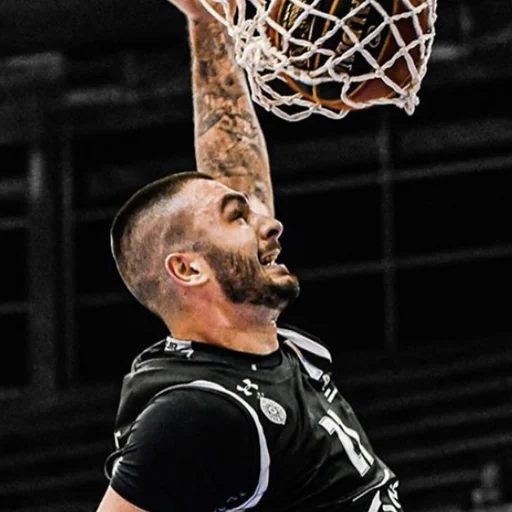
Nikola Janković
Co-founder · Former professional basketball player
Nikola Janković is a former professional basketball player — a 6'9" forward and the 2016–17 ABA League MVP — who played for Partizan, Union Olimpija and Mega, among others. Today he runs a pilates studio and gym focused on strength, mobility and overall wellbeing. He co-founded PUSHapp to make consistent, measurable training simple for everyone.