
Variations & Types
Advanced Pushup Variations: Master Unilateral Strength
Explore advanced pushup variations to build unilateral strength, core stability and control. Learn progressions, common pitfalls, and practical tips.
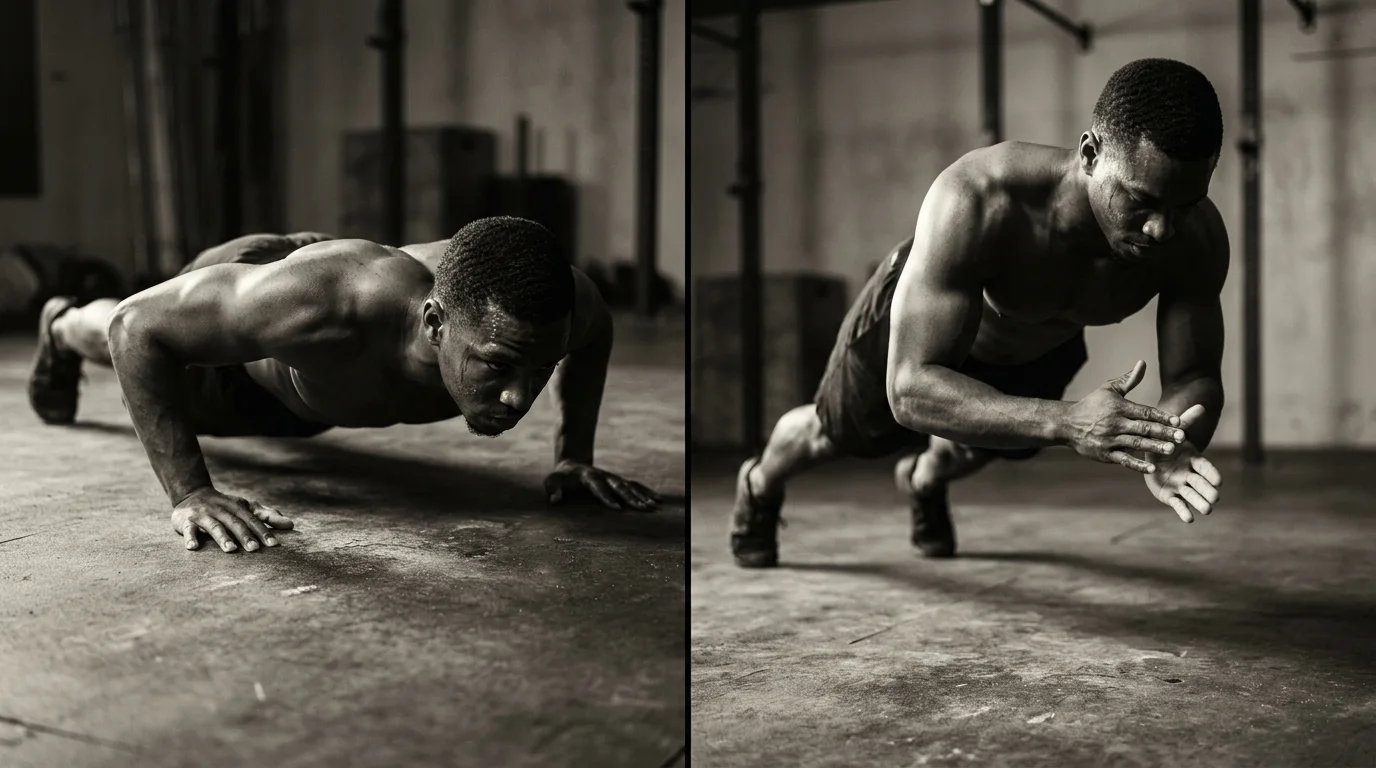
Progression Framework for Advanced Push-Up Variations
SAID Principle in Push-Ups: Aligning Outcomes with Variations
- The SAID principle means your body adapts to the exact demands you place on it. In push-ups, choose variations that challenge stabilization, anti-rotation, and unilateral loading where you need it.
- Design progressions to hit mechanical neuromuscular specificity for push-ups and the metabolic demands your training targets.
Comprehensive Progression Roadmap: Stabilization, Archer, Spiderman, and Cross-Body Variations
- Start with stabilization work: solid scapular control and a tight core with a stable base.
- Progress to unilateral patterns like the archer variation, then add Spiderman and cross-body variations as symmetry holds.
Independent Assessment: Unilateral Stability, Anti-Rotation Metrics, and Loading Symmetry
- Use a simple assessment template: can you maintain a square torso while lowering with one arm? Observe hip rotation, scapular control, and wrist alignment.
- Track loading symmetry by comparing depth, reps, and effort between sides; aim for balanced demand.
Common Technique Pitfalls and Early Fixes: Hip Rotation, Scapular Control, and Wrist Alignment
- Cue hips square to the floor and ribs braced.
- Drill scapular micro-retractions and keep wrists neutral in hand placement.
Phase 1 Stabilization Endurance: Week-by-Week Plan, Tempo, and Progression Triggers
Phase 1 Goals, Metrics, and Safe Loading Guidelines
- Build unilateral stability and anti-rotation through unilateral push-up progression with deliberate time under tension.
- Metrics: pelvis square, torso braced; tempo 3-0-2-0 with a brief bottom pause.
- Safe loading: start on incline or knees; move to floor once form stays solid across sets.
Week-by-Week Schedule: Tempo, Sets, Reps, and Progression Triggers
- Weeks 1–2: 6–8 reps per side, 3 sets; 3-0-2-0. Progression trigger: no hip tilt or trunk wobble on two sessions.
- Weeks 3–4: 5–7 reps per side, 3–4 sets; 4-0-2-0. Progression trigger: maintain neutral spine, then add Spiderman or Archer with light load.
Spiderman and Archer Pathways Within Phase 1
- Spiderman: incline to floor, knee toward elbow while keeping pelvis stable.
- Archer: narrow ROM, shoulders square; advance to a slightly offset stance as control allows.
Assessment Template for Phase 1: Unilateral Stability and Anti-Rotation
- Record pelvis alignment, anti-rotation tolerance, and reps with solid form per side.
Common Phase 1 Pitfalls: Hip Rotation, Scapular Control, Wrist Alignment, Loading Symmetry
- Hip rotation: keep hips squared; regress if rotation appears.
- Scapular control: avoid winging; maintain cueing and control.
- Wrist: wrists under shoulders; neutral grip.
- Loading: balance weight evenly; note any side bias.
Unstable Surfaces, Modalities, and Advanced Technique Mastery for Unilateral Push-Ups
Unstable surfaces and load modalities sharpen anti-rotation, core bracing, and scapular control. Move gradually from stable form to controlled instability, keeping loading symmetry and safe mechanics.
Beyond TRX: Unstable Surfaces and Modalities for Load and Torque Variations
- Unstable options: stability ball under the hands, BOSU, foam pad, or a balance disc to challenge control; keep hips square and ribs down.
- Modalities: anchor cables or resistance bands to create torque variety; fat grips alter grip diameter and forearm engagement.
- Substitutes: if TRX isn’t available, use rings or bands with a solid anchor and maintain steady tension.
Archer Push-Up Progressions: From Arch to Asymmetrical Loading
- Begin with a pronounced arch and one extended arm; load shifts to the pressing side.
- Progress by widening the rear arm’s distance and gradually increasing asymmetry without losing torso stability.
Spiderman Push-Up Progression and Cross-Body Variations
- Spiderman pattern: as you descend, bring the knee toward the corresponding elbow while keeping hips level.
- Cross-body variation: guide the torso and knee across midline during the press to heighten anti-rotation demands.
Technique Cues for Wrist, Scapula, and Hip Control on Unstable Surfaces
- Wrist neutral, fingers spread; scapula set and allowed minimal movement; hips braced and level.
Assessment and Progression Triggers on Unstable Surfaces
- Reps stay controlled on an unstable surface; advance when balance and form hold across sets, then increase instability or resistance.
Frequently asked questions
What are some advanced push-up variations to try beyond the standard push-up?
Beyond the standard push-up, try unilateral patterns like archer push-ups, single-arm push-ups, and offset-hand variations. These challenge stability and anti-rotation more than a standard rep.
How do Archer push-ups develop unilateral pressing strength and core stability?
Archer push-ups load one arm more, forcing your torso to stay square and resist twist, which builds unilateral pressing strength and anti-rotation core control.
What progression path leads from a regular push-up to an Archer push-up safely?
Start with a solid regular push-up, then progress to unilateral patterns like Archer with a stable base, and only advance as control holds; add Spiderman or a slightly offset stance once you can maintain a square torso.
What is stabilization endurance in push-ups, and how do you train it?
Stabilization endurance is the ability to maintain a square torso and braced core through repeated unilateral push-ups. Train it with phase 1 tempo (3-0-2-0), time under tension, and loading that progresses from incline to floor as form stays solid.
About the authors
Goran Huskić
Co-founder · Professional basketball player
Goran Huskić is a Serbian professional basketball player — a 6'11" center currently playing for Monbus Obradoiro in Spain's Primera FEB. He won the 2019–20 Basketball Champions League with San Pablo Burgos and has competed professionally across Spain, Germany, Lithuania, Serbia and the United States. He co-founded PUSHapp to bring pro-level training discipline to everyday workouts.
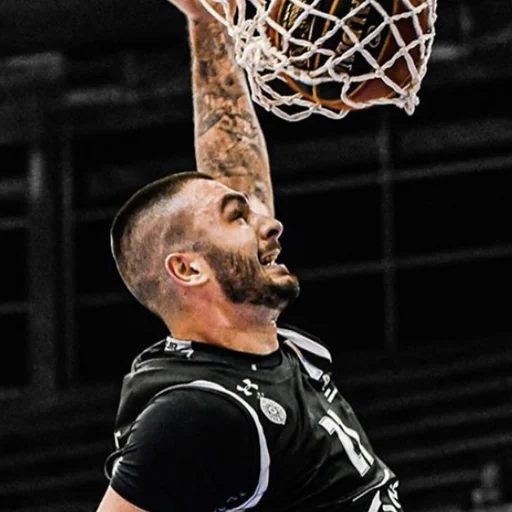
Nikola Janković
Co-founder · Former professional basketball player
Nikola Janković is a former professional basketball player — a 6'9" forward and the 2016–17 ABA League MVP — who played for Partizan, Union Olimpija and Mega, among others. Today he runs a pilates studio and gym focused on strength, mobility and overall wellbeing. He co-founded PUSHapp to make consistent, measurable training simple for everyone.