
Variations & Types
Pike Pushups: Form, Variations & Progressions
Learn proper pike pushups form, key muscles, common mistakes, and effective variations to progress toward advanced calisthenics.


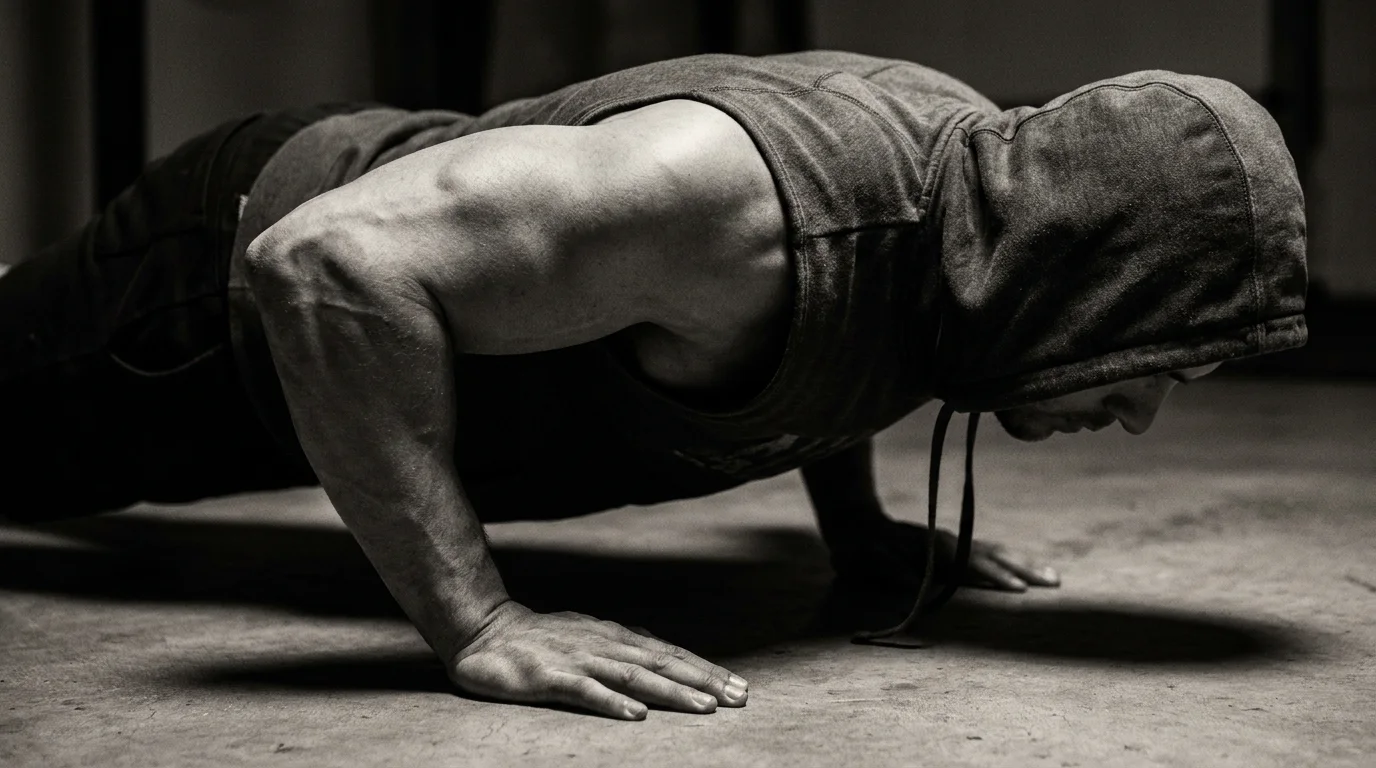
Pike Pushups Fundamentals: Setup, Form Cues & Safe Execution
These cues lock in pike push up form—the inverted-V stance that emphasizes vertical pressing; it’s different from decline push ups, which rely on a more horizontal push.
Starting position: torso angle, hand placement, and foot position
- Form an inverted V: hips high, spine neutral, head tucked.
- Hands sit a touch forward of shoulders, shoulder-width apart; fingers spread.
- Feet stay hip-width apart; weight through the hands to set the pike position.
Elbow angle and head/neck cues: how to descend and press
- Bend elbows to about 90 degrees; upper arms roughly 45–60 degrees from your torso.
- Neck stays neutral; chin subtly tucked, gaze toward the floor between hands.
- Press through the palms, extend elbows without locking out.
Hip angle and scapular control: maintaining an active core
- Brace the core; ribs down, hips aligned with shoulders.
- Depress shoulder blades and keep them slightly retracted as you press.
Depth targets and safe range: quantified cues for each rep
- Bottom: elbows near 90 degrees; forehead about 1–2 inches from floor (vary by height).
- Return with control, maintaining scapular position.
Common mistakes and how to fix them
- Elbows flare: tuck to about 40–60 degrees.
- Hips sag: brace and lift with the core.
- Neck cranes: maintain a neutral head position.
Progressions, Variations & Regression Pathways
Beginner progression: Kneeling Pike Push-Ups
- Start on hands and knees; walk hands forward to create a shallow pike with hips up and knees on the ground.
- Keep the spine neutral and ribs braced; bend elbows to about 90 degrees, then press back up. 5–8 reps.
- If you're exploring how to do pike pushups, this is the progression for beginners; focus on pike push up form.
Standard Pike Push-Ups: building a solid base
- From hands and knees, lift hips into an inverted V; weight balanced over the hands.
- Lower by bending elbows, keeping them angled back and ribs braced; press to full height.
- Note: pike pushups variations exist; pike pushups vs decline push ups: this version emphasizes shoulders more.
Advanced progressions: Feet-elevated and deficit pike push-ups
- Feet elevated: feet on a box; higher feet increase shoulder demand; maintain a tight line.
- Deficit pike push-ups: hands on a lower platform than feet to lengthen the range; 3–8 reps.
Tempo, holds & coaching cues: eccentric tempo and pauses
- Lower 3–4 seconds, pause 1 second at bottom, press up 1–2 seconds; exhale on the push.
- Keep core braced and neck neutral throughout.
Regression strategies for mobility constraints
- If depth is limited, regress to kneeling or incline pike push-ups; shorten the range.
- Add thoracic and shoulder mobility work to support progression.
Pike Pushups in Training: Comparisons, Core, & Practical Drills
Pike pushups vs decline push-ups and other vertical presses
- Pike pushups emphasize vertical pressing with a steep torso angle, loading the shoulders differently than decline push-ups (where the chest path is more horizontal).
- Overhead pressing moves (barbell/dumbbell) train vertical pressing without bodyweight leverage, while pike pushups build scapular control and core while you press.
- Handstand push-ups are a more advanced target; use pike pushups as a safe bridge to those skills.
- How many pike pushups should I do? Start with 3–4 sets of 3–5 reps and adjust based on form and recovery.
Core stability and scapular depression in the pike position
- Brace the core, keep the spine neutral, and prevent butt-to-floor collapse.
- Depress the scapula: pull shoulder blades down and away as you press.
- Maintain a neutral neck and press through the shoulders, not the crown of the head.
Shoulder-health drills and movement-improving cues
- Scapular wall slides or scapular push-ups to train depression.
- Tempo cues: 3 seconds down, 1–2 seconds up; pause briefly at the bottom.
- Band pull-aparts and hollow holds support posture and core integrity.
- Cue: stay tall from hips to head; press the floor away, not just with the arms.
Practical training plan: frequency, volume, and progression targets
- Frequency: 2–3 sessions/week, with at least 48 hours between.
- Volume: 3–4 sets of 3–5 reps to start; add 1 rep per set every week if form remains solid.
- Progression targets: move from incline/pike variations to floor pike pushups, then toward fuller ROM, and finally toward handstand progressions when ready.
Frequently asked questions
What is a Pike Push Up?
A Pike Push Up is an inverted-V push-up that emphasizes vertical pressing, with hips up and weight over the hands. It sits between a regular push-up and a vertical press.
Are Pike Push Ups effective?
Yes. They build shoulder stability and vertical pressing strength through a structured progression that emphasizes control and proper form.
How do Pike Push Ups differ from decline push-ups?
Pike Push Ups use an inverted-V to create a vertical pressing angle, while decline push-ups stay more horizontal; the movement places greater emphasis on the shoulders.
What muscles do Pike Push Ups work?
They primarily target the shoulder complex and core stability, supporting safe, controlled vertical pressing.
About the authors

Goran Huskić
Co-founder · Professional basketball player
Goran Huskić is a Serbian professional basketball player — a 6'11" center currently playing for Monbus Obradoiro in Spain's Primera FEB. He won the 2019–20 Basketball Champions League with San Pablo Burgos and has competed professionally across Spain, Germany, Lithuania, Serbia and the United States. He co-founded PUSHapp to bring pro-level training discipline to everyday workouts.
Nikola Janković
Co-founder · Former professional basketball player
Nikola Janković is a former professional basketball player — a 6'9" forward and the 2016–17 ABA League MVP — who played for Partizan, Union Olimpija and Mega, among others. Today he runs a pilates studio and gym focused on strength, mobility and overall wellbeing. He co-founded PUSHapp to make consistent, measurable training simple for everyone.