
Variations & Types
Diamond Pushups: Form, Benefits & Variations
Diamond pushups: learn proper form, muscles targeted, benefits, and progression variations for bodyweight training.


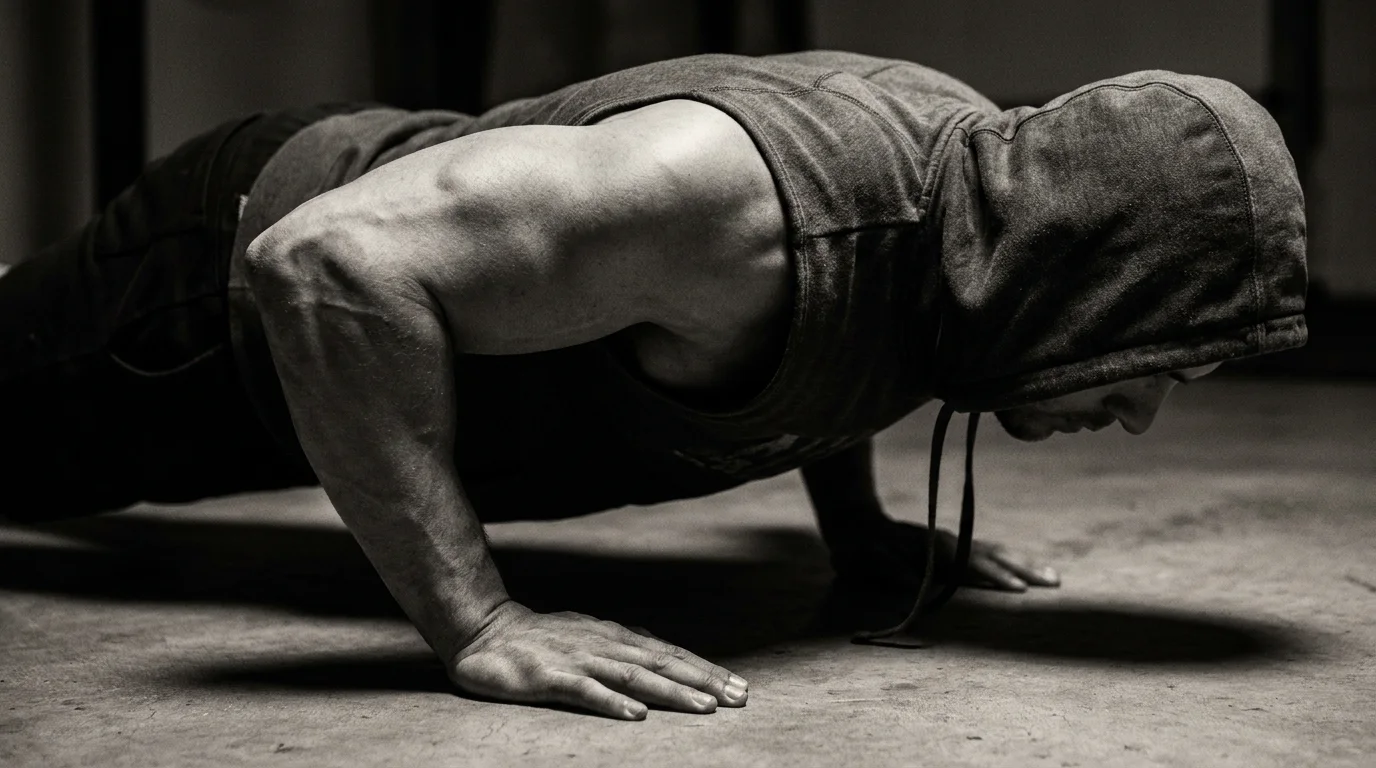
Diamond Pushups Technique: Form, Alignment & Cues
Setup and hand position
- Diamond pushups use a hand position diamond: thumbs and index fingers touch.
- Place hands under the chest with wrists in line with forearms; elbows tucked.
- This is the triangle push-up variant.
- This helps with diamond pushups proper form.
- How to do diamond pushups: form the diamond, press the floor, lower toward the center.
Executing with tempo and breathing
- Tempo: 2 seconds down, 2 seconds up; inhale down, exhale up.
- Brace the core and keep a neutral neck.
- Video checks: film side to confirm hips stay level; front to confirm elbows stay near the midline.
Scapular stabilization and elbow tracking: cues and corrections
- Squeeze shoulder blades down and together, then hold.
- Elbows track close to the ribs, about 45 degrees from the body.
- If pinching or pain appears, adjust hand position or switch to a triceps push-up.
Common faults and fixes
- Hips sag: brace the core and keep hips level.
- Elbows flare: pull them in toward the sides.
- Depth control: pause briefly and maintain tension.
Benefits, Hand Positions, and Variations
Muscle targets and benefits
Diamond pushups benefits include strong triceps engagement, with solid inner-chest and front-shoulder work. They also demand core bracing and shoulder stability, helping you build a steadier push posture across exercises.
Grip analysis: diamond vs other hand positions for chest vs triceps
In the diamond position (hand position diamond), the load shifts toward the triceps and inner chest. A narrower grip increases triceps emphasis, while a wider grip shifts more work to the chest and front delts. The triangle push-up is essentially the same setup—aim for solid form and controlled depth to protect the shoulders.
Variations to match goals (beginners to advanced)
- Beginners: elevate hands on a bench or wall, keep the diamond shape, and focus on form.
- Intermediate: floor diamond push-ups with a steady tempo.
- Advanced: feet elevated, add a pause at the bottom or wear a light load to increase challenge.
diamond pushups variations for beginners: start with easier setups and progress as you can maintain proper form.
Progressions, Programming & Common Pitfalls
Progressions and regressions
- Wall diamond pushups: hands form the triangle at chest height; great for learning how to do diamond pushups proper form.
- Incline diamond pushups on a bench or table.
- Knee diamond pushups as you build strength.
- Full diamond pushups on toes when ready.
- Diamond pushups with elevated feet for an advanced challenge.
Programming plans by goal: strength, hypertrophy, endurance
- Strength: 3×4–6 reps, 2–3 days/week; focus on solid form, add reps or a small load when feasible.
- Hypertrophy: 3–4×8–12 reps, control tempo, gradual volume increases.
- Endurance: 2–3×15–25 reps, shorter rest, steady technique.
Tempo, pauses, breathing cues
- Eccentric (lowering): 2–3 seconds; concentric (pressing up): 1–2 seconds.
- Inhale down, exhale up; pause 1–2 seconds at the bottom for paused reps.
Alignment checklist
- Wrists under shoulders, elbows close to ribs, neutral spine, hips level, neck relaxed.
Video checks
- Film side and front to verify hip, spine, and elbow alignment; pause at the bottom to confirm control.
Coaching cues
- “Squeeze the chest as you push,” “brace the core,” “keep elbows tucked.”
Common mistakes and fixes
- Hip sag: brace core and glutes; keep ribs down.
- Neck tension: gaze slightly forward, relax jaw.
- Elbow angle: tuck elbows ~45 degrees to ribs.
- Fixes: slow reps, shorter range, progressive loading.
Frequently asked questions
What muscles do diamond push-ups work?
Primarily the triceps and inner chest, with supportive work from the front delts and a braced core for stability.
How do you perform a diamond push-up correctly?
Place hands in a small diamond under your chest with wrists aligned to forearms and elbows tucked, keep hips level and core braced, then lower with control (about 2 seconds) and press back up while maintaining a neutral neck.
Are diamond push-ups harder than standard push-ups?
Yes—the diamond position shifts more load to the triceps and inner chest, making them typically more challenging; use progressions like incline, knee, or feet-elevated push-ups to build up.
What are some diamond push-up variations?
Variations include beginner options (incline or wall diamond push-ups), intermediate floor diamond push-ups with a steady tempo, and advanced versions (feet elevated and/or added load).
About the authors

Goran Huskić
Co-founder · Professional basketball player
Goran Huskić is a Serbian professional basketball player — a 6'11" center currently playing for Monbus Obradoiro in Spain's Primera FEB. He won the 2019–20 Basketball Champions League with San Pablo Burgos and has competed professionally across Spain, Germany, Lithuania, Serbia and the United States. He co-founded PUSHapp to bring pro-level training discipline to everyday workouts.

Nikola Janković
Co-founder · Former professional basketball player
Nikola Janković is a former professional basketball player — a 6'9" forward and the 2016–17 ABA League MVP — who played for Partizan, Union Olimpija and Mega, among others. Today he runs a pilates studio and gym focused on strength, mobility and overall wellbeing. He co-founded PUSHapp to make consistent, measurable training simple for everyone.