
Variations & Types
Close Grip Pushups: Form, Benefits & Variations
Master close grip pushups with step-by-step form, benefits for triceps and chest, and variations from beginner to advanced.


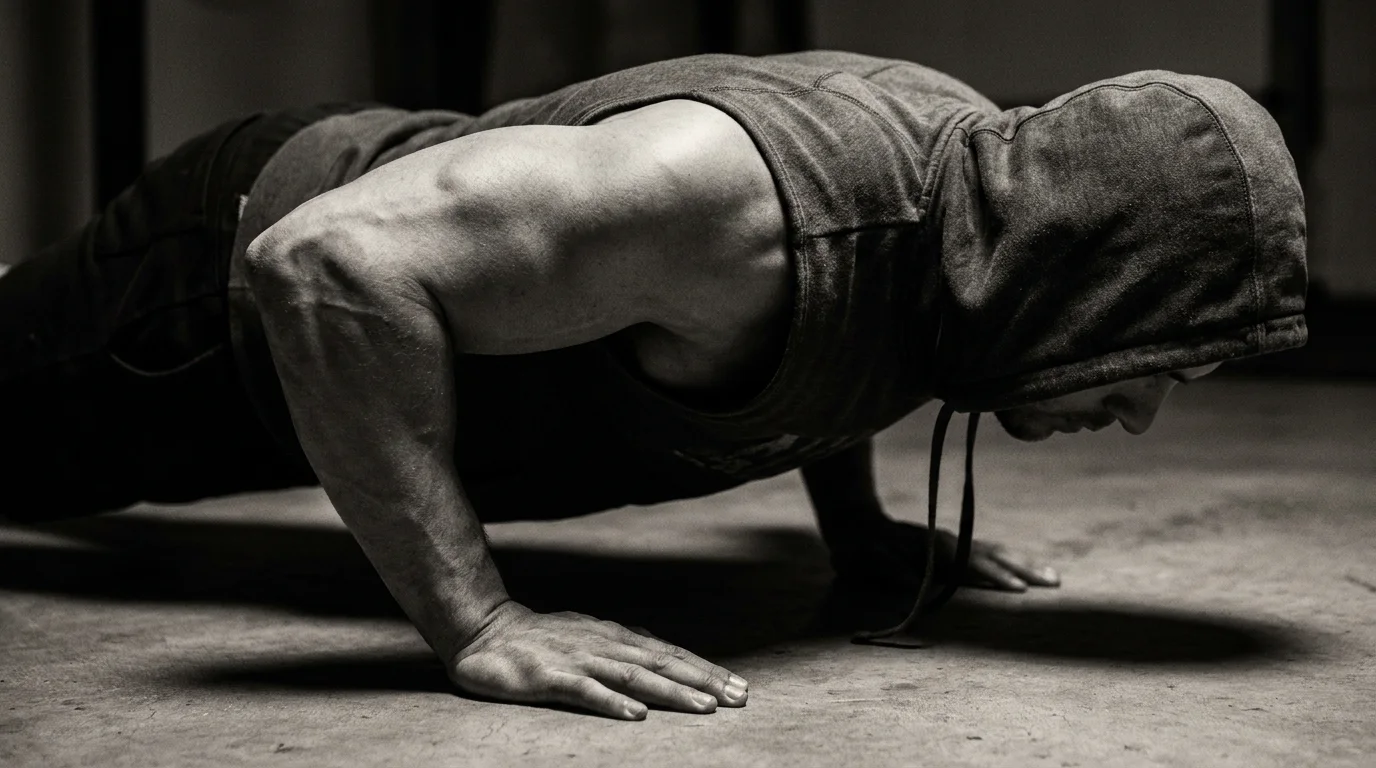
Close-Grip Pushups Fundamentals: Form, Cues, and Injury Prevention
Muscle targets and benefits
- Primary targets: triceps, inner chest, and front deltoids; core braces support the spine for elbow health and shoulder stability.
Step-by-step: hand position, body alignment, and setup
- If you're curious how to do a diamond push-up, place hands close under the chest to form a small diamond.
- Hands placed close under the chest; elbows at about 45 degrees.
- Keep a straight line from heels to crown; hips level; glutes and ribs braced.
- Feet hip-width apart for stability; move with controlled tempo.
Common errors and corrective cues (elbow flaring, hip sag, misalignment)
- Elbow flaring: tuck elbows toward your ribs during the descent.
- Hip sag: brace glutes, draw navel toward spine.
- Misalignment: maintain a straight line from heels to head; look slightly forward.
Breathing, tempo, and core engagement for efficiency
- Inhale on the way down, exhale as you press up.
- Tempo: deliberate descent (about 2 seconds) and a controlled press; keep the core engaged.
- Squeeze glutes to prevent hips from dropping.
Warm-up and prehab for shoulders and elbows
- Start with warm-up routines: arm circles, band pull-aparts, scapular push-ups.
- Do a few incline close-grip reps or wall push-ups before floor work to protect shoulders.
- Progress gradually; stop if pain.
Progression from Beginner to Advanced: A Complete Close-Grip Pushups Plan
Foundation phase: beginner-friendly reps, tempo, and rests (Week 1-2)
- Frequency: 3 days/week
- Reps/Tempo/Rest: Week 1: 3x5-6, tempo 2-0-2-0, rest 60-90s; Week 2: 3x6-8, same
- Cues: hands close under chest, elbows in, core braced; breathe in on descent, out on press
- Progression cue: move to Week 3 after two sessions at the upper end with solid form
Building strength and control: intermediate tempo and volume (Week 3-6)
- Frequency: 3-4 days/week
- Reps/Tempo/Rest: 3x8-12 (or 4x8-12), tempo 3-0-1-0, rest 60-90s
- Progression: Week 5-6 add diamond push-ups: 3x6-10 diamond if ready
- Checkpoint: form intact; advance to Week 7+ after two weeks at upper range
Advanced strength and endurance: higher volume and varied tempos (Week 7+)
- Frequency: 4 days/week
- Reps/Tempo/Rest: 4-5x12-15; tempos vary (2-0-2-0, 3-0-1-0); rest 90s
Plateau management
- If stuck 2-3 weeks, tweak rest to 90-120s or drop to incline/knee variants for two sessions
Sample four-week templates and progression checkpoints
- Week 1: 3x5-6; Week 2: 3x6-8; Week 3: 3x8-12; Week 4: 4x8-12; checkpoint: maintain upper-end reps with good form
Close-Grip vs Other Push-Up Variations: Diamond Push-Ups, Incline/Decline, and Programming for Plateaus
Muscle emphasis: close grip vs diamond push-ups
- Diamond push-ups place the hands close under the chest, loading the triceps and inner chest more and demanding stern scapular control.
- Close-grip push-ups also target the triceps, with strong front-d delt engagement and a steadier wrist position for many lifters.
- If you’re asking, diamond push-ups vs close grip pushups which is better? It depends on your goal and tolerance.
When to use incline or decline variations based on goals
- Incline push-ups are easier and excellent for progression, form work, or when you’re rebuilding shoulder stability.
- Decline push-ups raise load and emphasize the upper chest and front shoulders, valuable for building pressing strength at the top of the range.
Programming for variety: weekly schedules, cycling variations, and progression
- Plan 3 sessions/week: rotate through close grip, diamond, incline, and decline in a simple cycle (e.g., 1 variation per day).
- Progress by reps, sets, or tempo; swap every 3-4 weeks to spark stability gains and avoid plateaus.
Bottom line: selecting variations to fit your goals and limits
- Match the variation to your strength level and goal, then mix cyclically to build consistent shoulder stability and pushing capacity.
Frequently asked questions
What is a close-grip push-up, and how does it differ from a standard push-up?
A close-grip push-up uses hands placed a few inches in from the center with elbows tucked in, loading the chest's inner region and triceps while reducing shoulder leverage; keep a straight body line and brace the core.
How do you perform a diamond push-up correctly?
Place your hands close under the chest to form a small diamond, keep elbows around 45 degrees, and maintain a straight line from heels to crown with hips level and core braced; use a controlled tempo.
What muscles are most engaged by close-grip/diamond push-ups?
Primary targets are the triceps, inner chest, and front deltoids, with a braced core supporting spine and elbow health.
Can beginners safely start with close-grip push-ups, and how should they progress?
Yes—start with incline or knee-supported variants to dial in technique, then progress to full floor reps with strict form and gradually increase workload, tempo, or elevation as you gain control.
About the authors

Goran Huskić
Co-founder · Professional basketball player
Goran Huskić is a Serbian professional basketball player — a 6'11" center currently playing for Monbus Obradoiro in Spain's Primera FEB. He won the 2019–20 Basketball Champions League with San Pablo Burgos and has competed professionally across Spain, Germany, Lithuania, Serbia and the United States. He co-founded PUSHapp to bring pro-level training discipline to everyday workouts.

Nikola Janković
Co-founder · Former professional basketball player
Nikola Janković is a former professional basketball player — a 6'9" forward and the 2016–17 ABA League MVP — who played for Partizan, Union Olimpija and Mega, among others. Today he runs a pilates studio and gym focused on strength, mobility and overall wellbeing. He co-founded PUSHapp to make consistent, measurable training simple for everyone.