
Workouts & Programs
Pseudo Planche Pushups: Master the Progressions
Learn what pseudo planche pushups are, proper form, benefits, and how to progress with parallettes and variations.


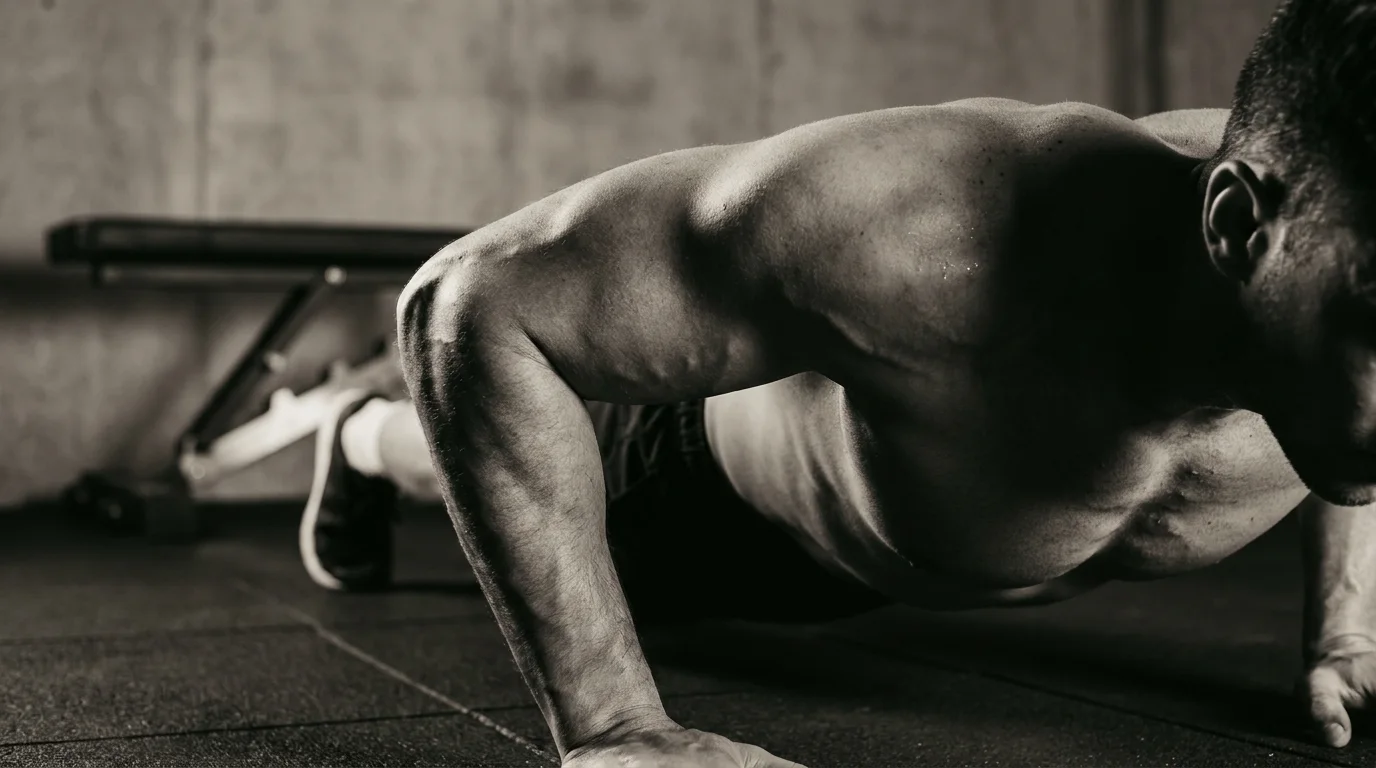
Foundations of the Pseudo Planche Pushup: Setup, Scapular Mechanics, and Warm-Up
Pseudo planche pushups are a challenging calisthenics push-up variant that shifts your weight forward, increasing load on the shoulders and wrists. They belong in the planche progression, and building a solid base matters. If you're wondering how to do pseudo planche pushups beginners, start with the planche progression and emphasize scapular control and core bracing.
Prerequisites and Safety
- Solid baseline push-up technique and control
- Wrist mobility and tolerance for forward-leaning loads (wrist-friendly push-ups guidance)
- Core bracing and scapular mobility; pain-free shoulders
Scapular Mechanics: Protraction and Depression
- Protraction: push the shoulder blades forward and apart as you lean; keep the chest tall
- Depression: pull the blades downward to keep shoulders stable and prevent shrugging
Starting Position and Forward Lean
- Hands near hips, fingers forward; elbows tucked; core tight
- Lean the torso forward, maintaining a straight head-to-heels line; weight shifts toward the hands
Warm-Up for Wrists and Shoulders
- Wrist circles, palm-to-floor stretches, finger push-ups
- Arm circles, scapular push-ups, light band pull-aparts; finish with a brief hollow hold
Progressions, Techniques, and Equipment: Building Load Safely
Tempo-Based Progressions: 4-Second Tempo
- Start with a deliberate 4-second tempo: 2 seconds lowering, a brief bottom pause, then 1–2 seconds pressing up. This cadence trains braced shoulders and a controlled forward lean.
Eccentric Loads
- Add load during the lowering phase through tempo or a light vest, while keeping ROM modest and wrists neutral. Prioritize control over range and avoid sudden yanks.
Equipment Play: Parallettes, Rings, and Alternatives
- Parallettes push-up variations reduce wrist extension and support a more forward-leaning line; they’re a common pathway to the pseudo planche.
- Ring push-up options introduce instability; use rings with controlled ROM to manage wrist comfort.
- Equipment considerations: wrist-friendly push-ups, handles, or a raised platform can dial intensity and reduce strain.
Regression and Advancement Options
- Pseudo planche pushups progressions and variations help tailor load to your level.
- If you’re wondering how to do pseudo planche pushups beginners, start with incline and limited forward lean, then progress.
- Regression: incline push-ups, shorter forward lean, or higher hand elevation.
- Advancement: increase forward lean, add tempo, or use a weighted vest; progress to parallettes or rings as strength grows.
Programming, Cues, and Mastery: 6–8 Week Blueprint and Common Pitfalls
Milestones: Weeks 1–2 to Week 6–8
- Week 1–2: establish scapular protraction and depression, core-traction, and hip engagement; tolerate a controlled forward lean on a stable surface.
- Week 3–4: lengthen holds, increase reps, deepen forward lean, maintain posterior chain tension.
- Week 5–6: solidify form under load; add controlled negatives and progress toward the full forward-lean pattern.
- Week 7–8: consistent forward-lean pseudo planche pushups with measurable progress (more reps, longer holds).
Coaching Cues: Scapular Protraction, Depression, and Core-Traction
- Protraction: push the floor away, chest lifts, scapulae glide forward.
- Depression: pull scapulae down toward hips; neck stays soft.
- Core-Traction: brace the core, tuck the pelvis, squeeze glutes; hips level; monitor anterior deltoid fatigue.
Warm-Up Routine for Planche Progressions
- 5–8 minutes: wrist prep, scapular push-ups, hollow-body activation, band pull-aparts, incline holds.
Common Mistakes and Fixes
- Missing scapular control; fix with scapular push-ups and reset protraction.
- Hips sag; fix with hip engagement cues and posterior chain activation.
Frequently asked questions
What is a pseudo planche push-up?
A challenging push-up variant that shifts your weight forward, increasing load on the shoulders and wrists, while you maintain a forward-leaning, braced torso. It belongs to the planche progression and relies on solid scapular control and core stability.
How do you perform a pseudo planche push-up?
Start with hands near your hips and fingers forward, elbows tucked, core braced; lean forward to a straight head-to-toe line while maintaining scapular protraction and depression, using a controlled tempo (lower, pause, press).
What muscles do pseudo planche push-ups work?
They require control from the shoulders, chest, and core, with emphasis on scapular movement and sustaining a braced torso during the forward lean.
Should I use parallettes for pseudo planche push-ups?
Parallettes reduce wrist extension and support a more forward-leaning line, making them a common pathway to the pseudo planche; rings add instability, so use them only when you’re ready to manage wrist comfort.
About the authors

Goran Huskić
Co-founder · Professional basketball player
Goran Huskić is a Serbian professional basketball player — a 6'11" center currently playing for Monbus Obradoiro in Spain's Primera FEB. He won the 2019–20 Basketball Champions League with San Pablo Burgos and has competed professionally across Spain, Germany, Lithuania, Serbia and the United States. He co-founded PUSHapp to bring pro-level training discipline to everyday workouts.

Nikola Janković
Co-founder · Former professional basketball player
Nikola Janković is a former professional basketball player — a 6'9" forward and the 2016–17 ABA League MVP — who played for Partizan, Union Olimpija and Mega, among others. Today he runs a pilates studio and gym focused on strength, mobility and overall wellbeing. He co-founded PUSHapp to make consistent, measurable training simple for everyone.