
Variations & Types
One Arm Pushups: Variations, Progressions, Form
Master one arm pushups with step-by-step technique, progressions, and cues to build unilateral pressing strength safely.

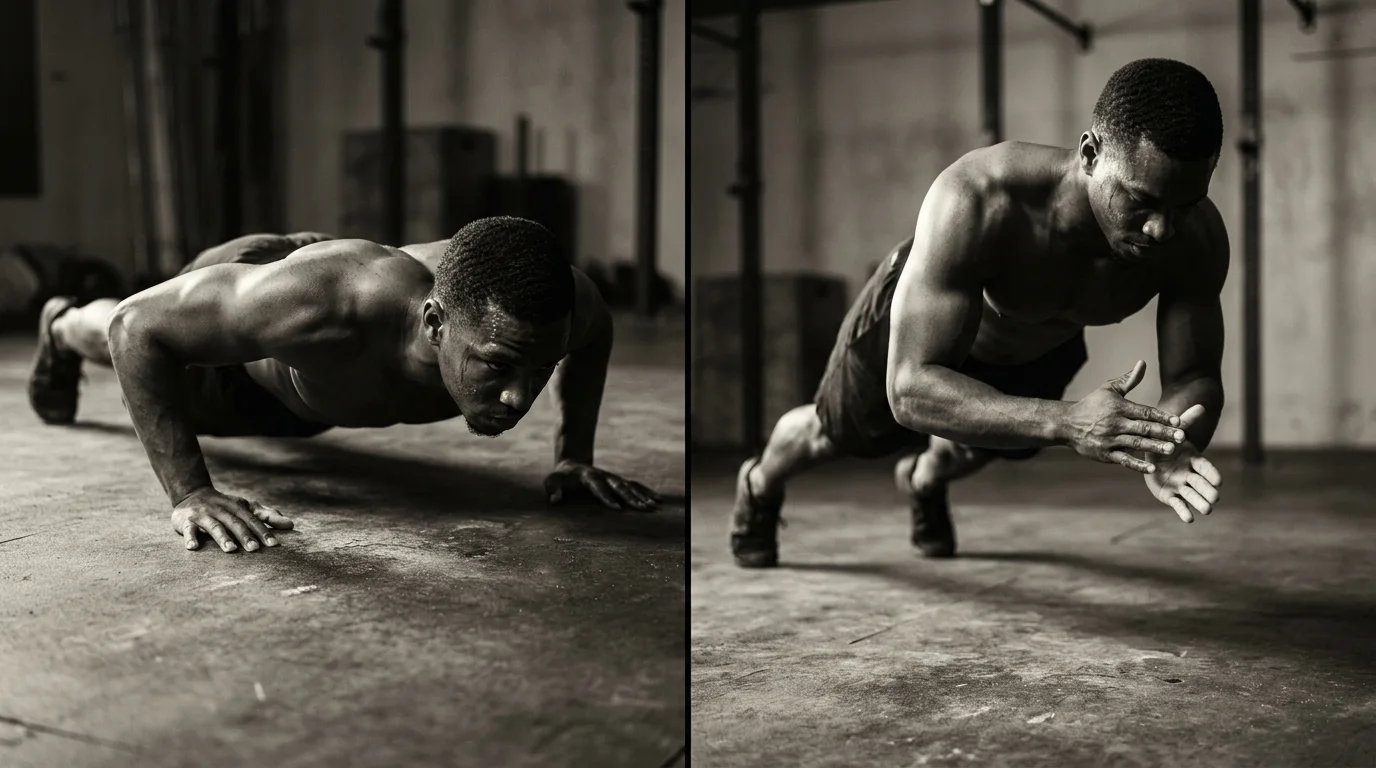
Technique, Prerequisites, and Core Demands of One-Arm Pushups
Prerequisites and Readiness Indicators
- Can you perform a solid standard push-up and hold a stable plank for 30–60 seconds?
- Pain-free shoulders, wrists, and elbows during pressing.
- Confidence with unilateral loading in a controlled range of motion.
- Clear progression path: you should be able to handle archer push-ups or similar offsets without losing form.
Core Stability and Anti-Rotation Cues
- Brace the core, glutes, and hips so the body stays in a straight line.
- Keep ribs down and hips square; avoid twisting toward the raised side.
- Use breath to maintain stability—inhale to set, exhale through the pressing phase.
- Think unilateral pushing: your working arm bears the load while the opposite side remains braced.
Setup, Hand Positioning, and Cues
- Position the working hand under the shoulder; fingers spread, wrist stacked.
- Non-working arm stays behind the back or at your side to limit leverage.
- Elbow stays close to the ribcage; drive through the palm as you press up, maintaining a single‑plane line.
- If you’re unsure, start with archer push-up technique and cues to build the pattern.
Progressions, Programming, and Rate of Load Progression
Progression Map: Elevated Push-Ups → Skydive → Archer → Full One-Arm Push-Up
- Elevated push-ups: hands on a bench/box; establish bracing and a solid ribcage.
- Elevated single-arm progression: working hand on the elevated surface; non-working hand supported, then lower the support as you gain control.
- Skydive push-up: load shifts toward the working arm while hips stay level; the non-working arm remains light or tucked.
- Archer push-up technique and cues: wider stance, extend the non-working arm to the side, bend the working elbow, chest stays square, ribs braced.
- Full one-arm push-up: non-working arm behind the back; maintain a straight line and pause briefly at the bottom before press.
Programming Parameters: Sets, Reps, Rest, Frequency
- Start: 3–4 sets per workout, 5–6 reps per side (or 4–6 reps total in symmetric stages); rest 90–180 seconds.
- Frequency: 2–3 sessions per week; progress by 1–2 reps or 1 set every 1–2 weeks.
Readiness Testing and Deload Considerations
- Test readiness with a controlled archer or elevated progression every 2–4 weeks; deload 1 week if form or speed declines.
Variations, Common Mistakes, and Injury Considerations
Variations and Regressions by Skill Level
- Beginner: use an elevated surface for the working arm. This is part of the elevated single-arm push-up progression. Keep the non-working arm at your side or on a light support.
- Intermediate: add archer push-ups to increase unilateral load, then dip toward the floor for a deeper range.
- Advanced: progress to a true one-arm push-up with controlled tempo and full ROM. Always refer to progressions to one-arm pushup as your guide, and consider a unilateral pushing training plan for one-arm pushups to structure this safely.
Common Mistakes and Fixes (Hip Rotation, Torso Tilt)
- Hip Rotation: hips drift or twist. Fix by keeping hips square to the floor; imagine a belt buckle facing down.
- Torso Tilt: one side sinks or ribs flare. Fix by locking in a straight line from crown to heel; use a slight brace in the core and pause at set depths.
Injury Considerations and Safe Modifications
- If you have shoulder or elbow pain, drop load by using a higher surface or shallower ROM. Consider a gradual, unilateral pushing approach and seek guidance if pain persists. This may shape your unilateral pushing training plan for one-arm pushups.
Frequently asked questions
What prerequisites should I meet before attempting a one-arm push-up?
Be able to perform a solid standard push-up and hold a stable plank for 30–60 seconds. Ensure pain-free shoulders, wrists, and elbows during pressing, and have confidence with unilateral loading in a controlled range. You should also be comfortable handling archer push-ups or similar offset variations without breaking form.
How do I safely progress from elevated or assisted variations to a full one-arm push-up?
Follow a stepwise progression: elevated push-ups, then elevated single-arm progressions, then skydive push-ups, then archer push-ups, and finally a full one-arm push-up with the non-working arm behind the back. Maintain a braced core, square hips, and controlled tempo throughout; stop if form or joint pain declines.
What muscles are primarily involved in a one-arm push-up?
It’s a full-body move that mainly targets the chest, front deltoid, and triceps, with substantial work from the serratus anterior and the working arm’s stabilizers. The core, glutes, and hips brace to keep a straight line and resist rotation.
What is the difference between a single-arm push-up and an archer push-up?
A single-arm push-up bears most of the load on one arm with the other braced behind the back; an archer push-up is a progression where the non-working arm extends to the side and the working elbow bends, allowing offset loading with more range.
About the authors
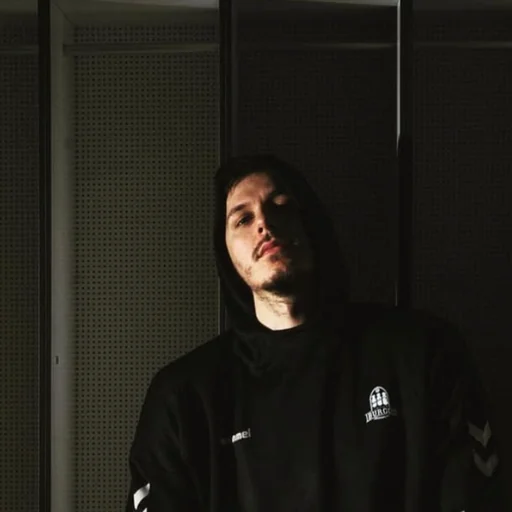
Goran Huskić
Co-founder · Professional basketball player
Goran Huskić is a Serbian professional basketball player — a 6'11" center currently playing for Monbus Obradoiro in Spain's Primera FEB. He won the 2019–20 Basketball Champions League with San Pablo Burgos and has competed professionally across Spain, Germany, Lithuania, Serbia and the United States. He co-founded PUSHapp to bring pro-level training discipline to everyday workouts.
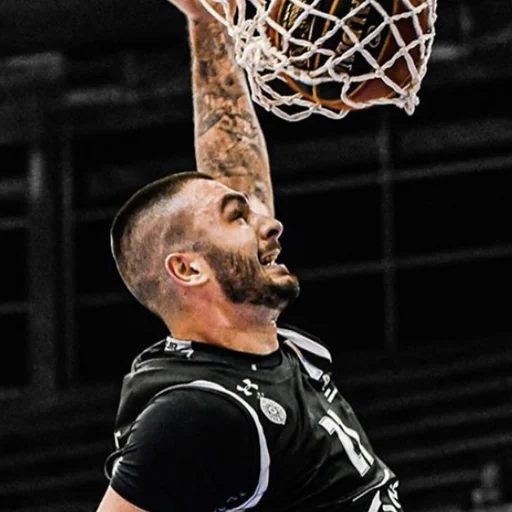
Nikola Janković
Co-founder · Former professional basketball player
Nikola Janković is a former professional basketball player — a 6'9" forward and the 2016–17 ABA League MVP — who played for Partizan, Union Olimpija and Mega, among others. Today he runs a pilates studio and gym focused on strength, mobility and overall wellbeing. He co-founded PUSHapp to make consistent, measurable training simple for everyone.