
Variations & Types
Weighted Pushups: Form, Load & Progressions
Learn weighted pushups with proper form, load placement, and progressive options to target chest, shoulders, and core.


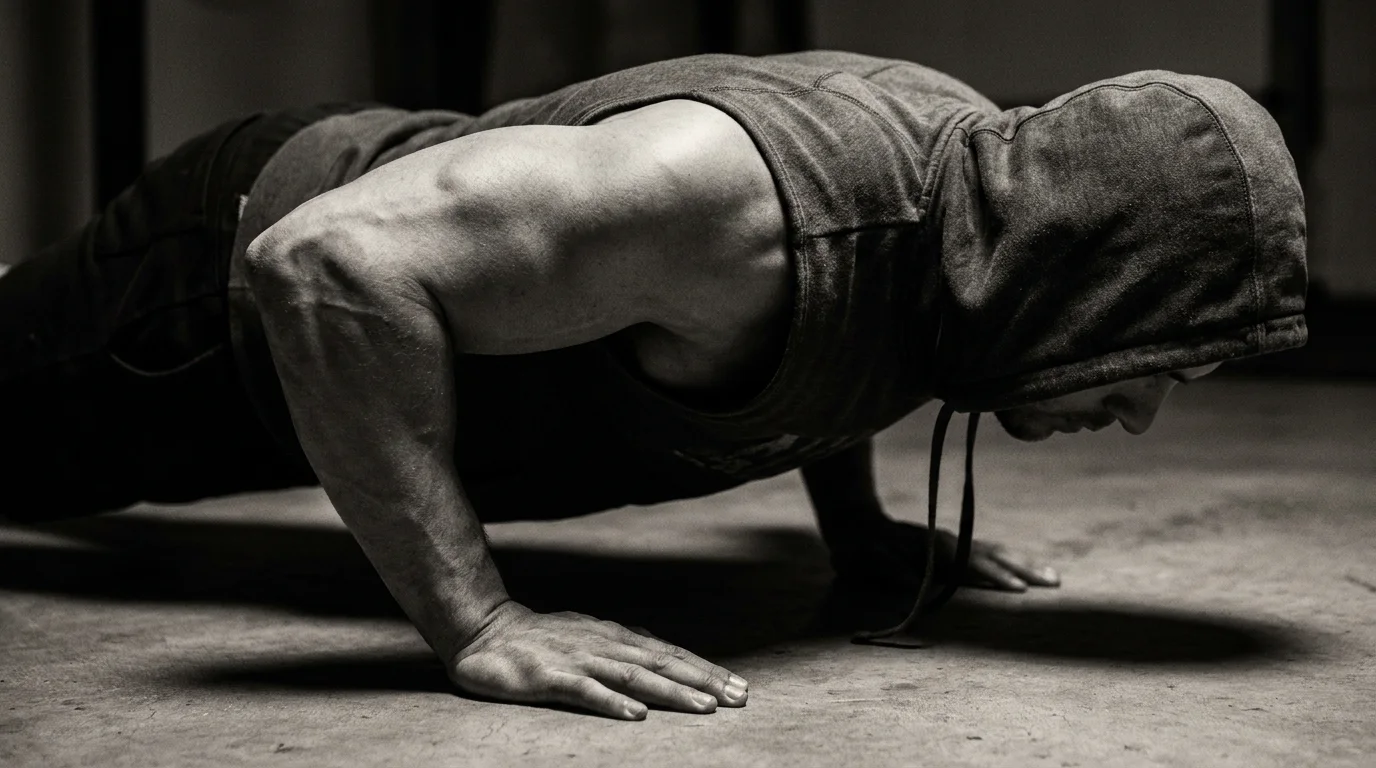
Weighted Pushups Technique: Form, Load Placement & Biomechanics
Technique fundamentals for weighted pushups
- Set hands slightly wider than shoulders; wrists neutral.
- Elbow position during pushups: tuck ~45 degrees from the torso as you lower.
- Scapulohumeral rhythm: let the shoulder blades glide apart on descent, then retract smoothly as you press; keep pace controlled.
- Core and hip alignment: brace the abdomen, keep a neutral spine, and level hips throughout; glutes lightly engaged.
Load placement: high-back vs low-back
- High-back load: plate rests on the upper back between the shoulder blades; lever favors chest and front shoulder work, with the torso remaining fairly stable.
- Low-back load: plate sits over the lumbar region; increases demand on core and hip stability, and may challenge maintaining a neutral pelvis.
Elbow position, scapulohumeral rhythm & core engagement
- Maintain 45-degree elbow tracking, avoid flaring; keep ribcage down and active through the core.
Real-time form checks and cues
- Pause briefly at the chest, not the floor; if form falters, reset and adjust load.
Progressions to Weighted Pushups: Load, Tempo & Safety
Starting points: foundations before loading
- Master form first: grip just outside shoulder width, elbows ~45°, core braced, hips in line, full chest-to-floor range.
- Tempo guidelines: descend 2–3 seconds, short bottom pause, press up 1–2 seconds.
Progression sequence: from bodyweight to weighted
- Bodyweight pushups: solid sets of 8–12 with clean technique.
- Band-resisted pushups: add a light band around the upper back or behind the hands; 3x6–10.
- Plates-on-back: place a light plate on the upper back; 3x5–8, stay level and control descent.
- Bands on plates: with plate secured, introduce a band to increase resistance through ROM; 3x5–8.
- Chains: add short chains over the back; 3x3–6, progress as you maintain form.
Load placement strategies and equipment
- Center the plate on the upper back; avoid neck pressure, keep weight off the wrists, and stay brace-focused.
Tempo, grip, and elbow angle safety
- Grip stable; elbows about 45–60° from the torso; respect the tempo and stop if form breaks.
Common Mistakes, Biomechanics Deep Dive & Variations
Common mistakes and quick fixes
- Hip misalignment common mistakes weighted pushups: hips sag or tilt; fix by bracing the core, squeezing glutes, and maintaining a straight line.
- Poor scapulohumeral rhythm: shoulders shrug or wings; fix by pulling shoulder blades down and together, then allow a subtle protraction at the top.
- Improper elbow angle: elbows flare or tuck; fix by keeping elbows about 45 degrees from the torso and wrists stacked under shoulders.
- Real-time hip alignment corrections: use a mirror or camera; cues: level hips, ribs down, neutral spine.
- How to perform weighted pushups with proper form: stay tight from heels to crown, control the descent, press evenly through both hands.
Biomechanical deep dive: scapulohumeral rhythm
- Scapulohumeral rhythm explained: the blades and humerus move together to maximize chest involvement and protect the joint.
- Load placement effects on biomechanics: plate on back vs plate on hip shifts stabilization demands and which muscles work hardest.
Real-time hip alignment corrections
- Quick cues: brace core, squeeze glutes, keep a straight line head-to-heels; avoid rotating hips.
Safety guidelines: grip, elbow angle, tempo
- Grip neutral, elbows ~45°, tempo controlled descent and press.
Related exercises and targets
- Band-resisted weighted pushups variations; add incline pushups and floor presses to target chest and shoulders.
Progress is easier to see when something logs the work for you. Compare your options in our roundup of the best push-up counter apps.
Frequently asked questions
How do you safely perform a weighted pushup with a plate on your back?
Set hands slightly wider than shoulders and brace your core with hips level and spine neutral. Place the plate on the upper back between the shoulder blades (or use a weight vest) and lower with control, pausing at the chest before pressing. If your form falters, back off to a lighter load.
Where should the weight be placed when doing weighted pushups (low back vs mid-back) and why?
High-back load rests on the upper back between the shoulder blades and tends to keep the torso more stable, emphasizing chest and front shoulders. Low-back load sits over the lumbar region, increasing core and hip stability demand and challenging pelvis control.
What progression should I use before attempting weighted pushups (band-resisted, incline, etc.)?
Master form with bodyweight first (8–12 reps). Then progress to band-resisted pushups, followed by plates-on-back (light plate, 3x5–8). Only after control and reps, add more resistance (bands on plates, chains) in small increments.
How much weight should I start with for weighted pushups and how should you progress?
Start with a light plate on the upper back or a light weight vest that you can control through the full set. Increase load only after you can complete a solid set with good form, then progress by adding reps, tempo, or range before adding more weight.
About the authors

Goran Huskić
Co-founder · Professional basketball player
Goran Huskić is a Serbian professional basketball player — a 6'11" center currently playing for Monbus Obradoiro in Spain's Primera FEB. He won the 2019–20 Basketball Champions League with San Pablo Burgos and has competed professionally across Spain, Germany, Lithuania, Serbia and the United States. He co-founded PUSHapp to bring pro-level training discipline to everyday workouts.

Nikola Janković
Co-founder · Former professional basketball player
Nikola Janković is a former professional basketball player — a 6'9" forward and the 2016–17 ABA League MVP — who played for Partizan, Union Olimpija and Mega, among others. Today he runs a pilates studio and gym focused on strength, mobility and overall wellbeing. He co-founded PUSHapp to make consistent, measurable training simple for everyone.