
Comparisons
Pushups vs Planks: Which Wins for Core Strength
Pushups vs planks: compare core strength, stability, and how to mix both into your routine for better upper-body fitness.


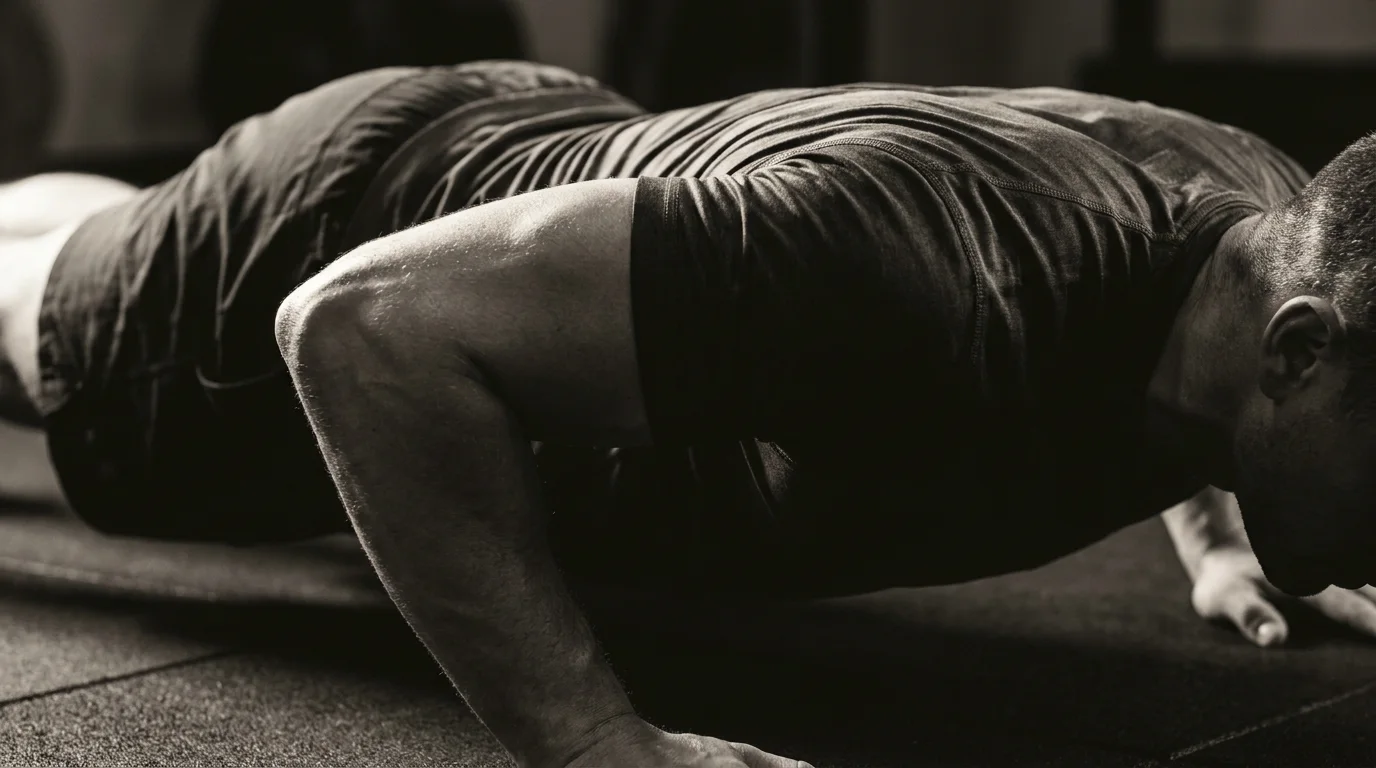
Pushups vs Planks: Understanding Neuromuscular Demands and Muscle Activation
Pushups vs planks place different demands on the nervous system and core muscles. Pushups load the movement dynamically, demanding anti-extension and anti-rotation as you press. Planks lock you into a stable position, building deep-brace and endurance in the core.
Which muscles fire in pushups vs planks?
- Pushups: Rectus abdominis helps brace the spine; transverse abdominis and obliques brace to prevent sagging and rotation; glutes and hip stabilizers assist with pelvic control; shoulder stabilizers keep the scapulae solid.
- Planks: Transverse abdominis and obliques do most of the bracing; rectus abdominis contracts isometrically; erector spinae and hip stabilizers support the torso; scapular stabilizers stay active.
Tempo and breathing cues (NASM-style)
- Pushups: tempo 2 seconds down, 0 pause, 1 second up, 0 pause; inhale down, exhale up.
- Planks: breathe steadily, exhale to reinforce bracing; how to do a plank: elbows under shoulders, body in a straight line, hips level.
- Plank variations subtly increase challenge to the stabilizers.
Programming Pushups and Planks: How to Integrate Them Across Populations
Population-specific progressions
- Beginners: use incline pushups and knee planks. How to do a plank: elbows under shoulders, forearms on the floor, ribs down, hips neutral. Plank hold duration starts at 15–20 seconds; progress by 5–10 seconds weekly. Back pain: if discomfort arises, switch to incline, reduce hold time, and consult a clinician if persists.
- Seniors: opt for wall or counter pushups and short holds, 10–20 seconds, with longer rest. Back pain: prefer seated or supported options.
- Athletes: move to standard pushups with a steady tempo (NASM-style cues) and plank holds 30–60 seconds; add progression like elevated feet or tempo 2-0-2-0.
Tempo, breathing, and cues for progressions
Pushups: inhale on the way down, exhale on the push. Maintain a braced core, rib cage down, and hips level. Plank: steady breathing, brace the core, keep hips neutral.
Weekly templates and example routines
Three sessions per week: Pushups 3x6–8 plus Planks 3x20–30s; progress to 3x8–12 and 3x30–45s over 4–6 weeks. These movements support core stability.
Practical Recommendations: Which Is Better for Core Strength and Overall Upper-Body Fitness
Direct comparisons and decision guide
- Which is better for core strength pushups or planks? In practice, both have a place. Pushups drive dynamic upper-body power and require core bracing during movement; planks build static spinal stability with minimal motion. Choose pushups when you want pressing strength and control through ROM; choose planks when you need steady core engagement with low spine load. Can planks replace pushups for upper body strength? Not fully—use plank variations alongside traditional pushups for balanced development.
- For back-pain prevention, prioritize neutral spine and gradual loading; planks or modified pushups tend to be gentler on the low back when done with proper form.
Hold durations and progression benchmarks
- How long should you hold a plank for beginners? Start around 15–20 seconds, 2–3 sets, and add 5–10 seconds weekly to reach 30–60 seconds per set. Progress to forearm to high planks and side planks as form stays solid. For pushups, build to 8–12 controlled reps with clean technique before adding reps or tempo.
Common mistakes and corrective cues
- Common cues: keep hips level, brace abs, and avoid shrugging shoulders. In planks, maintain a neutral neck and straight line from head to heels. In pushups, keep elbows at ~45 degrees and touch the chest lightly to the floor; use incline or incline-to-full progressions if needed.
Frequently asked questions
Which is better for core: pushups or planks?
Neither is strictly better—the two train the core in different ways: pushups require dynamic bracing during a movement, while planks build static spinal stability and endurance. Use both in a balanced week to cover pushing strength and steadier core control.
How long should you hold a plank?
Beginners start around 15–20 seconds, then add 5–10 seconds each week; athletes may aim for 30–60 seconds per hold. Choose a duration you can maintain with a neutral spine and steady bracing.
What muscles do planks work?
Planks mainly brace with the transverse abdominis and obliques, with the rectus abdominis contracting isometrically; erector spinae, hip stabilizers, and scapular stabilizers also help keep the torso solid.
Can planks help reduce lower back pain?
They can support a neutral spine and core endurance when loaded gradually with proper form; if pain occurs, switch to incline or shorter holds and consult a clinician if it persists.
About the authors

Goran Huskić
Co-founder · Professional basketball player
Goran Huskić is a Serbian professional basketball player — a 6'11" center currently playing for Monbus Obradoiro in Spain's Primera FEB. He won the 2019–20 Basketball Champions League with San Pablo Burgos and has competed professionally across Spain, Germany, Lithuania, Serbia and the United States. He co-founded PUSHapp to bring pro-level training discipline to everyday workouts.

Nikola Janković
Co-founder · Former professional basketball player
Nikola Janković is a former professional basketball player — a 6'9" forward and the 2016–17 ABA League MVP — who played for Partizan, Union Olimpija and Mega, among others. Today he runs a pilates studio and gym focused on strength, mobility and overall wellbeing. He co-founded PUSHapp to make consistent, measurable training simple for everyone.