
Comparisons
Pushups or Situps: Which Builds Core Strength?
Compare pushups or situps to decide which exercise best builds core strength, improves safety, and fits fitness tests.


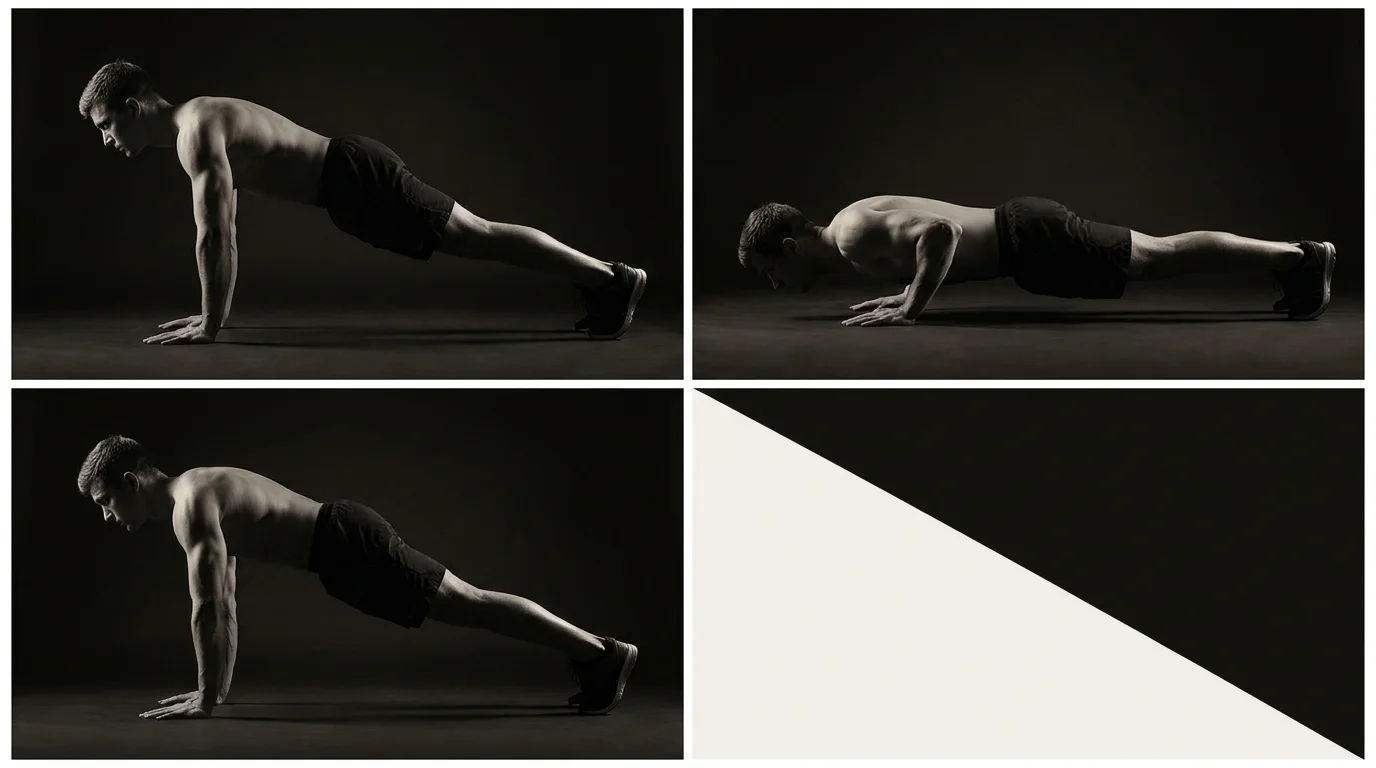
Core Strength Clash: Pushups vs Situps for the Spine, Safety, and Long‑Term Health
How pushups and situps train the core and spine
- Pushups load the core mainly as an isometric brace: rectus abdominis, obliques, and transverse abdominis stabilize the spine while the chest, shoulders, and triceps do the lifting.
- Situps recruit hip flexors and the rectus abdominis to curl the torso; the sit-ups benefits include stronger hip-to-torso control, but the movement increases spinal flexion load when executed with momentum or poor form.
Spinal load, back health, and age-related safety considerations
- Situps increase spinal flexion and may raise long‑term risk for sensitive backs; modify with bent knees or substitute core moves if needed. Older adults often benefit from braced planks or dead bugs rather than full situps.
- Pushups offer spinal neutrality when braced; risk comes from sagging hips or flared ribs. In the presidential fitness test push-ups, a knee-supported version is common—prioritize proper alignment.
Form cues and common mistakes to avoid
- Pushups: maintain a neutral spine, brace the core, elbows ~45 degrees, hips not sagging.
- Situps: don’t pull on the neck, cue with your ribs—not momentum, exhale on the lift.
Standards, Variations, and Alternatives: From Presidential Testing to Beyond Planks
Pushups or situps show up in many core-testing frameworks, including historical versions of the Presidential Fitness Test. Push-ups typically measure upper-body endurance and functional strength; sit-ups have been used to assess trunk endurance. Programs vary by year and by school or gym, so use these references as a guide, not a rule.
Presidential Fitness Test context: sit-ups vs push-ups
- Some eras favored sit-ups; others counted push-ups to gauge different aspects of core and upper-body stamina.
- Outcomes depend on the protocol, so check your current standard when planning.
Core moves beyond planks: dead bugs, hollow body holds, side planks
- Dead bugs: opposite arm and leg extend while the core stays braced.
- Hollow body holds: ribs down, lower back pressed, long neutral spine.
- Side planks: hold with stacked feet or knees; maintain a straight line.
Modifications for beginners and older adults
- Pushups: wall, incline, then knee progressions.
- Sit-ups: crunches or partial sit-ups; avoid full flexion as needed.
- Add variations with tempo, sets, and rest.
Decision Guide and a Progressive 4–6 Week Program
Decision framework by goal
- If your aim is core strength, which is better pushups or situps for core strength? Pushups load the torso in a stabilization pattern and recruit anti‑extension demands; situps target hip flexors and spinal flexion differently. Use pushups first, situps second, and balance with both over time.
- For endurance or fitness testing, emphasize higher reps with clean form.
- Safety for older adults: start with knee pushups and partial sit-ups; progress gradually and stop if pain or instability appears.
- Presidential fitness test sit-ups vs push-ups: follow the standard protocol to compare.
Week-by-week progression (4–6 weeks) integrating both moves
- Week 1–2: 3 sets; pushups 6–8 reps; situps 12–15 reps; 60–90s rest.
- Week 3–4: pushups 8–10; situps 15–18; add incline pushups or partial sit-ups if needed.
- Week 5–6: pushups 10–12; situps 18–22; tempo or an extra set.
- Progressive overload: gradually raise reps, add a set, or move to incline pushups to keep challenging the core.
Safety reminders
- Maintain a neutral spine, exhale on effort, stop if pain.
Tracking progress
- Log reps, sets, and any form notes.
Modification guidance
- Use knee or incline pushups; partial sit-ups or dead bugs as needed.
Frequently asked questions
Are sit-ups good for core strength?
Sit-ups train the rectus abdominis and hip flexors and can improve hip-to-torso control, but they place more spinal flexion load than pushups and emphasize momentum over anti‑extension stability.
Are push-ups or sit-ups better for overall fitness?
It depends on your goals: pushups train a braced, neutral-spine core and upper‑body endurance, while sit-ups emphasize hip flexors and spinal flexion. A balanced program that uses both with proper form tends to serve overall fitness.
Should I skip sit-ups in favor of planks for a stronger core?
Not necessarily; planks and other braced movements are great for spine neutrality, especially for aging or back-sensitive individuals. You can substitute planks, dead bugs, or similar anti‑extension moves for sit-ups while still training the core.
What is the Presidential Physical Fitness Test and what are its components?
The Presidential Fitness Test is a historical school program that used different protocols over the years, with versions that included push-ups or sit-ups to measure upper‑body or trunk endurance. The exact components vary by year, so check the current standard in use.
About the authors

Goran Huskić
Co-founder · Professional basketball player
Goran Huskić is a Serbian professional basketball player — a 6'11" center currently playing for Monbus Obradoiro in Spain's Primera FEB. He won the 2019–20 Basketball Champions League with San Pablo Burgos and has competed professionally across Spain, Germany, Lithuania, Serbia and the United States. He co-founded PUSHapp to bring pro-level training discipline to everyday workouts.

Nikola Janković
Co-founder · Former professional basketball player
Nikola Janković is a former professional basketball player — a 6'9" forward and the 2016–17 ABA League MVP — who played for Partizan, Union Olimpija and Mega, among others. Today he runs a pilates studio and gym focused on strength, mobility and overall wellbeing. He co-founded PUSHapp to make consistent, measurable training simple for everyone.