
Comparisons
Pushups or Pullups: Which Builds Upper-Body Better?
Compare pushups or pullups: learn proper form, grip width, progressions, and benefits for upper-body strength.


Pushups and Pullups: Movement Foundations, Muscles, and Form Principles
Both pushups and pullups hinge on scapular control, a full range of motion (ROM), and deliberate tempo. They recruit different muscle groups, but the core mechanics stay the same: move with control, maintain a solid spine, and respect your ROM.
Muscles Worked and Joint Angles
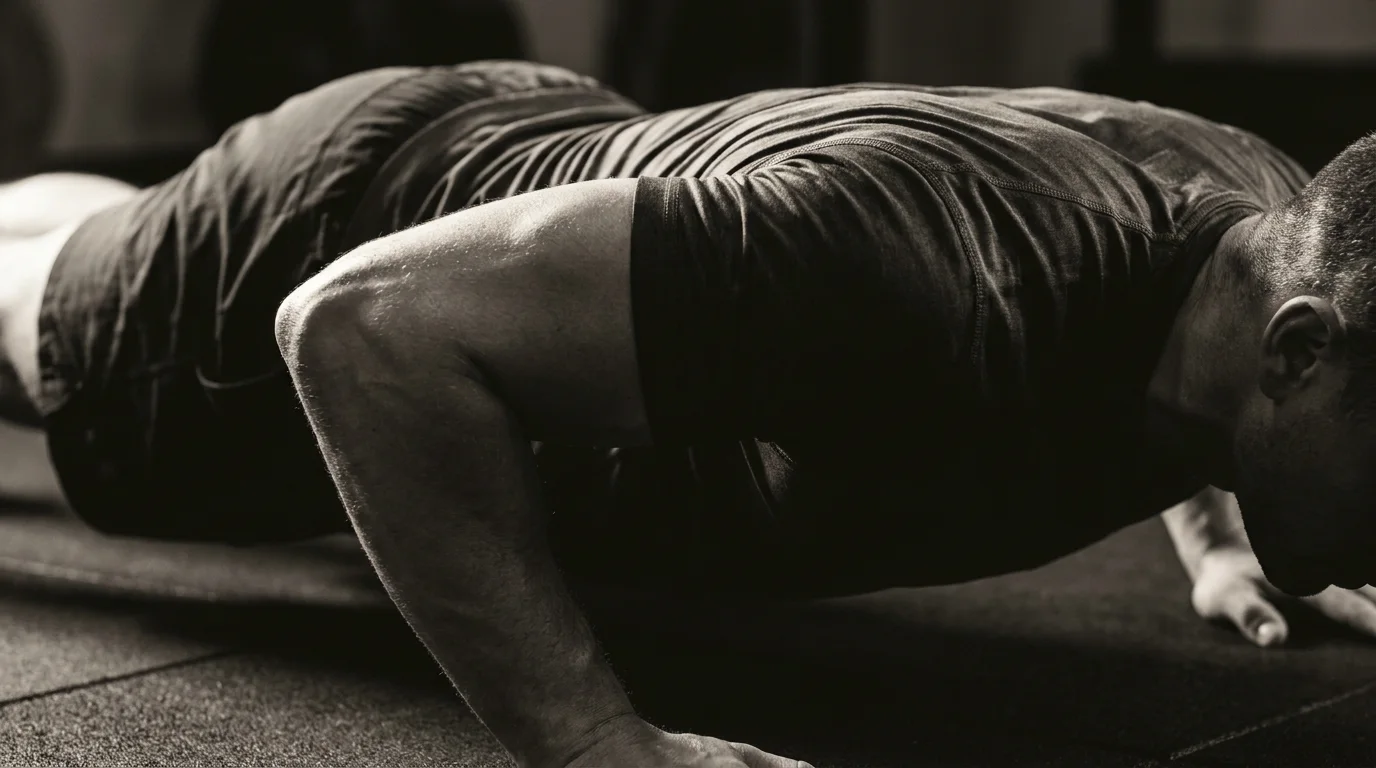
- Pushups train chest, front delts, and triceps; elbow angle around 45–60 degrees from the torso helps protect shoulders. In push-up form, keep the torso solid and the elbows tucked as you descend and press.
- Pullups target lats, biceps, and mid-back; use a grip that allows a full ROM with elbows bending enough to clear the chin. In pull-up form, initiate with the shoulder blades and finish with a full hip-to-chin range.
Tempo, Pauses, and Time Under Tension
- Use a controlled eccentric (lowering) and concentric (lifting) phase.
- Tempo examples: pushups 2-0-2-0; pullups 3-0-3-0.
- Brief pauses at bottom or top increase time under tension without derailing technique.
Scapular Control and Elbow Position
- Initiate movement from the scapula: depress and retract before pressing or pulling.
- In push-up form, elbows stay relatively close to the torso; in pull-up form, let the shoulders settle and the elbows track through a full ROM.
- Keep the spine steady and avoid shoulder shrugging during reps.
Technique, Variations, and Progressive Frameworks for All Levels
Push-Up Form: From Modified to Standard and Variations
Start with a modified push-up: hands on a bench or wall, body in a straight line, core tight, hips not sagging. Lower with control, elbows ~45 degrees, chest toward the surface. Press back up with a solid brace. Move to standard push-ups with grip width around shoulder-width; maintain the same line. For variations: incline, decline, tempo, and paused reps.
Pull-Up Form and Grip Width: Targeting Lats and Back
Grip width: start at shoulder-width or slightly wider. Use overhand grip, engage lats, brace core, and avoid swinging. Pull with the chest toward the bar, squeezing shoulder blades at the top. Range of motion: from a full dead hang to chin over bar when possible; band-assisted pull-ups help beginners.
Progressions: From Modified Push-Ups to Full Reps and From Band-Assisted to Unassisted
For push-ups, progress from modified push-ups to standard with consistent grip width; add tempo or variations as you master form. For pull-ups, begin with band-assisted pull-ups, then negatives and partial reps, gradually reducing band support until you can perform unassisted.
Decision-Making, Safety, and Programming: Which Is Right for You
Core Stability
Which is better for core stability? Both pushups and pullups require bracing, but pullups with a hollow-body cue tend to train anti-extension and midline control more directly. Pushups build a steady, full-body brace through the torso as you press and lower.
Shoulder Health, and Injury Considerations
Warm up shoulders, activate rotator cuffs, and keep scapular movement smooth. If you have pain or limited ROM, start with incline pushups or band-assisted pullups. Chin-ups can ease the loading of the pulling pattern, while kipping pull-ups are an advanced variant best saved for later.
Who Should Start with Pushups vs Pullups? Beginner Guidance
Beginners aiming for pushing strength usually start with incline or knee pushups; pullers often begin with inverted rows or band-assisted pullups to build habit and scapular control.
Sample 6- to 8-Week Progression Plans
- Pushups-first: incline pushups + ring rows (Weeks 1–2); progress to standard pushups with band-assisted pulls (Weeks 3–4); add tempo or small deficit reps (Weeks 5–6); finish with full pushups and unassisted pulls if possible (Weeks 7–8).
- Pullups-first: band-assisted pullups or inverted rows (Weeks 1–2); progress to strict chin-ups with negatives (Weeks 3–4); add reps and then blend in pushups for balance (Weeks 5–8).
Frequently asked questions
What is the proper depth for a push-up?
Lower with control until your elbows are about 45 degrees from your torso and your chest approaches the surface, then press back up with a solid brace. Keep your torso rigid and ribs down throughout the move.
How wide should my grip be for pull-ups?
Start at shoulder-width or slightly wider with an overhand grip, brace your core, and engage the lats as you pull, keeping the shoulders down and avoiding swinging.
Can I modify push-ups if I can't perform a full version?
Yes. Begin with a modified push-up on a bench or wall with a straight line, then progress to standard push-ups as your form improves; you can also use incline, tempo, or paused reps to build strength.
Which muscles do push-ups work and which do pull-ups work?
Push-ups primarily train the chest, front delts, and triceps; pull-ups primarily train the lats, mid-back, and biceps.
About the authors

Goran Huskić
Co-founder · Professional basketball player
Goran Huskić is a Serbian professional basketball player — a 6'11" center currently playing for Monbus Obradoiro in Spain's Primera FEB. He won the 2019–20 Basketball Champions League with San Pablo Burgos and has competed professionally across Spain, Germany, Lithuania, Serbia and the United States. He co-founded PUSHapp to bring pro-level training discipline to everyday workouts.

Nikola Janković
Co-founder · Former professional basketball player
Nikola Janković is a former professional basketball player — a 6'9" forward and the 2016–17 ABA League MVP — who played for Partizan, Union Olimpija and Mega, among others. Today he runs a pilates studio and gym focused on strength, mobility and overall wellbeing. He co-founded PUSHapp to make consistent, measurable training simple for everyone.