
Comparisons
Dips vs Pushups: Core Differences & Progression
Dips vs pushups: compare form, benefits, and progression to build balanced strength with bodyweight calisthenics.


Dips vs Pushups: Mechanics, Muscles, and Joint Demands
Muscle Activation and EMG Insights
- Dips on parallel bars emphasize pectoralis major and triceps; a forward lean increases chest involvement. EMG data often shows higher pec and triceps activity in dips than in many push-ups.
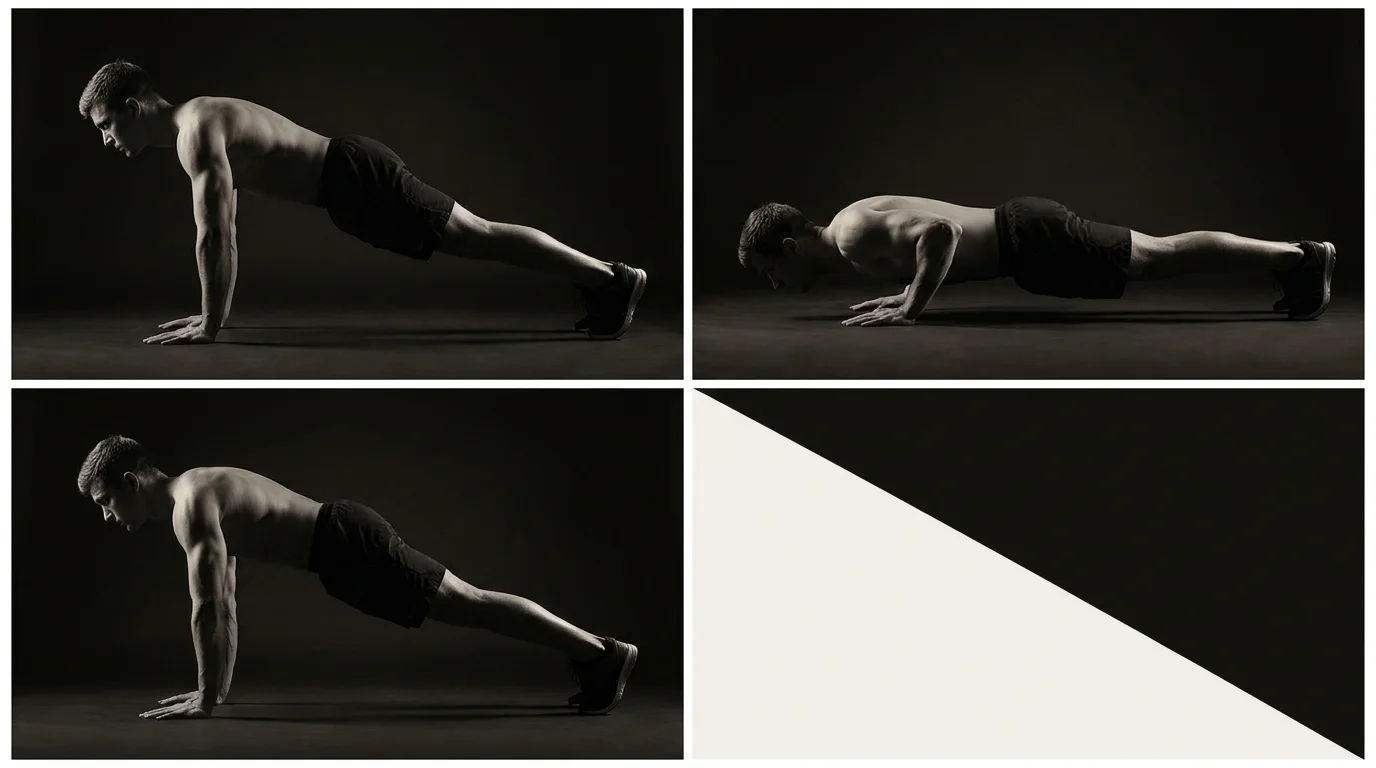
- Push-ups recruit a similar mover set but rely more on scapular stabilizers (serratus anterior, lower traps) to keep the shoulder blades stable. This is a staple calisthenics movement; hand position, elevation, and tempo tailor activation.
- Both moves demand solid scapular control to protect shoulder health; keep ribs braced and shoulders from hiking.
Shoulder Mechanics and Scapular Stability
- Dips: stay tall, depress the scapula, bend elbows to a controlled depth, and avoid excessive hip swing that could pinch.
- Push-ups: maintain a solid plank, gently pull the scapula toward the spine, and press through the floor with the hands under the shoulders.
Injury Risk and Joint Demands
- Dips: higher joint stress with deep depth or added weight; progress gradually with partial ROM and lighter loads.
- Push-ups: generally lower risk when form is solid; adjust hand width or elevate to reduce load if needed.
Progression Ladders: From Beginner to Advanced for Dips and Pushups
Beginner Foundations
- Knee incline pushups: 3x8–12, tempo 3-0-1-0, rest 60–90s. No-equipment option: wall pushups.
- Bench-assisted dips: 3x6–8, tempo 3-0-1-0, rest 90s. Minimal-equipment option: sturdy chair; no-equipment option: dip at a stable countertop edge.
From Pushups to Dips
- Prereqs: solid pushup form, scapular control, and comfortable elbow extension. These moves are bodyweight exercises you can do anywhere with minimal gear. This progression ladders approach helps you safely scale from pushups to dips.
- Technique: elbows tucked, lower with control, press through the chest.
Tempo-Driven Progressions
- Pushups: 3-0-1-0 to 2-0-2-0; 6–12 reps per set; rest 60–90s.
- Dips: 3-0-1-0 to 2-0-2-0; 6–12 reps per set; rest 90s.
Advanced Variations and Combination Drills
- Dip variations: bench dips with feet elevated; pushup variations: incline, standard, or declined pushups.
- Combination drills: pushup–dip supersets, 4 rounds, short rests.
Programming, Safety, and At-Home Sequencing for Balanced Calisthenics
Injury Prevention and Shoulder Care
- Start each session with a 5–7 minute warmup: arm circles, scapular push-ups, thoracic rotations, and glute bridges to prime the shoulders and trunk.
- Keep shoulder health in mind: pull the shoulder blades down and back, avoid shrugging, and maintain scapular control during every rep.
- Do not push through sharp pain; if load or range causes pain, dial back and progress with tempo or reps to manage injury risk.
- Finish with a 5–8 minute cooldown of chest/shoulder stretches and deliberate breathing.
Weekly Templates and Sequencing
- 3 days per week: Day A push-focused, Day B dip-focused, Day C mix with balanced sequencing and rests; progress with reps, tempo, or incline/decline variation.
- Use a simple pattern: aim for 2–3 progressive overload elements per week across the week.
Pushups and Dips Pairing in Workouts
- Begin with the warmup; pair on the same day after warmup; alternate which comes first, and rest 60–90 seconds between sets.
No-Equipment At-Home Options
- If no equipment, use incline pushups on a countertop or stairs; dips with two sturdy chairs only if safe; maintain scapular control; adapt with tempo and range in simple home workout templates.
Frequently asked questions
Are dips better than push-ups for targeting the chest or triceps?
Dips tend to load the chest and triceps more—especially the lower chest—with deeper ROM, while push-ups still work those muscles but emphasize core bracing and shoulder health. Neither is universally better; choose based on your goals and shoulders.
What are the proper push-up form cues to maximize benefit and minimize shoulder risk?
Keep your ribs braced, elbows at a comfortable angle, and a solid plank, then press through the floor with the hands under the shoulders and maintain scapular stability. Adjust hand position or elevation to modulate load and avoid shrugging.
How do I progress from knee or cheater push-ups to a full standard push-up?
Begin with incline push-ups to build control, then progress to standard push-ups as your scapular control and elbow extension improve. Move from partial ROM to full depth gradually, prioritizing technique over depth to reduce injury risk.
What are safe alternatives to dips if I have shoulder or elbow issues?
If you have shoulder or elbow concerns, use incline variations or ring rows and keep the range of motion tolerable. Avoid deep dips and excessive depth; prioritize technique and gradual progression.
About the authors

Goran Huskić
Co-founder · Professional basketball player
Goran Huskić is a Serbian professional basketball player — a 6'11" center currently playing for Monbus Obradoiro in Spain's Primera FEB. He won the 2019–20 Basketball Champions League with San Pablo Burgos and has competed professionally across Spain, Germany, Lithuania, Serbia and the United States. He co-founded PUSHapp to bring pro-level training discipline to everyday workouts.

Nikola Janković
Co-founder · Former professional basketball player
Nikola Janković is a former professional basketball player — a 6'9" forward and the 2016–17 ABA League MVP — who played for Partizan, Union Olimpija and Mega, among others. Today he runs a pilates studio and gym focused on strength, mobility and overall wellbeing. He co-founded PUSHapp to make consistent, measurable training simple for everyone.