
Comparisons
Bench Press vs Pushups: EMG, Strength, and Load
Compare bench press vs pushups: muscle activation, strength gains, load equivalence, sex differences, and practical programming guidance.


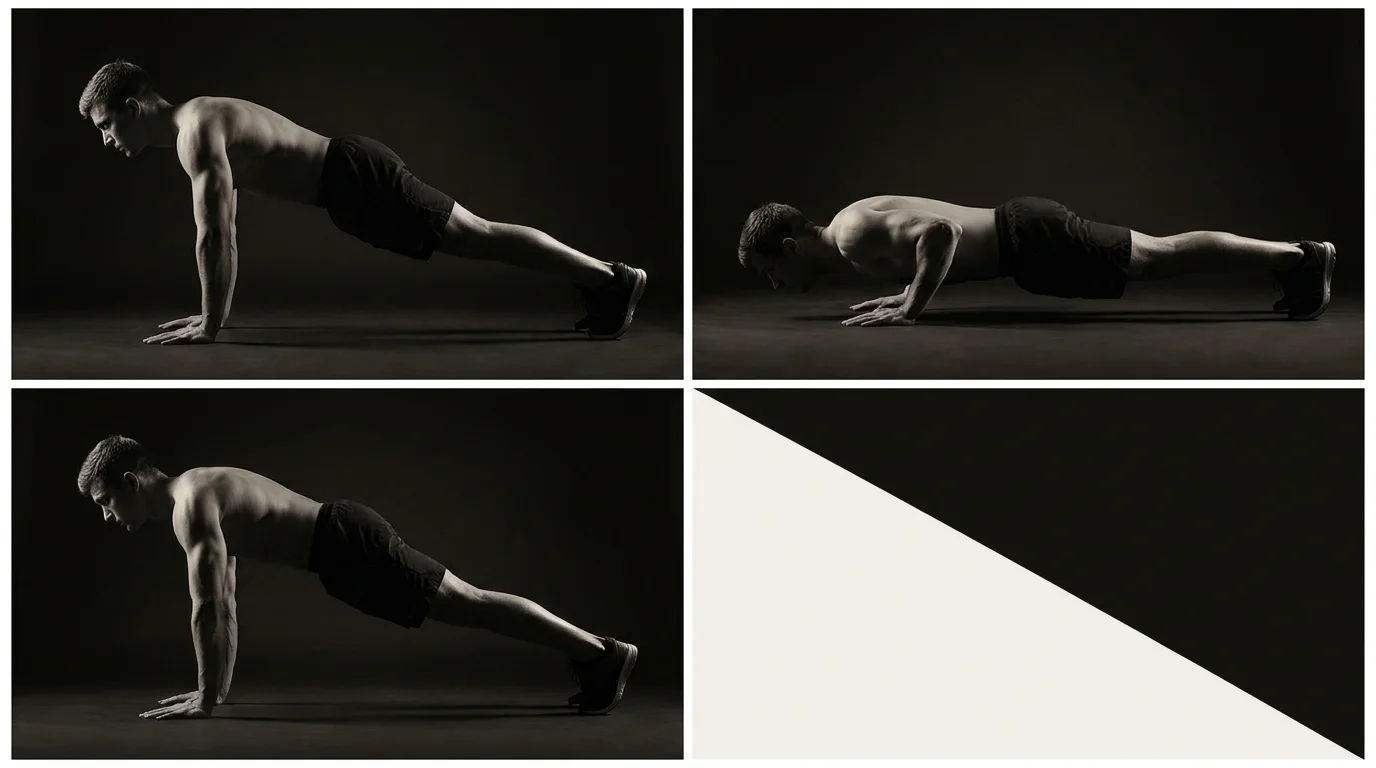
EMG and Muscle Activation: Bench Press vs Push-Ups Across Variations
Muscle-by-muscle activation patterns (PEC, anterior deltoid, triceps)
Bench press generally delivers strong pec major activation and substantial triceps work. Push-ups recruit the same muscles, but activation varies with form. Keep a solid brace and full ROM to maximize pec and deltoid engagement; narrower hand placements raise triceps involvement.
Effect of body angle: incline/decline and its impact on activation
Decline push-ups (feet up) tend to drive more upper-chest and anterior-deltoid involvement; incline push-ups ease the effort and shift less load to the upper chest. Elevating the feet increases overall demand, often boosting shoulder and triceps contribution.
Hand position and push-up variations on EMG
Wider hand positions emphasize chest activation; closer grips heighten triceps and inner chest engagement. Incline and decline tweaks help dial which chest region is emphasized.
Sex and training status as moderators of activation
Sex differences bench press vs pushups: when effort is matched, activation is similar across sexes, though absolute EMG can differ with muscle size. Training status matters: trained individuals recruit more efficiently and show steadier activation across variations.
Load Equivalence and Strength Gains: Matching Intensity Between Bench Press and Push-Ups
6RM-based load-matching framework
- Determine your 6RM bench press. Use that effort level to guide push-ups: aim for 6 reps at a similar RPE, using controlled tempo and short rests to keep effort aligned. If push-ups feel lighter, add load through modifications.
Using elastic resistance to approximate a 6RM push-up
- Use elastic band push-up load to approximate a 6RM push-up: anchor bands and add tension so six push-ups demand a comparable effort to your bench 6RM. Adjust band strength as you gain strength and recheck effort.
Interpreting EMG targets as intensity proxies
- When EMG targets align with bench press effort, view that as a proxy for similar muscle loading. Pair EMG clues with RPE and reps completed to judge intensity, not as a sole measure.
Limitations and methodological considerations in cross-over studies
- Cross-over designs can suffer from carryover and learning effects. Include washouts, randomize order, and maintain consistent technique to keep comparisons meaningful.
Programming Guidance and Sex/Training-Status Differences: Practical Guidance for Bench Press vs Push-Ups
Use bench press when you want maximal loading and clear, isolated strength targets; push-ups when you need portability, core engagement, and control. sex differences bench press vs pushups: absolute strength gaps exist, but the progression framework stays similar and coaching cues transfer across sexes. training status differences bench press push-ups: novices tolerate lower volumes and slower progressions; trained athletes handle higher loads and more variation. Plan with tempo and overload progression in mind.
Novice vs trained populations: tailoring volume and progression
- Frequency guidelines bench press push-ups: 2–3 sessions per week per movement for beginners; adjust upward gradually as technique solidifies.
- Start with 1–3 sets of 5–8 reps (bench) and 2–3 sets of 6–12 reps (push-ups); increase reps before adding load.
Tempo and tempo-based progression strategies
- Tempo: bench press 2-0-1-0; push-ups 2-0-1-0; slower eccentrics boost muscle activation and control.
- Use tempo changes to accumulate overload safely when you’re ready for progression.
Progression tools: bands, weights, variations, and periodization
- Add bands for accommodating resistance; progress to incline/decline variations or weighted push-ups and floor/board press variants.
- Periodize: linear for beginners, undulating for intermediates; cycle 6–8 weeks with clear load and rep targets.
Frequently asked questions
Do bench press and push-ups produce the same strength gains when EMG levels are matched?
Not necessarily. Even with matched EMG, bench presses enable higher absolute loads and a more stable core, which can drive different strength adaptations; use RIR/RPE to align effort, but expect different outcomes for strength vs endurance.
How can you estimate the load of a push-up relative to a bench press?
Use a 6RM-based approach: determine your bench press 6RM, then aim for roughly the same effort in push-ups (about 6 reps at a similar RPE); add load with a weighted vest or elevate your feet, and adjust incline/decline to match effort.
Are push-ups equivalent to bench press for overall upper-body strength gains?
They recruit similar muscles, but the outcomes aren’t identical: bench builds higher absolute strength with a stable core, while push-ups emphasize trunk and scapular control and endurance; use both for a balanced program.
What push-up variations change muscle activation compared to the bench press?
Decline push-ups increase upper-chest and front-shoulder activation; incline push-ups lower load and shift emphasis away from the upper chest. Wider hand placements emphasize the chest, while closer grips boost triceps involvement.
About the authors

Goran Huskić
Co-founder · Professional basketball player
Goran Huskić is a Serbian professional basketball player — a 6'11" center currently playing for Monbus Obradoiro in Spain's Primera FEB. He won the 2019–20 Basketball Champions League with San Pablo Burgos and has competed professionally across Spain, Germany, Lithuania, Serbia and the United States. He co-founded PUSHapp to bring pro-level training discipline to everyday workouts.

Nikola Janković
Co-founder · Former professional basketball player
Nikola Janković is a former professional basketball player — a 6'9" forward and the 2016–17 ABA League MVP — who played for Partizan, Union Olimpija and Mega, among others. Today he runs a pilates studio and gym focused on strength, mobility and overall wellbeing. He co-founded PUSHapp to make consistent, measurable training simple for everyone.