
Muscles & Benefits
One Arm Pushups Benefits: Muscles, Form, Progression
Discover the one arm pushups benefits, muscles targeted, safe progression, and tips to master unilateral push-ups with proper form.


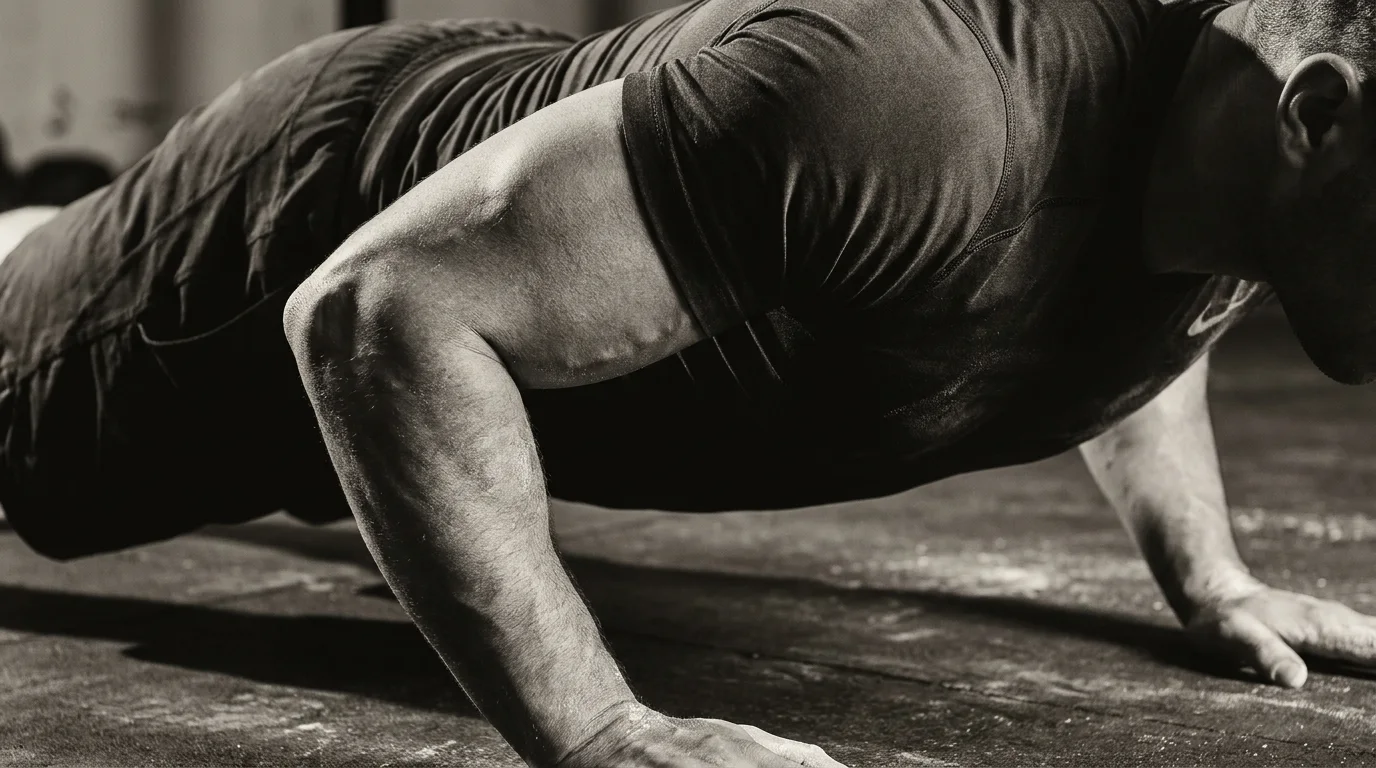
Muscle Targets and Benefits of One-Arm Push-Ups
Primary muscles worked
What muscles do one-arm push-ups target? The primary movers are:
- Pectoralis major (chest)
- Anterior deltoid (front shoulder)
- Triceps
- Serratus anterior (stabilizes the shoulder blade)
Secondary stabilizers and core engagement
- Obliques and transverse abdominis for anti-rotation
- Glutes and hip stabilizers to keep the spine aligned
- Scapular stabilizers to control the shoulder girdle
Unilateral loading vs two-arm push-ups
- Load is concentrated on one arm, increasing press demand and reducing assistance from the non-working side.
- The torso must resist rotation, boosting core stability benefits of unilateral push-ups and changing weight distribution.
Archer push-up as an intermediate progression
- Archer push-ups provide a controlled way to load one arm while the other extends to the side.
- They build unilateral strength, stability, and help with single-arm push-up progression toward a true one-arm push-up.
Form, Safety, and Progression to One-Arm Push-Ups
Starting from a standard push-up
Set a solid base: hands under shoulders, body in a straight line, core braced, glutes active. Keep the shoulder blades gently connected, elbows tucked to avoid flaring. Are one-arm push-ups safe for beginners? Not yet—start with standard push-ups, then progress to incline or archer-style variations before attempting the full version. To begin the one-arm path, place the working hand near midline and let the non-working arm extend out as you lower and press, keeping hips square. Use an elevated surface at first and gradually lower the height as control improves. Archer push-ups can bridge toward a true one-arm push-up, offering unilateral load and shoulder stability benefits while you build strength.
Tempo, time under tension, and eccentric focus
Use a deliberate tempo: down for 3 seconds, pause 0–1 second, push up in 1–2 seconds. Emphasize the eccentric (lowering) phase to build tolerance, then solid concentric control as you progress.
Scapular control, core engagement, and safe shoulders
Keep scapulae stable and ribs braced. Maintain a level pelvis and neutral gaze. If you feel instability, regress and rebuild.
Common mistakes and fixes
Sagging hips — tighten glutes and shorten range; elbow flares — tuck the elbow toward the ribcage; twisting — reset feet and hips, regain a square stance.
Structured Progressions, 4-Week Plan, and Accessory Exercises
Progression ladder: from knee/toe to one-arm
- Knee push-ups, bilateral, 3x8-12.
- Bias toward working arm: 3x6-10 on an incline or floor, non-working arm lightly supporting.
- Archer push-up progression: start with incline archer push-ups, progress toward flat-arms archer; benefits include improved unilateral strength and shoulder stability.
- Move to standard push-ups, 3x6-12, then assisted one-arm (non-working arm on a bench) 3x4-6 per side.
- Negative-only to full one-arm: 3x3-4 lowers, then 3x2-4 full reps.
4-week sample program (beginner, intermediate, advanced)
- Beginner: 3 days/wk. Weeks 1-2: knee bias 3x8; Weeks 3-4: incline two-arm 3x6-8 and assisted one-arm 3x4-6.
- Intermediate: 3 days/wk. Weeks 1-2: incline two-arm 4x6-8; Weeks 3-4: unilateral assisted 4x4-6; add tempo 2-0-2.
- Advanced: 4 days/wk. Weeks 1-2: standard push-ups 5x6-8; Weeks 3-4: archer push-ups 3x4-6; one-arm negatives 3x3-5.
Accessory work for shoulder health
- Rotator cuff: external/internal rotations with bands, 2x12.
- Anti-rotation: Pallof press, 2-3x8-10.
- Grip: farmer carries, plate pinches, 2x30-60s.
Programming notes: load distribution vs two-arm push-ups
- One-arm push-ups shift load to one side, stressing stabilizers and core. Progress gradually, prioritize form, and use tempo and assisted steps to balance load.
Frequently asked questions
What are the benefits of one-arm push-ups?
They increase loading on one arm, boosting unilateral strength and demanding greater core and shoulder stability for anti-rotation compared to two-arm push-ups.
How do you perform a one-arm push-up correctly and safely?
Brace the core, keep the spine long, and stack the working shoulder over the wrist; start on an elevated surface and progress gradually, warming up first and using a slow, controlled tempo, stopping if anything pinches.
Which muscles are activated during a one-arm push-up?
Primary movers are the pectoralis major, anterior deltoid, triceps, and serratus anterior; secondary stabilizers include the obliques, transverse abdominis, glutes, and scapular stabilizers.
How can I progress from regular push-ups to one-arm push-ups?
Build base strength with standard push-ups, then use incline or unilateral variations (like archer push-ups) to load one arm; gradually narrow the base and decrease support as control improves until a true one-arm push-up is possible.
About the authors

Goran Huskić
Co-founder · Professional basketball player
Goran Huskić is a Serbian professional basketball player — a 6'11" center currently playing for Monbus Obradoiro in Spain's Primera FEB. He won the 2019–20 Basketball Champions League with San Pablo Burgos and has competed professionally across Spain, Germany, Lithuania, Serbia and the United States. He co-founded PUSHapp to bring pro-level training discipline to everyday workouts.
Nikola Janković
Co-founder · Former professional basketball player
Nikola Janković is a former professional basketball player — a 6'9" forward and the 2016–17 ABA League MVP — who played for Partizan, Union Olimpija and Mega, among others. Today he runs a pilates studio and gym focused on strength, mobility and overall wellbeing. He co-founded PUSHapp to make consistent, measurable training simple for everyone.