
Muscles & Benefits
Archer Pushups Benefits: Unilateral Strength & Core
Discover the archer pushups benefits, from unilateral strength gains to core stability. Learn form, progressions, and common mistakes.

Archer Pushups 101: What They Are, What They Do, and Who Should Do Them
What makes an archer push-up unique?
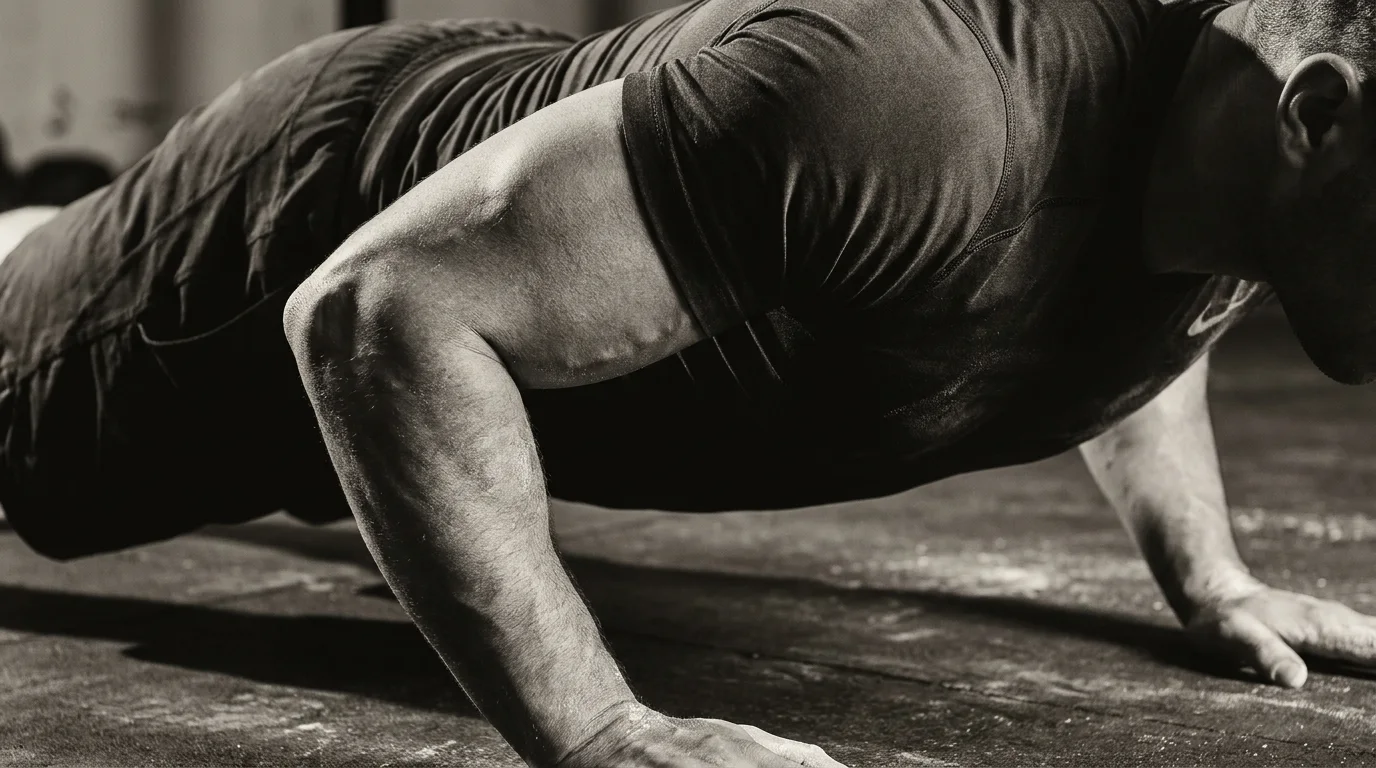
- An archer push-up is a push-up with one arm pulled back and the other extended to the side.
- The body leans toward the bent arm, loading the chest and shoulder on that side while the extended arm steadies you.
- This unilateral loading is the core difference and drives the training demand.
Muscles worked and overall benefits
- Archer push-up muscles worked center on the pushing side: pecs, especially the upper chest, front delt, and triceps.
- Secondary work includes the lat, serratus, and the core (obliques) for anti-rotation and stability.
- Archer pushups benefits include greater unilateral strength, improved core stability, and smoother transfer to real-world pushing and sports movements, while unilateral push-up benefits show up as better balance and shoulder control.
Who should start archers? prerequisites and suitability
- Prereqs: clean push-ups, solid core, and shoulder comfort; start with an incline or kneeling version.
- Progression: gradually reduce incline and increase depth; keep hips level and spine neutral. Stop if you feel sharp pain.
Form, Cues, and Safe Progression: Mastering the Archer Push-up
Prerequisites and setup
- Solid 30–60 second high plank with a neutral spine and braced core.
- Shoulder mobility and scapular control; pain-free wrists and elbows.
- Ability to perform a standard push-up with solid form.
- Set up with feet hip-width, hips square, and the working arm prepared to bear load while the opposite arm stays extended to the side. Use the archer push-up form steps as your guide: the working arm bends to push, the opposite arm stays extended and lightly engaged.
Key form cues and anti-rotation
- Brace the core, ribs down, hips level.
- Anti-rotation cue: imagine squeezing a ball between ribs and pelvis to keep torso square.
- Working elbow tucked about 90 degrees; extended arm active but not weight-bearing.
- Shoulders down, gaze neutral, exhale on the push.
Common mistakes and precise corrections
- Hips sag or twist: tighten abs, recheck stance, reduce range.
- Elbows flare out: tuck the elbow closer to the body.
- Shoulders rise: pull them away from the ears and press down.
- Not maintaining the extended arm: keep it lightly engaged, not bearing weight.
Progressions (incline to decline)
- Incline archer push-up progression: start with the working arm on a raised surface; maintain form, 4–6 reps.
- Move toward mid-depth, then to decline by elevating the feet as strength improves, always guarding anti-rotation cues.
- Finish with a controlled full archer push-up when stability and strength allow.
Programming Archer Push-Ups: Variations, Tempo, and How to Progress to a Single-Arm Push-Up
Rep schemes and progressive overload
How many archer push-ups should I do? Start with 3-4 sets of 5-8 reps per side, aiming for solid form. When you hit 12 reps per side cleanly, add a set or switch to a harder variation (lower incline or more reach). Track reps and push up by 1-2 each week over 2-3 sessions.
Tempo, pauses, and dropsets
Use a controlled tempo: descent 3 seconds, pause 1-2 seconds, press 1-2 seconds. Pauses boost strength. Finish a harder set with paused reps or partials to near-failure, then drop to an easier variation to complete the session.
Integrated programming and no-equipment progressions
No-equipment routes: incline archer push-ups (hands on a bench), negative archer push-ups, assisted archer push-ups with the non-working hand on a wall or box. To reach a single-arm, progress from incline archer to elevated archer, then controlled negative one-arm reps.
Upper chest emphasis with incline variants
For upper-chest bias, perform incline archer push-ups with hands on a higher platform, drive the chest upward, and finish with the working arm nearly extended while keeping the shoulder stable.
Frequently asked questions
What muscles do archer push-ups work?
They emphasize the pushing side—pecs (especially the upper chest), front delt, and triceps—with secondary work from the lat, serratus, and the oblique core for anti-rotation.
What are the benefits of archer push-ups?
They load each arm independently to boost unilateral strength, improve core stability and anti-rotation, and enhance shoulder control and balance for real-world pushing.
How do archer push-ups develop unilateral pressing strength?
By loading the working arm heavily while the opposite arm stays extended, you brace the core to keep the torso square and resist rotation, building stronger unilateral pushing and steadier posture.
How can I progress from regular push-ups to archer push-ups?
Ensure you can do solid push-ups with a braced core, start with incline archer progressions or kneeling versions. Gradually lower the incline and increase depth while keeping hips level and anti-rotation cues, and only advance when form is clean.
About the authors

Goran Huskić
Co-founder · Professional basketball player
Goran Huskić is a Serbian professional basketball player — a 6'11" center currently playing for Monbus Obradoiro in Spain's Primera FEB. He won the 2019–20 Basketball Champions League with San Pablo Burgos and has competed professionally across Spain, Germany, Lithuania, Serbia and the United States. He co-founded PUSHapp to bring pro-level training discipline to everyday workouts.
Nikola Janković
Co-founder · Former professional basketball player
Nikola Janković is a former professional basketball player — a 6'9" forward and the 2016–17 ABA League MVP — who played for Partizan, Union Olimpija and Mega, among others. Today he runs a pilates studio and gym focused on strength, mobility and overall wellbeing. He co-founded PUSHapp to make consistent, measurable training simple for everyone.