
Muscles & Benefits
Incline pushups muscles worked: form & muscles
Explore incline pushups muscles worked, including primary & secondary muscles, proper form, common mistakes, and progression toward full push-ups.


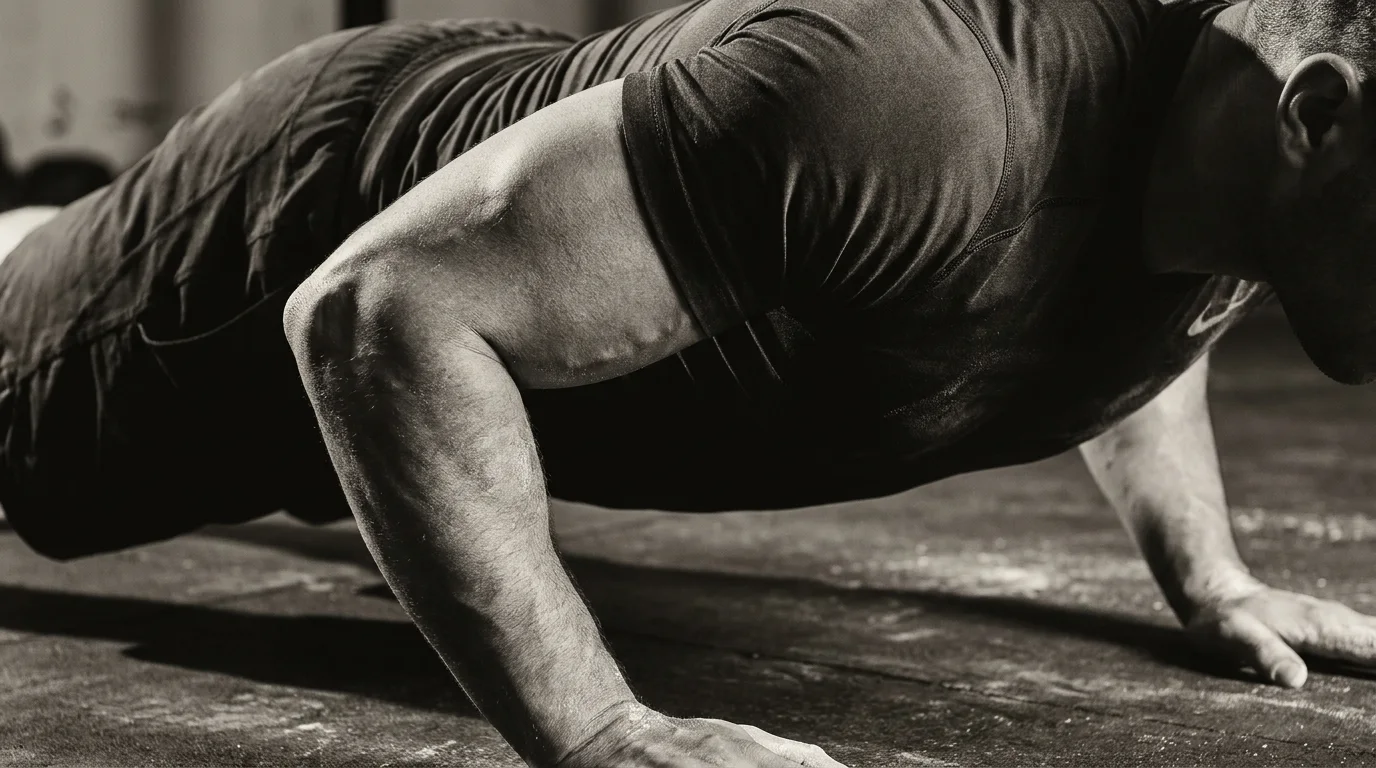
What muscles do incline pushups work? Primary and secondary muscles
Muscle groups and how incline angle shifts emphasis
- High incline (hands on a high surface, feet on the floor): chest activation decreases, while triceps brachii incline push-up and anterior deltoid incline push-up demand rise. Serratus anterior remains active to stabilize the scapula; core stabilization incline push-up helps maintain a straight line.
- Low incline (hands on a surface near floor): chest activation increases, particularly pectoralis major incline push-up fibers; triceps and anterior deltoid still work, and serratus anterior aids scapular control; core stays braced.
Primary vs secondary muscles
- Primary muscles: pectoralis major incline push-up, triceps brachii incline push-up, anterior deltoid incline push-up.
- Secondary muscles: serratus anterior incline push-up; core stabilization incline push-up; plus small stabilizers around the shoulder.
Angle-specific activation insights (high vs low incline)
- EMG patterns align with the angle: lower incline generally boosts pectoralis major activation, while higher incline emphasizes the triceps and anterior deltoid; serratus anterior and core stabilization stay engaged across angles.
How to perform incline pushups correctly: form, tempo, and breathing
Starting position and hand placement
- Set a bench at a height that keeps your body in a straight line from head to heels; higher means easier, lower means harder. This is bench height for incline push-ups.
- Place hands slightly wider than shoulder width, fingers forward; align wrists under shoulders.
- Step back to create a straight line; hips level, core tight, glutes engaged.
- Pinch your shoulder blades down and together just enough to stabilize the upper back.
Descent and ascent cues (tempo)
- Lower with control for 2–3 seconds, elbows tracking at about 45 degrees.
- Pause briefly at the bottom, then push up in 1–2 seconds.
- Maintain a rigid core and quiet neck; avoid sagging hips.
Breathing patterns and core brace
- Inhale during the descent; exhale as you press up.
- Brace the core as if bracing for a punch; ribs stay from flaring.
- Core stabilization incline-up requires hips and glutes to stay engaged.
Common mistakes and troubleshooting
- Hips droop or hike up: adjust bench height or tighten the core.
- Elbows flare excessively: bring them closer to 45 degrees.
- Hands too close or too high: reset hand position and scapular cue.
Progressions, equipment options, and modifications for accessibility and injuries
Milestones toward a full push-up
- Start with wall push-ups to build scapular control and core bracing.
- Move to a high incline push-up (hands on countertop) to reduce load.
- Progress to mid incline (bench at hip height) and then low incline (lower bench) toward a floor push-up.
Bench height ranges and equipment options
- High incline: wall or countertop (roughly 20–30 inches tall).
- Mid incline: sturdy bench or coffee table (about 18–22 inches).
- Low incline: lower bench or step (roughly 12–16 inches).
- Equipment alternatives incline push-ups: adjustable-height platforms, two stacked benches, sturdy desks, or blocks. Core stabilization matters: brace the abs and glutes to maintain a straight line. Note that higher incline favors shoulder load; lower incline increases chest activation.
Injury-ready variations and accessibility
- Modifications: wall or countertop incline, partial range, or knee-supported push-ups.
- Safety cues: elbows at ~45 degrees, scapular set, neutral spine, and a controlled tempo (no sagging).
- If pain appears, pause and revert to a safer incline or reduce depth.
Sample rep schemes for goals
- Beginners: 2–3x6–8; progress to 3x8–12 as you improve.
- Building strength: 3–4x6–10; gradually lower incline.
- Endurance: 4x12–15 on a comfortable incline, then inch toward a lower surface.
Frequently asked questions
What muscles do incline pushups work?
Primary muscles: pectoralis major, triceps brachii, and anterior deltoid. Secondary muscles include serratus anterior and core stabilizers; the emphasis shifts with incline angle.
How do incline pushups compare to standard push-ups in difficulty?
Incline pushups are scalable: a higher incline is easier, a lower incline is harder. Lower surfaces increase chest activation and bring the effort closer to a floor push-up.
When should I progress from incline push-ups to full push-ups?
Follow a stepwise progression: start with wall push-ups, then high incline, then mid incline, then low incline. Progress to a floor push-up when you can maintain form and a straight body line.
What are common mistakes in incline push-ups and how can I fix them?
Common mistakes include hips sagging or hiking, and elbows flaring. Fix by bracing the core and glutes, keeping elbows about 45 degrees, and resetting hand placement to maintain a straight line.
About the authors

Goran Huskić
Co-founder · Professional basketball player
Goran Huskić is a Serbian professional basketball player — a 6'11" center currently playing for Monbus Obradoiro in Spain's Primera FEB. He won the 2019–20 Basketball Champions League with San Pablo Burgos and has competed professionally across Spain, Germany, Lithuania, Serbia and the United States. He co-founded PUSHapp to bring pro-level training discipline to everyday workouts.
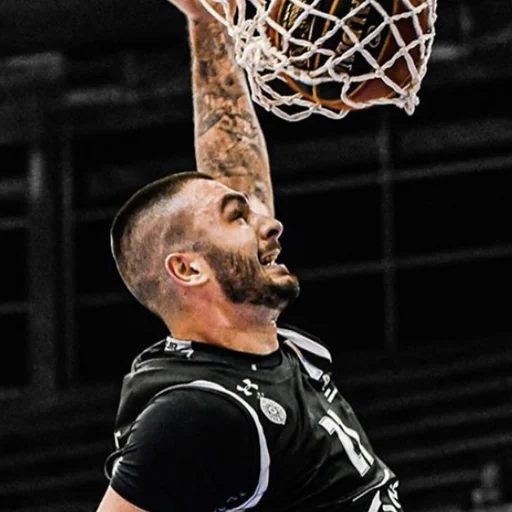
Nikola Janković
Co-founder · Former professional basketball player
Nikola Janković is a former professional basketball player — a 6'9" forward and the 2016–17 ABA League MVP — who played for Partizan, Union Olimpija and Mega, among others. Today he runs a pilates studio and gym focused on strength, mobility and overall wellbeing. He co-founded PUSHapp to make consistent, measurable training simple for everyone.