
Muscles & Benefits
Pushups Benefits for Women: Full-Body Strength Guide
Explore pushups benefits for women: full-body engagement, form tips, and beginner-to-advanced progressions for safer, effective workouts.


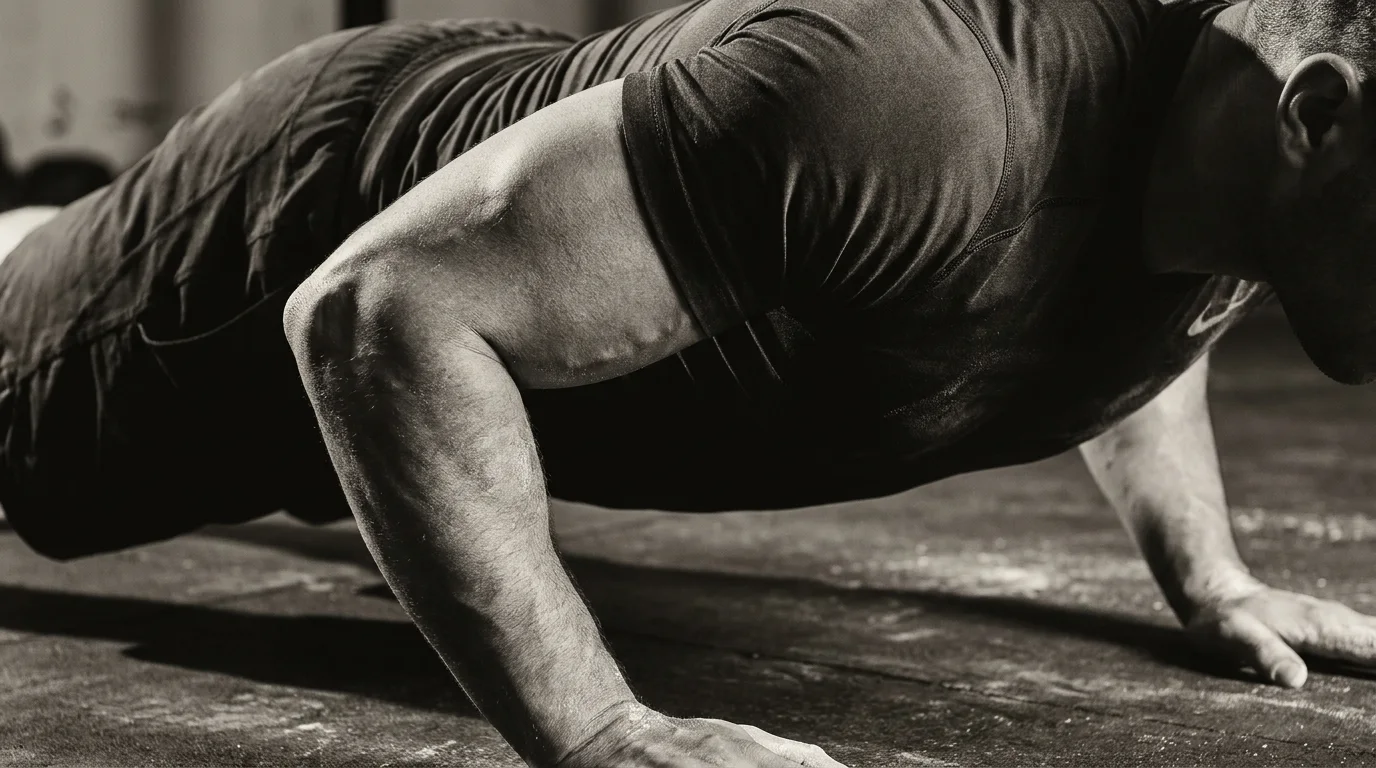
Pushups Benefits for Women: Full-Body Fitness, Pelvic Floor Health, and Safety
What muscles you work with standard push-ups
- Chest, shoulders, and triceps drive the press.
- Core and glutes brace to keep a solid plank.
- Legs stay engaged to help hips stay stable and transfer force.
Gender-specific considerations: pelvic floor and diastasis
- Brace the pelvic floor and exhale on the press to avoid bearing down.
- If you have diastasis, keep the core stable and progress from incline or knee push-ups.
- For pregnancy modifications, use incline or wall push-ups and shorter range as needed.
Safety for osteoporosis and shoulder mobility
- With osteoporosis risk, start elevated and progress gradually; stay within comfortable load.
- Protect shoulder health: warm up shoulders, keep elbows about 45 degrees, and retract the shoulder blades.
- No-equipment push-ups work well, especially with incline variations; this aligns with best push-up variations for women.
Progressions, Modifications, and Overload: From Beginner to Advanced Push-Ups
Beginner version and progression
- Incline push-up: 3x6–8, 2–3 days/week.
- Move to knee push-ups: 3x6–10.
- Then standard push-ups: 3x5–12 with slow descent (2s) and solid press. Rest 60–90s.
- How to do pushups correctly for women: hands under shoulders, elbows ~45°, hips neutral, core braced; breath in on descent, out on push; if wrists bother, adjust incline or use handles.
Mid-level variations and technique focus
- Diamond push-up: 3x6–10; wide push-up: 3x8–12; Pike push-up: 3x5–8. Switch when current variation feels easy for 2 weeks.
- In practice, the best push-up variations for women blend incline, diamond, and wide forms to balance chest, shoulders, and triceps.
- Cue: maintain a neutral spine, ribs in, and a tight core.
Advanced variations and when to scale
- One-arm push-up: 3x3–6 per side (start assisted); switch when you can perform 4–6 reps per side cleanly for 2 weeks.
- Overload: add 1–2 reps per week or one extra set every 2 weeks; frequency 3 days/week; rest 2–3 min.
At-Home, No-Equipment Ready: Warm-Up, Mobility, and a Balanced Push-Up-Centric Routine
Structured warm-up for push-ups
- 5–7 minutes: march in place, arm circles, scapular wall slides
- 6 thoracic twists (3 each side) and hip hinges
- 1 minute of light core activation (dead bugs or marching planks)
Mobility and stability sequence
- 8 scapular push-ups against wall or floor
- Front planks 20–30 seconds; side planks 20–30 seconds each side
- Quadruped contralateral arm/leg reach; 6 per side
- Glute bridge 10–12 reps
Sample 4-week at-home routine
- Week 1–2: 3 days/wk; incline or knee push-ups 3x8–10; 2 core sets; 5 minutes mobility
- Week 3–4: add standard push-ups 3x6–8; 2 antagonist sets (towel-assisted rows or doorway pulls) 2x8; cooldown
Progress tracking and motivation: log reps and pain, note weekly gains, and pair with a workout buddy or fixed schedule. For osteoporosis safety, avoid deep push-ups and consult a clinician if joints feel unstable.
Frequently asked questions
What muscles do push-ups work?
They primarily target the chest, shoulders, and triceps. The core and glutes brace to keep a solid plank, and the legs stay engaged to stabilize the hips and transfer force.
How do you perform a push-up with proper form?
Place your hands under your shoulders with elbows about 45 degrees from your body, keep a neutral spine, and brace the core from feet to head. Lower with control and press up, exhaling on the push; if wrists bother you, use an incline or handles.
How can I modify push-ups for beginners?
Start with incline or wall push-ups, then progress to knee push-ups, and finally to standard push-ups. Use this progression: incline 3x6–8, knee push-ups 3x6–10, then standard push-ups 3x5–12 with a slow 2-second descent.
Are push-ups beneficial for women's fitness specifically?
Yes. They support full-body strength, posture, and pelvic floor health, with gender-specific guidance on biomechanics and safe progression for osteoporosis or diastasis, using incline or wall modifications when needed.
About the authors

Goran Huskić
Co-founder · Professional basketball player
Goran Huskić is a Serbian professional basketball player — a 6'11" center currently playing for Monbus Obradoiro in Spain's Primera FEB. He won the 2019–20 Basketball Champions League with San Pablo Burgos and has competed professionally across Spain, Germany, Lithuania, Serbia and the United States. He co-founded PUSHapp to bring pro-level training discipline to everyday workouts.

Nikola Janković
Co-founder · Former professional basketball player
Nikola Janković is a former professional basketball player — a 6'9" forward and the 2016–17 ABA League MVP — who played for Partizan, Union Olimpija and Mega, among others. Today he runs a pilates studio and gym focused on strength, mobility and overall wellbeing. He co-founded PUSHapp to make consistent, measurable training simple for everyone.