
Muscles & Benefits
Wall Pushups Benefits: Strength & Low-Impact Workout
Discover wall pushups benefits for a stronger upper body with low impact. Learn proper form, beginner-friendly progressions, and variations.


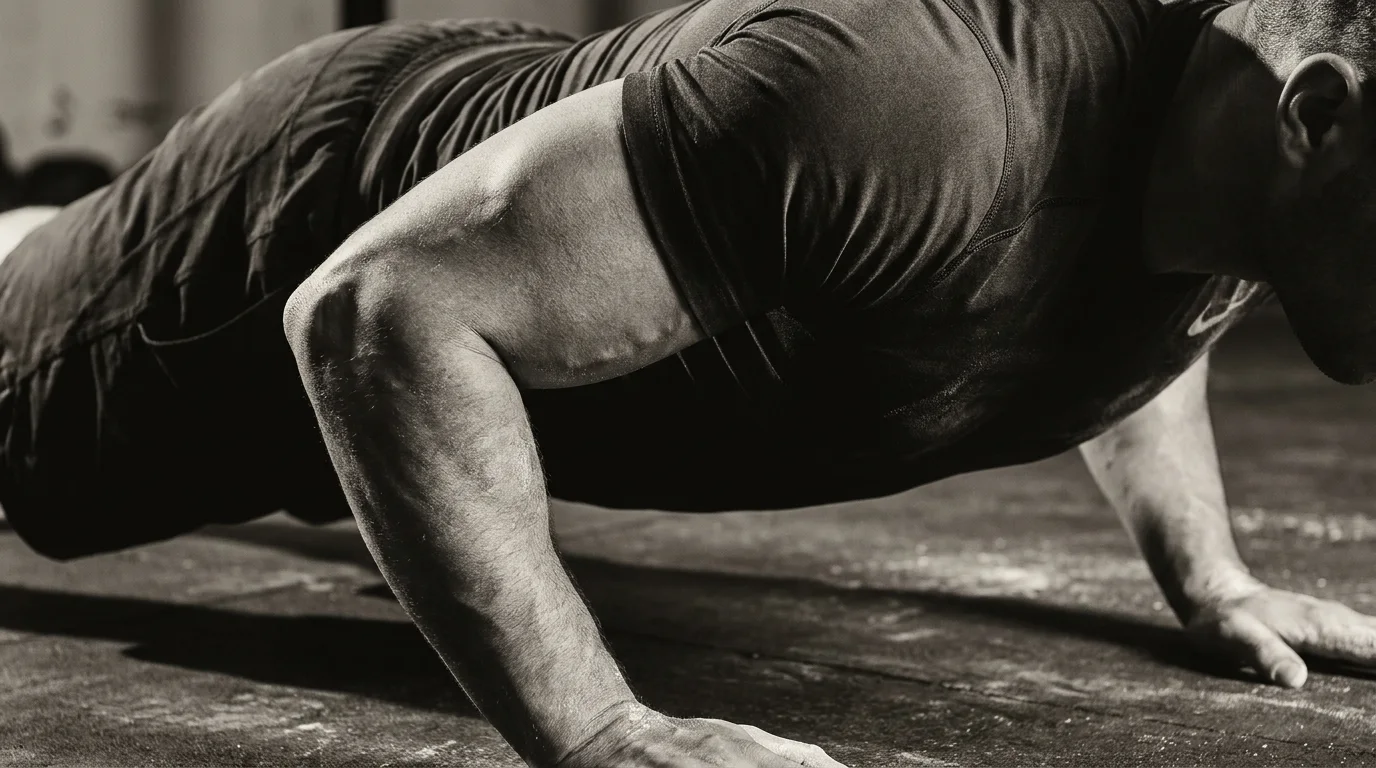
What wall pushups are, how they work, and their benefits
Definition and biomechanics
Stand about an arm’s length from a wall. Place hands on the wall at chest height, directly under the shoulders. Step one foot back to create a slight angle, then align your body in a straight line from head to heels. Brace the core. Inhale as you bend the elbows to lower the chest toward the wall, keeping elbows at about 45 degrees. Exhale to press back to the start. Wall pushups predominantly train the chest, front shoulders, and triceps, with the core and glutes stabilizing.
Benefits overview
What are the benefits of wall pushups? They build pressing strength with a low-impact setup, and they tend to spare the wrists and lower back while still engaging the upper body.
Evidence-based comparison: joint impact vs incline vs standard pushups
Wall pushups typically place the least joint load, making them easiest. Incline pushups increase the challenge gradually, and standard pushups place the greatest demand on shoulders, chest, and core.
Who should consider wall pushups
Best for beginners, rehab-focused athletes, or anyone easing into pushups—especially when shoulder comfort and form matter.
Technique, cues, and a guided progression from beginner to advanced
Initial technique cues
- To learn how to do a wall pushup correctly, stand about an arm’s length from a sturdy wall, feet hip-width, hands on the wall at chest height, shoulder-width apart, with a slight elbow bend.
- Scapular depression cues: pull the shoulder blades down and toward the spine before you press, keeping the upper back stable.
- Core engagement cues: brace the core, lightly engage the glutes, maintain a neutral pelvis and spine.
- Movement rhythm: inhale to lower to about 30–45 degrees, exhale to press back. Tempo guidelines: 2s down, 2s up (adjust as you progress).
Weekly progression timeline (weeks 1–8+): reps, sets, and movement complexity
- Weeks 1–2: 3×6–10, wall distance ~1–2 ft, tempo 2s down, 2s up.
- Weeks 3–4: 3×8–12, distance ~2–3 ft, tempo 2s down, 1s pause, 2s up.
- Weeks 5–6: 4×8–12, distance ~3–4 ft, tempo 3s down, 3s up.
- Weeks 7–8+: 4×6–12; options include progressing to a lower surface for a greater lean or adding a knee-modified pushup as part of wall pushups progressions for beginners; consider how to do a wall pushup correctly with tempo guidelines.
Common mistakes and fixes (pelvis tilt, elbow flare, core disengagement)
- Pelvis tilt: brace and set a neutral pelvis before each rep.
- Elbow flare: keep elbows at about 45 degrees to the torso.
- Core disengagement: maintain ribcage stability and glute tension.
Shoulder pain considerations and contraindications
- If pain occurs, adjust distance to wall, slow the tempo, or switch to a higher surface. Stop with sharp pain or instability.
Integrating wall pushups into full-body routines: variations, tempo, and sample workouts
Variations without equipment
- Hand placement: try standard shoulder-width, then narrow to emphasize triceps, or wide to target the chest.
- One-arm wall pushups: perform with one hand on the wall, switching sides after each set.
- One-leg wall pushups: lift one leg off the ground to increase load and challenge balance.
- Feet on wall: place your feet on a wall to raise your body angle and increase difficulty while maintaining a controlled pace.
Tempo and rep schemes for different goals
- Endurance: 12–20 reps with a steady tempo (3-0-1-0); rest 30–60 seconds.
- Strength: 6–12 reps, faster on the ascent but controlled (2-0-2-0); rest 60–90 seconds.
- Mobility/shoulder mobility focus: 6–10 reps, slower descent (4-0-3-0); emphasize full range and respiration.
Sample full-body workouts
- Beginner: 3 rounds — wall pushups 8–12; bodyweight squats 12–15; glute bridges 12–15; plank 20–30s.
- Intermediate: 4 rounds — wall pushups 12–15; reverse lunges 10 per leg; step-ups 8 per leg; side plank 20–30s per side.
- Advanced: 5 rounds — wall pushups on feet-on-wall 12–15; walking lunges 12 per leg; glute bridges with pulse 15; plank with shoulder taps 20.
Frequently asked questions
What are wall pushups and how do they work?
Wall pushups are a low-load pressing exercise performed from a wall. Stand about an arm’s length away with your hands at chest height under your shoulders, brace your core, bend your elbows to lower toward the wall, then press back using your chest and arms.
What are the benefits of wall pushups?
They build upper-body pressing strength with low impact on the spine and wrists, and they train the chest, front shoulders, and triceps while stabilizing the core.
How do wall pushups compare to incline and standard pushups in terms of joint load?
Wall pushups place the least joint load, making them the easiest progression; incline pushups are tougher, and standard pushups place the greatest demand on the shoulders, chest, and core.
Who should consider wall pushups?
Best for beginners, rehab-focused athletes, or anyone easing into pushups where shoulder comfort and form matter.
About the authors

Goran Huskić
Co-founder · Professional basketball player
Goran Huskić is a Serbian professional basketball player — a 6'11" center currently playing for Monbus Obradoiro in Spain's Primera FEB. He won the 2019–20 Basketball Champions League with San Pablo Burgos and has competed professionally across Spain, Germany, Lithuania, Serbia and the United States. He co-founded PUSHapp to bring pro-level training discipline to everyday workouts.

Nikola Janković
Co-founder · Former professional basketball player
Nikola Janković is a former professional basketball player — a 6'9" forward and the 2016–17 ABA League MVP — who played for Partizan, Union Olimpija and Mega, among others. Today he runs a pilates studio and gym focused on strength, mobility and overall wellbeing. He co-founded PUSHapp to make consistent, measurable training simple for everyone.