
Muscles & Benefits
Pushups for Mass: Build Muscle with Bodyweight
Discover how pushups for mass can drive hypertrophy, compare to bench press, and learn progressive overload and PUP tricks for growth.


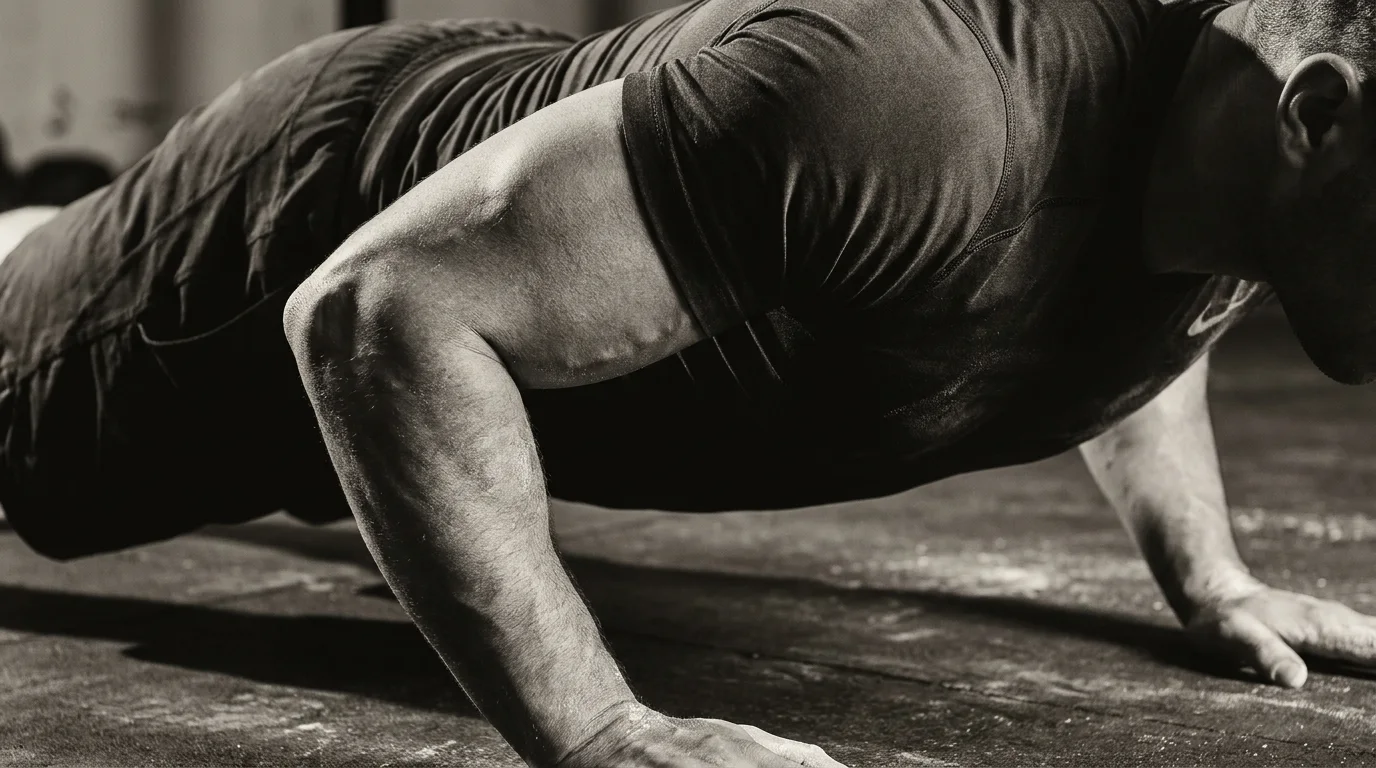
Can pushups build muscle mass? Hypertrophy mechanics, load, and the 40% rule
Understanding load in push-ups vs bench press
- In a bench press, load is a precise percentage of your 1RM. In push-ups, load comes from your bodyweight and any added resistance. To increase load, use a weighted vest, elevate your feet, or switch to narrower or wider hand positions. Start with a low-load push-up (or knee/incline variants) and progress.
40% of 1RM: what it means for bodyweight training
- The 40% of 1RM rule is a barbell guideline. It doesn’t map neatly to calisthenics push-ups. For hypertrophy, focus on near-failure sets in the 6–12 rep range, or use progressive overload bodyweight with more reps, sets, or harder variations. If you can crank out many reps, add load or tempo to keep the stimulus.
Tempo and time under tension for hypertrophy
- Slow down the tempo to boost time under tension: 3 seconds down, 1 second up, with a 1–2 second pause at the bottom. Do pushups for mass with 2–4 sets, leaving a couple of reps in reserve, and rest 60–120 seconds between sets.
Progression and programming: PUP, tempo, and time under tension for hypertrophy
PUP (Push-Up Progression)–based progression levels
- Level 1: Wall push-up or incline push-up; focus on scapular stability and elbow tracking.
- Level 2: Knee push-up; maintain a straight line from head to hips.
- Level 3: Standard push-up; controlled tempo with moderate depth.
- Level 4: Feet-elevated push-up or slow-tempo push-ups to boost time under tension.
- Level 5: Advanced calisthenics push-ups (e.g., gradual difficulty steps) only after solid form at Level 4.
Tempo and time under tension protocols
- Protocol A: 2-0-2-0 tempo; 3-4 sets of 6-12 reps; aim for 20-40 seconds of work per set.
- Protocol B: 3-1-2-0 tempo; add a 1-second bottom pause for stability.
Scapular stability and elbow tracking
- Retract and depress the scapulae; brace the rib cage.
- Elbows track close to the torso; avoid flaring.
- Maintain scapular control throughout descent and ascent to protect joints.
Variations, targeting, and mass-focused programming: chest, shoulders, triceps, and back
Variation sequencing for muscle groups
- Chest bias: wide-grip push-ups, then decline push-ups to emphasize the upper chest, with controlled tempo.
- Shoulders bias: pike push-ups or elevated-hand variations to increase shoulder load.
- Triceps bias: close-grip or diamond push-ups, tempo 3-0-1-0 to stress elbow extension.
- Back emphasis: scapular push-ups to train retraction, and paused push-ups with a focus on keeping the shoulder blades set.
Push-ups vs bench press for mass
Both move mass when you apply progressive overload. The bench press can tolerate heavier loads, but push-ups train ROM and muscular endurance with bodyweight. Use a rough guide: aim around 40% of your 1RM bench press load when selecting a challenging push-up variation, and progress by tempo, range of motion, or added resistance (vest, bands).
Measurement and recovery for push-ups
Train 2–4 times weekly with at least 48 hours between hard sessions. Track progress via max reps or time under tension, and monitor MT thickness as a bodily gauge of growth (ultrasound or calipers if available; otherwise chest circumference). Pair this with 1RM bench press checks every few weeks to calibrate effort.
Frequently asked questions
Can push-ups build muscle mass or is it only for endurance?
Yes—push-ups can drive hypertrophy when you load them purposefully, progress steadily, and use tempo and added resistance rather than just aiming for high reps.
Are push-ups as effective as bench presses for chest hypertrophy?
Push-ups can yield similar chest growth with progressive overload through variations, tempo, range of motion, and added resistance; the bench press allows heavier loads, but both can build muscle with the right stimulus.
How should I progress push-ups to maximize strength and hypertrophy?
Follow the Push-Up Progression levels from wall/incline to standard to elevated/slow-tempo, use protocols like 2-0-2-0 or 3-1-2-0, perform 3–4 sets of 6–12 reps, and increase load, depth, or tempo over time with 60–120 seconds rest.
How many push-ups should I do per week to build muscle mass?
Train 2–4 times per week with 3–4 sets per session and 6–12 reps per set, staying near failure, and allow at least 48 hours between hard sessions.
About the authors

Goran Huskić
Co-founder · Professional basketball player
Goran Huskić is a Serbian professional basketball player — a 6'11" center currently playing for Monbus Obradoiro in Spain's Primera FEB. He won the 2019–20 Basketball Champions League with San Pablo Burgos and has competed professionally across Spain, Germany, Lithuania, Serbia and the United States. He co-founded PUSHapp to bring pro-level training discipline to everyday workouts.

Nikola Janković
Co-founder · Former professional basketball player
Nikola Janković is a former professional basketball player — a 6'9" forward and the 2016–17 ABA League MVP — who played for Partizan, Union Olimpija and Mega, among others. Today he runs a pilates studio and gym focused on strength, mobility and overall wellbeing. He co-founded PUSHapp to make consistent, measurable training simple for everyone.