
Muscles & Benefits
Pushups for Posture: Build Spine & Shoulder Stability
Discover how pushups for posture support spine alignment, shoulder stability, and progression for all fitness levels with proper form.


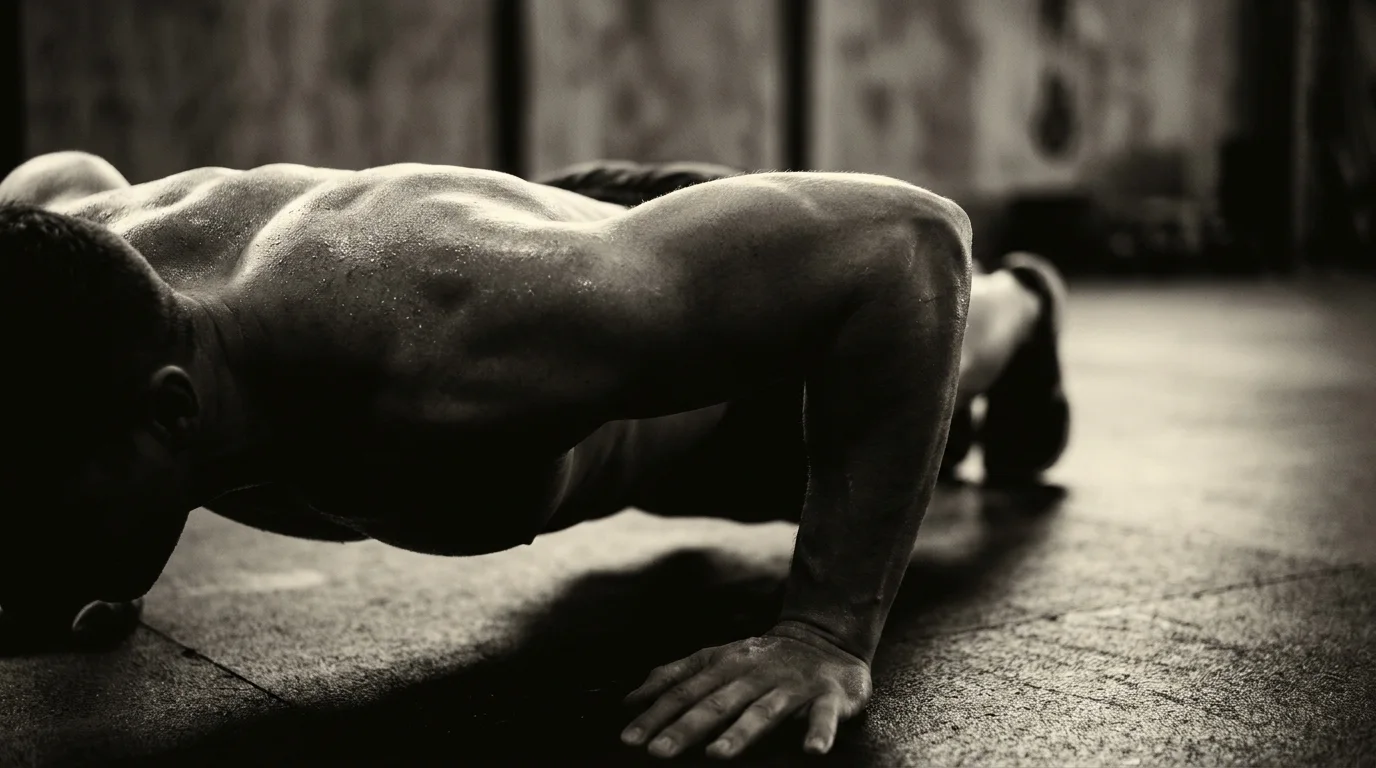
Pushups for posture fundamentals: alignment, scapular control, and neutral spine
These basics set the biomechanical foundation for posture focused pushups. Start with a tall spine, tight core, and steady shoulders. Keep the neck relaxed and the rib cage not flaring.
Why posture matters for daily function
Good alignment supports breathing, reduces neck and upper back fatigue, and makes everyday reaching feel smoother. Front of chest and upper back work together when you push, so stable shoulder blades matter.
Key alignment cues for all push-up variations
- Head, spine, and hips stay in a straight line from crown to tailbone.
- Shoulders glide down away from ears; squeeze the shoulder blades lightly toward the spine.
- Feet or sit bones ground firmly for balance. Use gradual thoracic mobility work to free the upper back.
Elbow angle, spine neutrality, and hand placement
- Elbow angle around 45 degrees keeps the chest open and protects the shoulders.
- Maintain a neutral spine; don't let hips sag or hips lift.
- Hands under the shoulders with fingers spread, wrists stacked.
Baseline posture assessment you can track
- Stand tall and look in a mirror to gauge shoulder height and rib flare.
- Do a wall push-up to check scapular motion before progressing.
- There is no single magic number; start with a manageable set and progress as form holds.
Progression for posture: from wall to seated push-ups and how each variant supports posture
Baseline assessment and starting point
- Do a wall push-up test with feet hip width and hands at shoulder height. Check that your pelvis stays neutral and your upper back stays stable through 5 reps.
- Note the elbow angle you can hold without losing spine alignment.
- Use this point to decide whether to start with wall push-ups or move to the next variation.
Elbow angle and spine cues by variation
- wall push-ups: elbows bend to about 90 degrees; keep ribs down and shoulders away from the ears.
- incline push-ups: elbows about 60 to 70 degrees; maintain a neutral spine and calm shoulder blades.
- knee push-ups: elbows 45 to 60 degrees; body forms a straight line from head to knees.
- standard push-ups: elbows around 45 degrees; hips, shoulders, and head stay aligned.
- seated push-ups: elbows 60 to 70 degrees; sit tall and press from the chair edge.
Progression criteria and tracking sheet
- Move to the next variation when you can complete two workouts in a row with clean form and no spinal sag.
- Track date, variation, reps, and any cue challenges on a simple sheet.
Sample 4-week progression to seated push-ups
- Week 1: wall push-ups 3x8
- Week 2: incline push-ups 3x6
- Week 3: knee push-ups 3x6
- Week 4: seated push-ups 3x5
Common mistakes and correction tips per variation
- wall: hips tilt or back arches; fix by bracing the core and keeping the pelvis neutral.
- incline: ribs flare; fix by lowering chest and pulling shoulders down.
- knee: hips sag; fix by tightening the glutes and maintaining a straight line.
- standard: elbows flare outward; fix by tucking elbows to about 45 degrees.
- seated: hips rock or slide; fix by sitting tall and keeping hips at the edge of the chair.
Enhancing posture through complementary training and practical programming
Posture assessment checklist and tracking
Do a quick side view and front view check. Neutral spine, ears over shoulders, shoulders over hips. Note any forward head, rounded shoulders, or excessive low back arch. Use a simple checklist weekly and take a photo every two weeks to compare.
Core and rotator cuff accessory moves
Dead bug, bird dog, side-lying external rotation with light resistance. 2-3 sets of 8-12 reps per side. Integrate seated push-ups for posture and core as a finisher on workout days.
Mobility routines for the thoracic spine and shoulders
Thoracic extensions over a foam roller or rolled towel for 1-2 minutes, wall slides, band pull-aparts, scapular push-ups. 2-3 rounds.
Sample 4-week programming and progression
Week 1-2: 3 days a week, pushups for posture 6-8 reps with good form. Add 1 set of seated push-ups for posture and core. Week 3-4: pushups for posture 9-12 reps; add tempo work; maintain mobility and accessory moves. If you are wondering how many push-ups for better posture, aim for about 8-12 reps with controlled form.
Common mistakes and corrective strategies
Hips sag during pushups for posture; brace the core and keep hips level. Shoulders shrug or flare; cue scapular setting and pull blades down.
Frequently asked questions
What are the key form cues to maintain a neutral spine during a push-up?
Keep the body in a straight line from crown to tailbone, brace the core, and avoid hip sag or rise. Elbows stay near the torso at about a 45 degree angle and the neck stays relaxed as you press through the floor.
Which elbow positioning helps protect the shoulders while maximizing chest and core engagement?
Aim for an elbow angle around 45 degrees; this protects the shoulders while maximizing chest and core engagement.
How should I modify push-ups if I have shoulder pain or limited mobility?
Start with incline variations such as wall or bench push-ups to build scapular control and a neutral spine, then progress to knee push-ups and finally to a floor push-up as you can hold the form.
How many push-ups per day or per week are recommended for posture benefits?
Two to three sets of six to eight reps, two to three days a week, is suggested for steady progress.
About the authors

Goran Huskić
Co-founder · Professional basketball player
Goran Huskić is a Serbian professional basketball player — a 6'11" center currently playing for Monbus Obradoiro in Spain's Primera FEB. He won the 2019–20 Basketball Champions League with San Pablo Burgos and has competed professionally across Spain, Germany, Lithuania, Serbia and the United States. He co-founded PUSHapp to bring pro-level training discipline to everyday workouts.
Nikola Janković
Co-founder · Former professional basketball player
Nikola Janković is a former professional basketball player — a 6'9" forward and the 2016–17 ABA League MVP — who played for Partizan, Union Olimpija and Mega, among others. Today he runs a pilates studio and gym focused on strength, mobility and overall wellbeing. He co-founded PUSHapp to make consistent, measurable training simple for everyone.