
Muscles & Benefits
How to Build Up to Pushups: A Step-by-Step Progression
Learn how to build up to pushups with beginner-friendly progressions, form cues, and variations to strengthen chest, shoulders, triceps, and core.


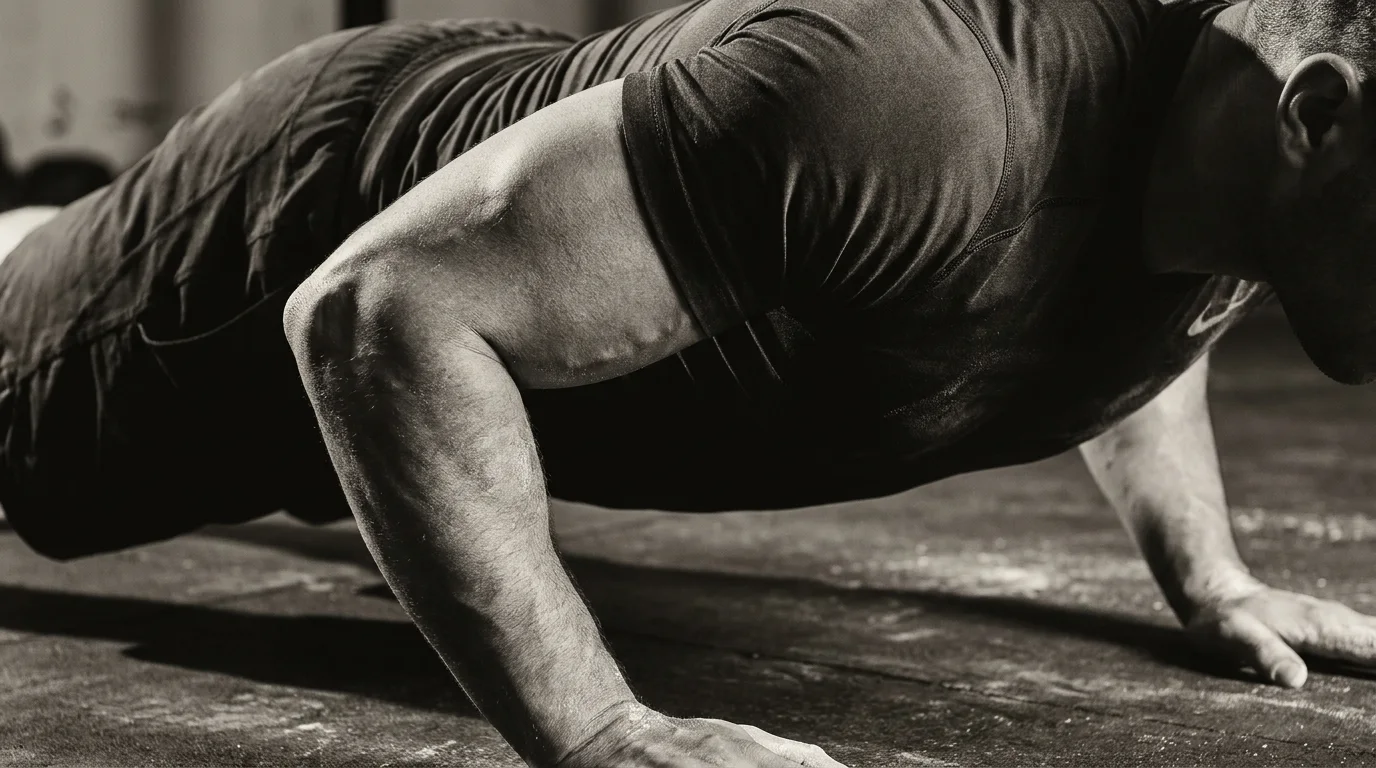
Foundations for push-up progressions: form, cues, and scapular stability
Hand position and setup
- Place hands under shoulders or slightly wider for wide push-ups; fingers spread, wrists neutral. Keep spine neutral and gaze a few inches ahead.
- Set the shoulder blades by pulling them down and together; keep the chest engaged.
Core and hip alignment
- Brace the core, ribs down, pelvis level; glutes active.
- Picture a straight line from head to heels; avoid sagging or piking.
Scapular stability and cueing
- Establish scapular stability before bending elbows; keep blades steady through the press.
- Anti-rotation cue: press evenly into the floor from both hands.
Elbow angle and ROM
- Keep elbows near the body for most push-ups; aim roughly 45 to 60 degrees from the torso.
- Lower to a comfortable depth, then press up with control.
- Beginners can start with knee push-up or incline push-up to build strength.
Common beginner mistakes and fixes
- Hips sagging: tighten glutes, raise the height, or use a wall or incline.
- Elbows flare: tuck elbows toward ribs and maintain scapular stability.
- Looking up or forward: keep neck in a neutral line.
- How to build up to pushups: start with wall push-ups and incline push-ups, then knee push-ups.
A 4-week push-up progression plan: weekly milestones, tempo, and modifications
Week 1: foundations and knee/wall variations
- Do 3 sets of 6-8 reps with a tempo of 2 down, 1 up, suitable for a beginner push-up.
- For injury-friendly modifications, use wall or knee push-ups with a higher surface; this is how to build up to pushups.
Week 2: incline and deeper rom
- Use incline push-ups on a bench or table, or deepen knee push-ups.
- Tempo guidelines: 2 down, 1 second pause, 1 up.
Week 3: tempo, pauses, and mid-range push-ups
- Do 3-4 sets of 5-8 reps with 2 second pauses at mid-range.
- Keep elbows around 45 degrees to protect the shoulders.
Week 4: from incline/knee to floor push-up and polishing form
- Transition to floor push-ups as able, with core tight and scapular control.
- If ready, add a decline push-up with feet on a bench.
- Tempo guidelines: 2 down, 0-1 pause, 1-2 up; bottom hold 3 seconds.
beyond the basics: push-up variations, safe progressions, and common form cues
from knee to full push-up: the safe handoff
- Start with knee push-ups, hands under shoulders, hips level, core braced.
- Use incline push-ups to bridge to full; lower the incline gradually while staying in a straight line.
- When you move to full push-ups, keep scapular stability and a neutral spine; progress only with a controlled tempo.
variation-specific cues: diamond, wide, incline, decline
- diamond push-up: hands form a small diamond under chest; elbows stay tight to the ribs.
- wide push-up: hands outside shoulder width; push with the chest, hips in line.
- incline push-up: hands on a raised surface; lower until the chest brushes the surface, keeping a straight line.
- decline push-up: feet on a raised surface; brace core and press up with hips level.
- video-friendly cues: hips neutral, neck in line, elbows about 45 degrees.
tempo and depth guidelines for each variation
- tempo and depth: two seconds down, one second up, brief pause at the bottom.
- depth: controlled; stop when form fades or hips sag.
common mistakes and corrective cues
- hips sag: brace glutes and core.
- elbows flare: tuck them to 45 degrees.
- neck jut: look at a spot, keep neck neutral.
- shoulders rise: press shoulder blades down.
progression strategies and safety notes
- move from incline to knee to floor only when control is solid.
- if form breaks, regress to a higher incline or knee push-ups.
- stop if pain or sharp discomfort.
Frequently asked questions
What is the proper push-up form?
Keep a straight line from crown to hips, brace the core, and pull the shoulder blades down and back. Elbows stay about 45 degrees to the torso, press through both hands, breathe in on the way down and out on the way up, and avoid sagging the hips.
How do you modify push-ups for beginners?
Start with wall push-ups or knee push-ups to build strength, or use an incline push-up on a raised surface. As you gain strength, lower the incline and move to deeper knee push-ups.
How can I progress to a full push-up as I get stronger?
Follow the four week progression plan that moves from wall and knee variations to incline and then floor push-ups, keeping a straight line and scapular control. Use a tempo of 2 down, 0-1 pause, 1-2 up and pause at the bottom as needed.
What is the difference between incline, decline, and standard push-ups?
Standard push-ups are floor push-ups with a straight line. Incline push-ups are done on a raised surface and are easier, while decline push-ups have the feet elevated and are harder.
About the authors

Goran Huskić
Co-founder · Professional basketball player
Goran Huskić is a Serbian professional basketball player — a 6'11" center currently playing for Monbus Obradoiro in Spain's Primera FEB. He won the 2019–20 Basketball Champions League with San Pablo Burgos and has competed professionally across Spain, Germany, Lithuania, Serbia and the United States. He co-founded PUSHapp to bring pro-level training discipline to everyday workouts.

Nikola Janković
Co-founder · Former professional basketball player
Nikola Janković is a former professional basketball player — a 6'9" forward and the 2016–17 ABA League MVP — who played for Partizan, Union Olimpija and Mega, among others. Today he runs a pilates studio and gym focused on strength, mobility and overall wellbeing. He co-founded PUSHapp to make consistent, measurable training simple for everyone.