
Form & Technique
Wall Pushup Form: Proper Wall Push-Up Technique
Master wall pushup form with setup, cues, and safe progressions for beginners to advanced athletes.


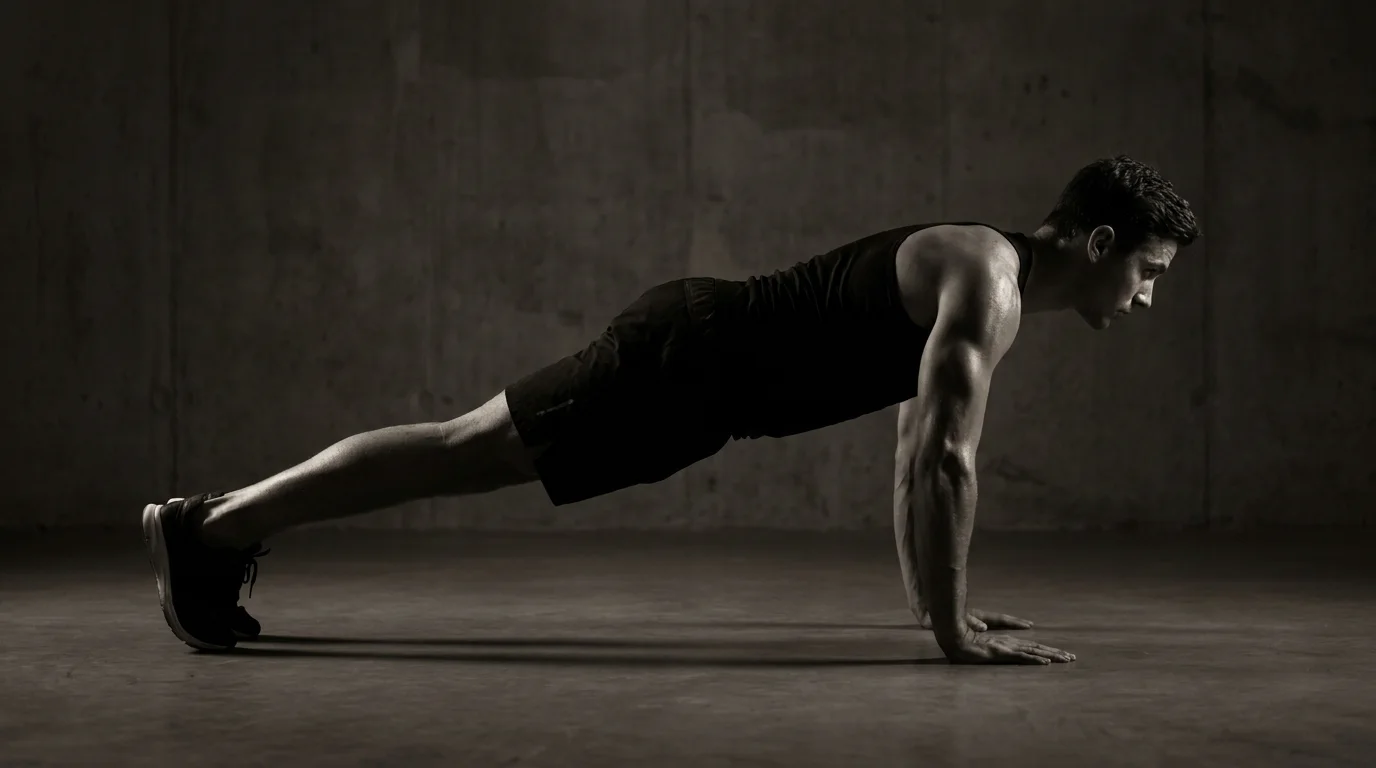
Wall Push-Up Mechanics: Setup, Scapular Stability, and Body Alignment
Setup: hand position, stance, and wall height
- Stand about 4-6 inches from the wall with feet hip-width apart. Foot placement should be solid, weight evenly distributed, to help hip alignment.
- Place hands on the wall at about shoulder width and at a height that allows elbows to bend to roughly 45 degrees as you lower, supporting proper push-up form.
- Keep wrists neutral, fingers spread, and forearms vertical.
- Keep hips in line with shoulders and ankles; pelvis neutral.
- Use a mirror to check: hips level, head in line with spine, and your gaze toward the wall.
Scapular stability and spine alignment
- Set the shoulder blades: gently slide them down the back and toward the spine.
- Maintain a neutral spine; avoid sagging or arching, and keep a slight brace in the core.
Breath and tempo cues during the descent and push
- Inhale as you bend elbows and lower toward the wall; exhale as you push away.
- Move with control: about 2–3 seconds down, 1–2 seconds up; keep neck relaxed.
Progressions, Tempo, and Variations: Mapping Wall Height to Difficulty
Wall-height ladder: from high to low
- If you're unsure how to do a wall pushup with correct form, start with a high height: hands at chest level, wrists under shoulders, body in a straight line, core braced.
- Then lower the hands along the wall to progressively increase load, in small steps.
- Finish with the lowest height you can control with clean reps.
Tempo and breath cues for controlled reps
- Descent 3 seconds, pause 0–1 second, press 1–2 seconds; exhale on the press.
- Inhale as you lower, exhale as you push away.
Progression map: from wall push-ups to incline, diamond, and pike forms
- Wall pushup form (easy) → incline push-up form (hands on bench) → diamond push-up form (hands close on floor) → pike push-up form (hips high, feet on floor).
Form Checks, Safety, and Comparisons: Shoulder Health and Real-World Cues
Common pitfalls and fixes
- Hip sag: brace the core, tuck the pelvis, and gently squeeze the glutes to keep hips level with shoulders.
- Sway: maintain a straight line from head to heels; press into the wall and use a micro-hold to reset alignment.
- Elbow flare: keep elbows about 45 degrees from the body to reduce shoulder stress.
- Shoulder impingement scenarios: if pain appears in the bottom range, shorten the movement by moving hands higher on the wall or switching to an incline push-up form and avoid deep angles.
Shoulder health: impingement risks and safe variations
Maintain stable shoulder blades, a neutral neck, and a vertical forearm. If any pain arises, stay higher on the wall and progress gradually with incline push-up form.
Measurable checks with mirror and video
Use mirror cues for hips, ribs, and head alignment; record a side view to verify elbow angle near 45 degrees and a straight line through spine.
Comparing wall push-ups to incline, diamond, and pike progressions
Wall push-up form: easiest to learn and build control. Incline push-up form: more load as you lower the wall height. Diamond push-up form: greater chest/tricep demand with tighter hand placement. Pike push-up form: higher shoulder demand—use cautiously if impingement symptoms arise.
Frequently asked questions
How do you perform a wall push-up correctly?
Stand 4–6 inches from the wall with feet hip-width apart and wrists under or slightly in front of the shoulders. Place your hands at shoulder width and keep your elbows about 45 degrees as you lower, bracing the core, keeping hips level, and neck long. Lower about 2–3 seconds, pause briefly at the bottom, then push back up in 1–2 seconds, exhaling on the press.
How deep should you go in a push-up?
For a wall push-up, elbows should bend to roughly 45 degrees at the bottom. Keep hips aligned with your shoulders, maintain scapular stability, and move with a controlled 2–3 second descent; if you feel pain, back off or move your hands higher on the wall.
Which push-up variation is best for beginners?
Wall push-ups are best for beginners. Start high on the wall and progress by lowering the hands or stepping farther away to increase load, with incline push-ups as the next step before floor variations.
Are incline or decline push-ups better for progression?
The progression described goes from wall push-ups to incline push-ups, then to floor variations; decline push-ups aren’t part of the listed progression and are more advanced. Progress gradually while maintaining scapular stability.
About the authors

Goran Huskić
Co-founder · Professional basketball player
Goran Huskić is a Serbian professional basketball player — a 6'11" center currently playing for Monbus Obradoiro in Spain's Primera FEB. He won the 2019–20 Basketball Champions League with San Pablo Burgos and has competed professionally across Spain, Germany, Lithuania, Serbia and the United States. He co-founded PUSHapp to bring pro-level training discipline to everyday workouts.

Nikola Janković
Co-founder · Former professional basketball player
Nikola Janković is a former professional basketball player — a 6'9" forward and the 2016–17 ABA League MVP — who played for Partizan, Union Olimpija and Mega, among others. Today he runs a pilates studio and gym focused on strength, mobility and overall wellbeing. He co-founded PUSHapp to make consistent, measurable training simple for everyone.