
Form & Technique
One Arm Pushup Form: Proper Technique & Progressions
Master the one arm pushup form with step-by-step cues, safety tips, and proven progressions from beginner to unilateral strength.
Prerequisites for one-arm push-up form: readiness, mobility, and prehab
Assessing readiness: strength, mobility, and health
- Can you hold a straight body line in a front plank for about 30 seconds with no sagging or excessive wobble.
- Can you perform a standard push-up with controlled tempo and full range without pain.
- Do overhead reaches and pressing movements feel stable with no sharp pain or pinching in the shoulder.
Mobility and stability prerequisites
- Shoulder mobility: you can reach arms overhead with minimal shrug and no joint pinching.
- Thoracic spine rotation: you can rotate the upper back several degrees each side with hips staying level.
- Core and spine control: you can brace and maintain a neutral spine during hinge and loading patterns.
- Scapular control: you can move the shoulder blades without compensating the spine.
Prehab, warm-ups, and progression gatekeepers
- Shoulder prehab for one-arm push-ups: external rotations, face pulls, band pull-aparts, scapular push-ups.
- Spinal and core prep: dead bug, bird dog, hollow holds with bracing.
- Warm-ups: dynamic arm circles, thoracic rotations, incline push-ups light.
- Gatekeepers: start with two-arm or incline variations, then progress only after technique stays solid and pain-free.
One-Arm push-up form progression: a structured ladder (incline to full, with eccentric and isometric phases)
phase 1: baseline foundations and assisted variations
- Start with a high incline. Place the working hand on a bench or box, the non working hand resting behind the back. Keep the hips square and the core braced. Lower with control and press back to start. Tempo: 3 seconds down, 1 second pause, 1 second up. Reps 4 to 6, sets 2 to 3. When this feels smooth, lower the incline to increase the load.
- If you can't finish a rep, use a bilateral push-up or a higher support to build the pattern.
phase 2: archer push-up as a bridge
- From a lower incline, shift weight toward the working arm and extend the opposite arm out to the side. The working arm takes most of the load. Gradually reduce incline to deepen the range. Tempo 3-0-2-0 for 4 to 6 reps per side.
phase 3: eccentric-only and isometric holds
- Eccentric only: start at the top position, lower slowly on the working arm for 4 to 6 seconds, then reset with assistance. Isometric holds: pause at the bottom for 3 to 4 seconds or hold near the top for 3 seconds before pressing.
phase 4: transition to full one-arm push-up and tempo guidelines
- When control is solid on a low incline, attempt a true one-arm push-up on a sturdy surface, then the floor. Tempo 2-0-2-0 and add a light load if form stays solid.
One-arm push-up form: technique, cues, and safety
Setup
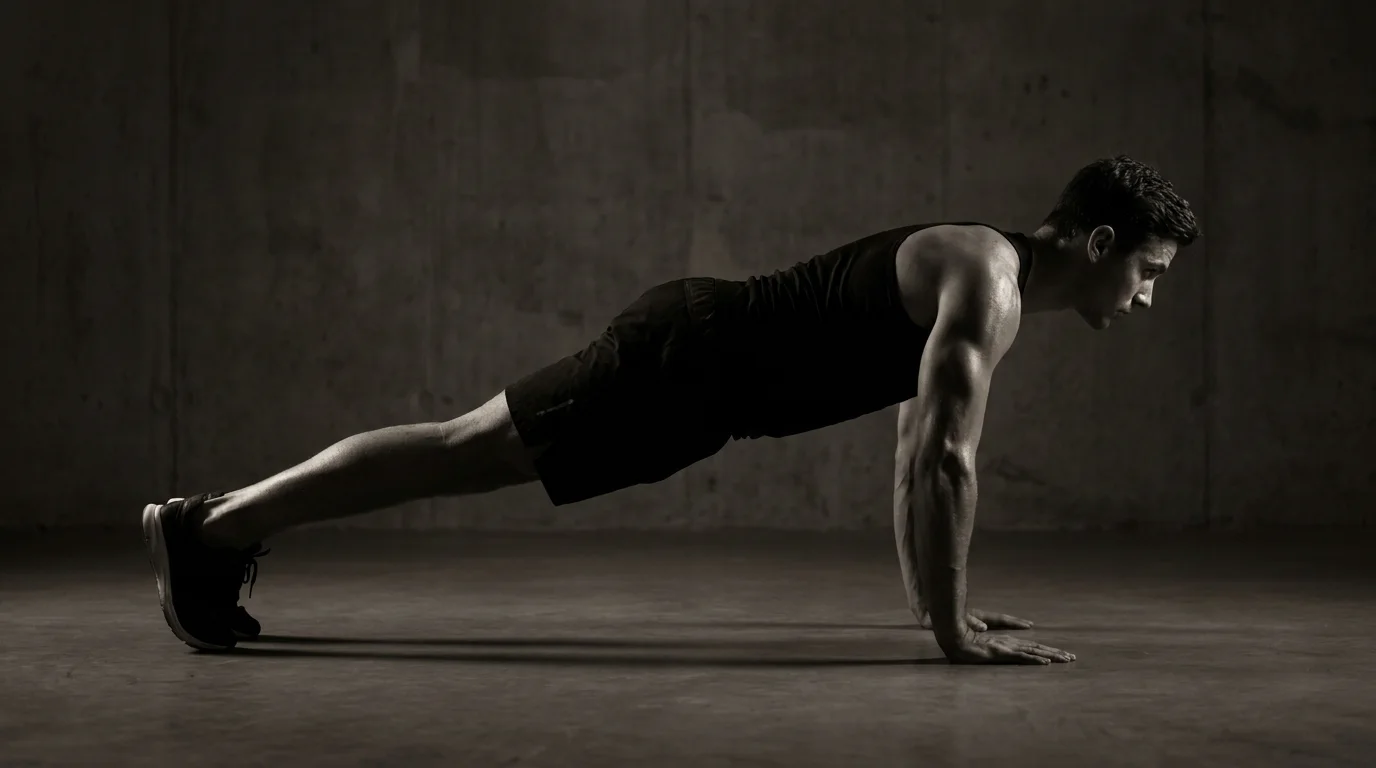
- Position your body in a straight line from head to heels. Place the supporting hand directly under your shoulder with fingers spread. The nonworking arm stays behind your back or at your side.
- Pick a stance that helps balance, such as a small stagger of the feet.
- Keep your neck neutral by looking slightly forward.
Alignment and core engagement cues
- Brace the core and squeeze the glutes. Maintain hips level and square to the floor.
- Stack the wrist under the shoulder and pull the shoulder blade gently down and back.
- Tense the ribcage down so it doesn't flare during the press.
Shoulder safety and core engagement
- Elbow stays close to the torso on the descent. The working shoulder stays stable; avoid shrugging toward the ear.
- If you feel pinch or pain, pause and switch toward archer push-up form or an incline modification.
Common mistakes and fixes
- Hips rotate or sag. Fix by bracing early and resetting between reps.
- Elbow flares out. Fix by guiding the elbow to stay about 10 to 20 degrees from the torso.
- Neck tilts or head pokes forward. Fix by maintaining a neutral gaze.
Safety modifications and progression safeguards
- Start on an incline and progress to the full one arm push-up form only after control is consistent.
- Use a controlled tempo and add brief isometric holds if needed.
- If soreness appears, revert to an archer push-up form or a higher incline.
Frequently asked questions
what are the prerequisites for starting a one arm push-up program
Prerequisites are strength, mobility, and health. You should be able to hold a straight body line in a front plank for about 30 seconds and perform a controlled standard push-up without pain, and overhead reaches and pressing movements should feel stable.
how does the progression ladder work from incline to full one arm push up
Start with a high incline and progress to lower inclines as you gain control. Then introduce archer push-ups, add eccentric and isometric work, and finally attempt a true one arm push-up on a sturdy surface and then the floor.
what tempo guidelines and cues help maintain proper form and safety
Tempo guidelines include 3 seconds down, 1 second pause, 1 second up for baseline; 3-0-2-0 for archer and 2-0-2-0 for full. Keep ribs braced, hips square, shoulders stable, and maintain a straight line from head to heels.
how should i set up to maintain alignment during a one arm push-up
Set up with a straight line from head to heels and the working hand under your shoulder. Use a small feet stagger to help balance and keep the neck neutral.
About the authors
Goran Huskić
Co-founder · Professional basketball player
Goran Huskić is a Serbian professional basketball player — a 6'11" center currently playing for Monbus Obradoiro in Spain's Primera FEB. He won the 2019–20 Basketball Champions League with San Pablo Burgos and has competed professionally across Spain, Germany, Lithuania, Serbia and the United States. He co-founded PUSHapp to bring pro-level training discipline to everyday workouts.
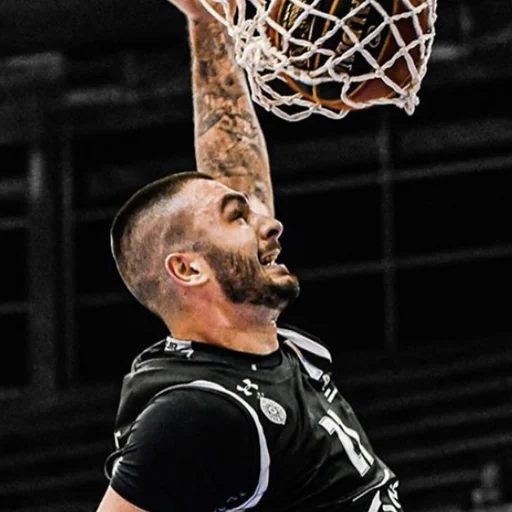
Nikola Janković
Co-founder · Former professional basketball player
Nikola Janković is a former professional basketball player — a 6'9" forward and the 2016–17 ABA League MVP — who played for Partizan, Union Olimpija and Mega, among others. Today he runs a pilates studio and gym focused on strength, mobility and overall wellbeing. He co-founded PUSHapp to make consistent, measurable training simple for everyone.