
Variations & Types
Triangle pushups: Form, benefits, variations
Master triangle pushups with proper form, targeted muscles, benefits, and progressive variations for all fitness levels.


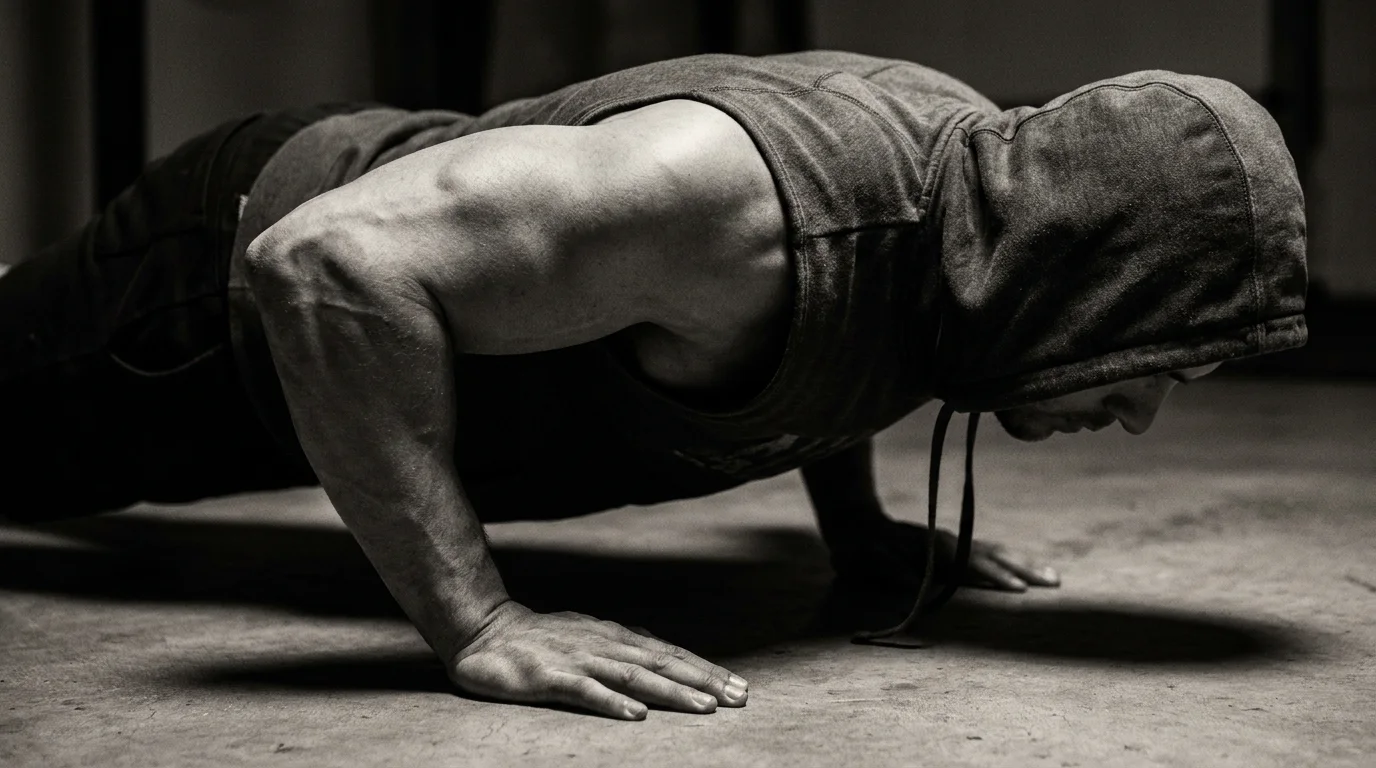
Triangle pushups form and technique
Hand and arm position
Form a small triangle with thumbs and index fingers. The triangle sits under the center of your chest, wrists stacked under your shoulders. Fingers spread for stability; keep wrists neutral and avoid bending them back. If the wrists bother you, try push-up bars or perform on fists.
Scapular engagement and core bracing
Gently pull the shoulder blades down and together, then brace your hips and core. Keep the hips in line with shoulders and heels to prevent sagging. This setup supports a stable platform for triangle push-ups form cues you can trust.
Elbow tracking and upward cues
Tuck elbows to about 45 degrees from your torso and maintain that path as you descend. Press the floor away to rise, exhale on effort, and avoid flaring the elbows. These are triangle push-ups form cues you can rely on for shoulder safety.
Wrist safety
Keep wrists in a neutral position; align them with forearms. If pain or numbness appears, use bars or perform on fists, and fade into fewer reps. Include wrist mobility work and light warm-ups before sets.
Warm-up and mobility
Do gentle wrist circles and scapular push-ups to prime the movement, aligning with hip and core bracing for a smoother start.
Muscles worked, benefits, and tempo-based progression
Muscles targeted and activation cues
- Triangle pushups strongly engage the triceps, chest, shoulders, and a braced core. Cues: press through the triangle evenly, keep elbows tight to your ribs, and pull the shoulder blades down and together.
Benefits and functional purpose
- Emphasizes triceps and inner chest while building scapular stability. The compact hand position invites cleaner elbow extension and translates to controlled presses in daily movement.
Tempo, reps, and progression for hypertrophy vs strength
- Hypertrophy: 6-10 reps, tempo 3-0-3-0; 2-4 sets; rest 60-90s. Progress by adding a rep or set, or a slight feet elevation for extra load.
- Strength: 4-6 reps, tempo 1-0-1-0; 3-5 sets; rest 2-3 min. Progress by increasing load (feet up) or adding a brief bottom pause while preserving form.
Shoulder and wrist care within a training block
- Do a quick wrist warm-up (circles, gentle flexion/extension). Maintain wrists stacked under shoulders, elbows at 40–60 degrees. If pain arises, switch to standard push-ups or use push-up bars.
Variations, equipment, regressions, and beginner-to-advanced roadmap
Beginner regressions and progression cues
- Wall triangle pushups: hands in a triangle on the wall, feet on the floor. 3x6–8. Cue: ribs braced, hips quiet, elbows tracking at a comfortable angle.
- Incline triangle pushups on a bench: 3x6–10. Cue: shorten the range, keep the triangle intact, chest toward the bench.
- Floor knee triangle pushups: 3x8–12. Cue: long spine, knees under hips, hips level.
- Progress to full floor triangle pushups: 3x6–12. Cue: press through the palms, elbows soft, torso in a straight line.
Elevation and incline/decline variations
- Start easy with an elevated surface for the hands (incline). Cue: chest nearly touches the surface.
- Move toward the floor for more load. Cue: keep the triangle stable as depth increases.
- Increase difficulty by elevating the feet (decline). Cue: hips in line, depth maintained without flaring elbows.
Equipment options: parallettes and bars
- Parallettes or push-up bars improve wrist position and allow a deeper press. Use stable, level platforms and keep hands in the triangle shape over the bars.
Progression roadmap: milestones and timelines
- Milestone 1 (Weeks 1–2): wall triangle; 3x6–8.
- Milestone 2 (Weeks 3–4): incline triangle; 3x6–10.
- Milestone 3 (Weeks 5–6): floor knee triangle; 3x8–12.
- Milestone 4 (Weeks 7–8): floor full triangle; 3x6–12.
- Milestone 5 (Weeks 9+): decline triangle or tempo variations; 3x6–10.
Triangle pushups vs diamond pushups: similar hand shape, but the load path and elbow travel feel different.
Frequently asked questions
What are triangle push-ups and what muscles do they target?
Triangle push-ups are push-ups performed with hands forming a triangle under the chest (thumbs and index fingers touching). This setup shifts load toward the triceps and inner chest, while the shoulders stabilize and your core remains braced to keep a straight spine.
How do you perform a triangle push-up correctly?
Form a small triangle with thumbs and index fingers under the center of your chest and stack your wrists under your shoulders; tuck elbows to about 45 degrees and keep hips in line with shoulders and heels while bracing your core. Descend with control, then press the floor away and exhale on effort. If wrists bother you, try push-up bars or perform on fists.
Can beginners do triangle push-ups, and how should I progress?
Yes. Start with beginner regressions like wall triangle pushups or incline triangle pushups (3x6–8 or 3x6–10), keeping the triangle intact and ribs braced. Progress to full push-ups, then tempo reps and pause holds, and increase reps, sets, or a slight feet-elevation to add load.
What should I do if I have wrist pain doing triangle push-ups?
Keep wrists neutral and stacked under the forearms; if pain persists, switch to push-up bars or perform on fists and reduce reps. Include wrist mobility work and a light warm-up before sets.
About the authors

Goran Huskić
Co-founder · Professional basketball player
Goran Huskić is a Serbian professional basketball player — a 6'11" center currently playing for Monbus Obradoiro in Spain's Primera FEB. He won the 2019–20 Basketball Champions League with San Pablo Burgos and has competed professionally across Spain, Germany, Lithuania, Serbia and the United States. He co-founded PUSHapp to bring pro-level training discipline to everyday workouts.

Nikola Janković
Co-founder · Former professional basketball player
Nikola Janković is a former professional basketball player — a 6'9" forward and the 2016–17 ABA League MVP — who played for Partizan, Union Olimpija and Mega, among others. Today he runs a pilates studio and gym focused on strength, mobility and overall wellbeing. He co-founded PUSHapp to make consistent, measurable training simple for everyone.