
Comparisons
Pushups on a Mat vs Hard Floor: Stability & Form
Pushups on a mat vs hard floor: learn how surface stability and cushioning affect effort, form, and muscle activation, plus beginner-friendly progressions.


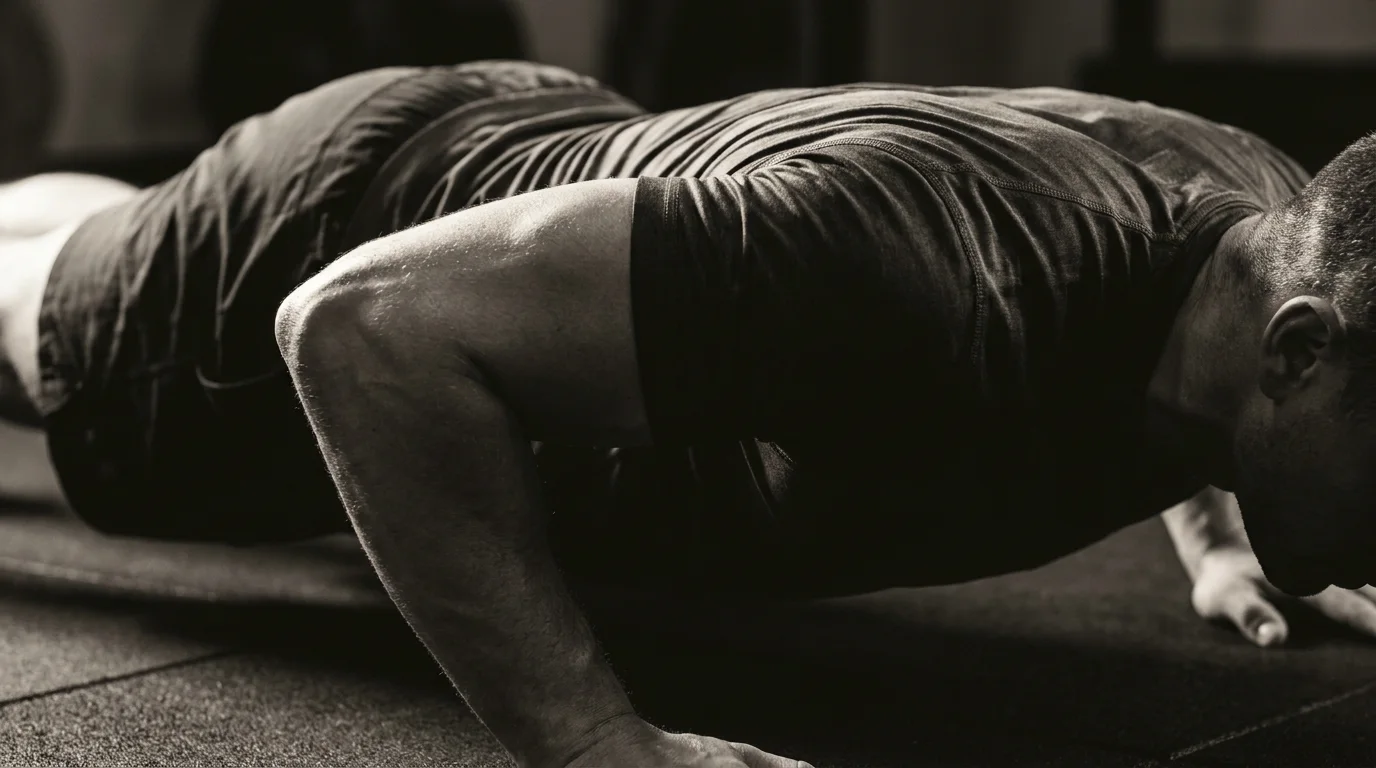
Surface stability and cushioning: mat vs hard floor effects on effort and activation
What surface stability means for pushups
- On a stable surface like a hard floor you can keep a neutral spine with minimal wobble. On an unstable surface such as a foam pad or balance disc your core and shoulder stabilizers work to resist movement, which can make the set feel tougher and shift your range slightly.
Cushioning and load distribution on mat vs floor
- A mat cushions wrists and elbows, reducing local stress but possibly dulling feedback that helps you lock in technique. A hard floor provides steady contact and clear cues for bracing, which can feel more demanding but helps consistency.
Muscle activation and core demand across surfaces
- Unstable surfaces tend to raise core and shoulder stabilizer engagement and may shorten the pressing range as you work to stay level. Stable surfaces let the prime movers carry more of the load while you practice strict pushups. For beginners, wall pushups or knee pushups on a mat are good progressions before progressing to a true pushup on a stable surface or an unstable one.
Form, alignment, and safety on mat and floor: keeping quality pushups on stable and unstable surfaces
Foundational cues for solid form on any surface
- Hands under shoulders, wrists straight, fingers spread.
- Neck neutral, gaze a few inches ahead.
- Core and glutes engaged, thighs active.
- Keep a long, straight line from head to heels.
Surface-specific form cues and common faults
- On the mat you are closer to an unstable surface pushups. Press through the palms, elbows at about 45 degrees, and avoid letting the hips sag. If you lose control, pause and reset. Common faults: hips rise or dip, elbows flare, head lifts.
- On a hard floor you can aim for a fuller range of motion while staying aligned. Ribs stay down, shoulder blades stay depressed, and the spine stays neutral. Common faults: back arches, loads shift to the neck, or the chest dips too far.
Beginner-friendly modifications by surface
- on the mat: incline pushups on a box, kneeling pushups, seated pushups with a chair behind you, wall pushups.
- on the floor: knee pushups, incline pushups from a box, seated pushups with a chair, wall pushups.
Progressions and programming by surface: a beginner-friendly path from wall to floor on mats and hard floors
Surface-specific progression ladders
Mat
- wall pushups: 3x8-12, tempo 2 down, 0 hold, 2 up, 0 hold; rest 60 seconds; cue tight core and stacked hips.
- incline pushups on mat: 3x6-10, tempo 2-0-2-0; use a stable chair or step on the mat; cue shoulders away from ears.
- floor pushups on mat: 3x4-8, tempo 2-0-2-0; cue braced core, glutes engaged, hips level.
Hard floor
- wall pushups: 3x8-12, tempo 2-0-2-0; rest 60 seconds.
- incline pushups on hard floor: 3x6-12, tempo 2-0-2-0; use a stable surface like a bench.
- floor pushups on hard floor: 3x6-10, tempo 2-0-2-0; cue elbows near ribs and full-body bracing.
Sample 4-week progression by surface
Week by week, keep form steady and add reps or a set as you tolerate. Mat weeks: wall 3x6-8, incline 3x5-8, floor 3x3-5; week 2 increase by 2 reps per set where possible; week 3 push to 4x8-12 on wall, 3x8-12 incline, 3x6-8 floor; week 4 push closer to 4x10-14 wall, 3x8-12 incline, 3x8-10 floor. Hard floor weeks: wall 3x6-8, incline 3x5-8, floor 3x3-5; week 2 add reps; week 3 aim 4x8-12 wall, 3x8-12 incline, 3x6-8 floor; week 4 target 4x10-14 wall, 3x8-12 incline, 3x8-10 floor.
Safety guidelines and progression criteria
- Progress only when technique stays solid and the torso remains in a straight line.
- Regress to the previous stage if hips sag or elbows flare more than 45 degrees.
- Keep a neutral neck and a steady breath pattern during the set.
- Engage the core and glutes at every stage to limit lumbar sag.
- If you feel pain or sharp discomfort, stop and reassess form or revert to an easier surface. If your form wobbles, drop back a step and rebuild.
Frequently asked questions
Are push-ups on a mat easier or harder than on a hard floor?
On a mat, wrists and elbows are cushioned which can make the push-up feel easier on local stress, but it may dull feedback for technique. On a hard floor you get steady contact and clearer bracing cues that make the movement feel more demanding but help consistency.
Do unstable surfaces increase muscle activation during push-ups?
Yes, unstable surfaces raise core and shoulder stabilizer engagement and may shorten the pressing range as you work to stay level.
What surface should I use for push-ups to protect joints?
On a mat you get cushioning for wrists and elbows, reducing local stress but potentially dulling feedback. A hard floor offers steady contact and bracing cues that aid technique; if joints are sensitive, start on the mat and progress to the hard floor as your form improves.
How do you modify push-ups for limited strength or mobility?
On the mat, incline pushups on a box, kneeling pushups, seated pushups with a chair, or wall pushups are good options. On the floor, start with knee pushups or incline pushups from a box and progress to full pushups as strength improves.
About the authors

Goran Huskić
Co-founder · Professional basketball player
Goran Huskić is a Serbian professional basketball player — a 6'11" center currently playing for Monbus Obradoiro in Spain's Primera FEB. He won the 2019–20 Basketball Champions League with San Pablo Burgos and has competed professionally across Spain, Germany, Lithuania, Serbia and the United States. He co-founded PUSHapp to bring pro-level training discipline to everyday workouts.

Nikola Janković
Co-founder · Former professional basketball player
Nikola Janković is a former professional basketball player — a 6'9" forward and the 2016–17 ABA League MVP — who played for Partizan, Union Olimpija and Mega, among others. Today he runs a pilates studio and gym focused on strength, mobility and overall wellbeing. He co-founded PUSHapp to make consistent, measurable training simple for everyone.