
Comparisons
Pushup Handles vs Flat Hands: Elbow Load
Compare pushup handles vs flat hands to understand elbow load, wrist comfort, and rehab suitability in push-ups.

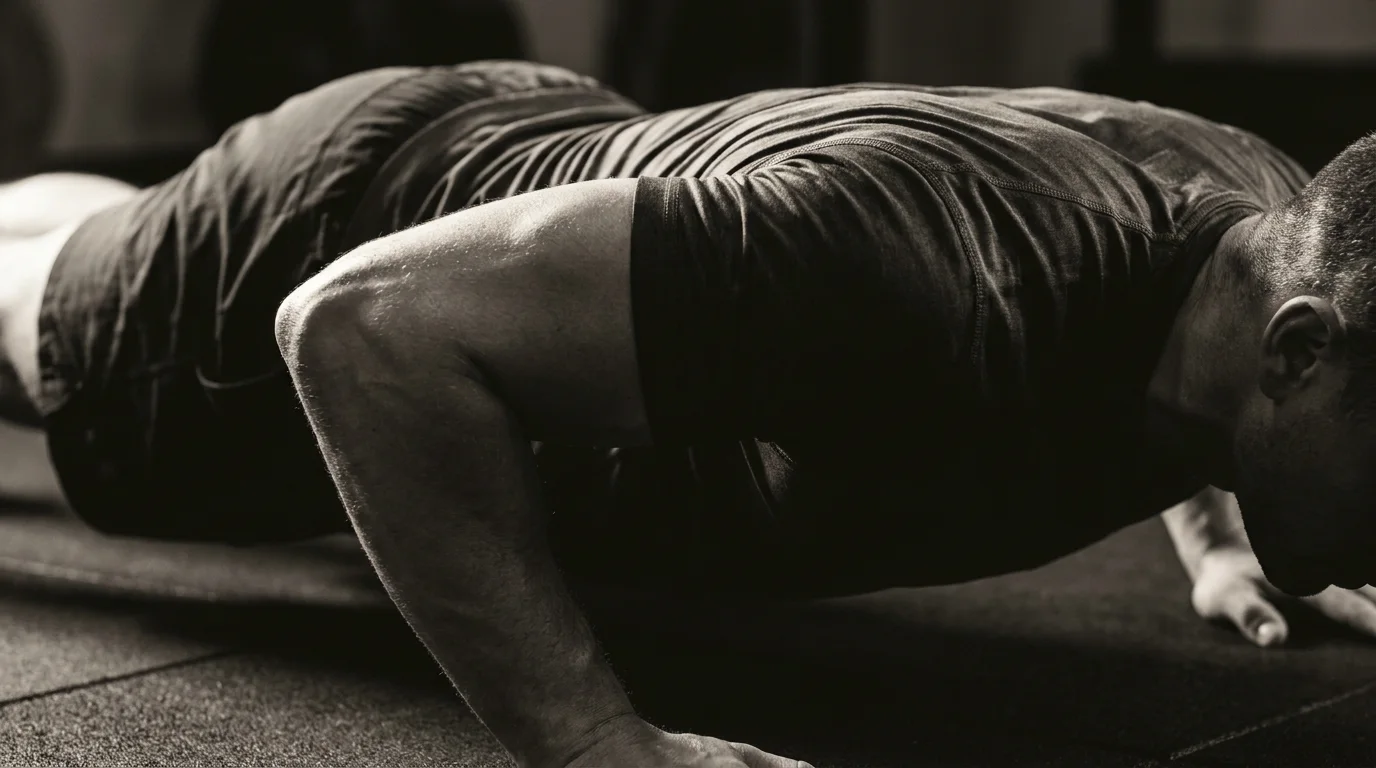
Pushup handles vs flat hands: hand position variations and elbow mechanics
Scapular mechanics across hand positions
- Normal hand position on the floor encourages a balanced scapular plane. Keep the shoulder blades stable as you press.
- Apart hand position asks more from the periscapular muscles to maintain upward rotation and control, which can fatigue these muscles sooner.
- Together hand position tends to keep the elbows closer to the ribs, promoting a tied-in scapular position but requiring solid thoracic extension control.
- Superior hand position on handles often reduces wrist bend, which can help the scapula stay steadier if you brace the core and maintain a steady chest lift.
Forearm axis torque and rotation tendencies
- Normal grip keeps the forearm axis near vertical, with torque shared between elbow and wrist.
- With the hands apart, the forearm axis tilts outward and load shifts a bit toward the elbow joint.
- With the hands together, the axis aligns more with the chest, reducing flair at the elbows but increasing demand on wrist stability.
- With superior hand position, the forearm axis shifts toward a more neutral alignment, which can lower wrist bend but may alter natural rotation tendencies.
Valgus torque and wrist comfort considerations
- Normal hand position usually yields comfortable wrists when you keep your wrists stacked under your shoulders.
- Apart grip can raise valgus torque risk if the elbows drift inward; cue the elbows to track over the wrists.
- Together grip often lowers valgus stress by tucking the elbows in, but watch for compressive load in the wrists if the setup is tight.
- Superior hand position tends to improve wrist comfort by reducing extension, provided the handles are stable and the chest stays lifted.
Single-Handed push-ups and stability: simulated fall conditions and loading implications
Loading patterns in asymmetrical supports
- In a single-handed push-up most weight goes to the working side. Under simulated fall conditions the torso tends to rotate toward that side, increasing torque at the elbow and shoulder.
- Handles tend to keep the wrist in a neutral position but create a longer lever from wrist to shoulder, which can amplify asymmetrical loading.
- Flat hands press load through the palm, which can feel less stable if the surface slips.
Surface stability and grip fatigue effects
- A stable surface reduces small corrections that steal distance from the push. On handles you grip with more of the forearm and fingers, which can delay grip fatigue but may raise forearm strain if the edge is hard.
- On flat surfaces grip fatigue comes from finger flexors and wrist posture; padding helps distribute pressure.
- Wrist comfort push-ups feel easier when the wrist stays near neutral, and handles often support that.
Implications for progression and safety
- Start with a controlled single-handed variation on a solid platform, then progress to full single-handed push-ups.
- Use handles if wrist comfort improves, but watch elbow load and core alignment.
- Stop if you feel a loss of straight-line form or twisting toward the loaded side.
Rehabilitation, long-term loading, and return-to-sport guidelines
Rehab protocols by hand position and load
- Begin with rehab push-ups on a wall or incline to limit elbow torque in early phases.
- Progress to rehab push-ups with different hand positions as tolerated, from flat hands to handles and then standard knee or full push-ups, while watching elbow track.
- Introduce the elbow load push-up gradually as tolerance allows, and avoid pushing into sharp pain.
EMG-guided form for elbow protection
- EMG data correlation with elbow protection can guide adjustments. Use cues to keep elbows near the body and the torso stable.
- Prioritize a solid scapular stance, a tight core, and controlled descent over flashy hand placement.
Progression, fatigue management
- Increase loading gradually across sessions, not within the same workout.
- Build in rest and monitor cumulative elbow loading to protect cartilage and tendons over time.
Return-to-sport criteria
- Pain-free range of motion and no swelling during sport tasks.
- Able to perform rehab push-ups with different hand positions pain-free and with good form.
- Return to sport only after you can tolerate sport-specific drills that involve elbow torque without pain.
Frequently asked questions
Do push-up handles reduce elbow joint load compared with flat hands?
Handles can shift torque toward a more neutral forearm axis, which may reduce some elbow stress. The overall elbow load also depends on grip width, scapular stability, and how deep you drop into the press.
Are there wrist or shoulder considerations when using push-up handles?
Push-up handles often promote a more neutral wrist posture, which can ease wrist bend, but you still need a stable chest lift and controlled shoulder blade position to avoid compensations.
Does using handles affect torque or joint stability during a push-up?
It changes the forearm axis and how torque is shared between the elbow and wrist, which can alter elbow stability across hand positions. In general, handles can reduce elbow flare by tucking the elbows, but they may increase wrist demands if the setup is tight.
What does the research say about one-handed push-ups and elbow stress?
In a single handed push-up most weight goes to the working side, raising elbow and shoulder torque under asymmetrical loading. Handles keep the wrist neutral but create a longer lever, which can amplify asymmetrical loading and stability demands on the supporting side.
About the authors

Goran Huskić
Co-founder · Professional basketball player
Goran Huskić is a Serbian professional basketball player — a 6'11" center currently playing for Monbus Obradoiro in Spain's Primera FEB. He won the 2019–20 Basketball Champions League with San Pablo Burgos and has competed professionally across Spain, Germany, Lithuania, Serbia and the United States. He co-founded PUSHapp to bring pro-level training discipline to everyday workouts.
Nikola Janković
Co-founder · Former professional basketball player
Nikola Janković is a former professional basketball player — a 6'9" forward and the 2016–17 ABA League MVP — who played for Partizan, Union Olimpija and Mega, among others. Today he runs a pilates studio and gym focused on strength, mobility and overall wellbeing. He co-founded PUSHapp to make consistent, measurable training simple for everyone.