
Muscles & Benefits
Pushups for Strength: Form, Progressions & Variations
Master pushups for strength with proper form, progressive levels, and variations to boost chest, triceps, shoulders, and core stability.


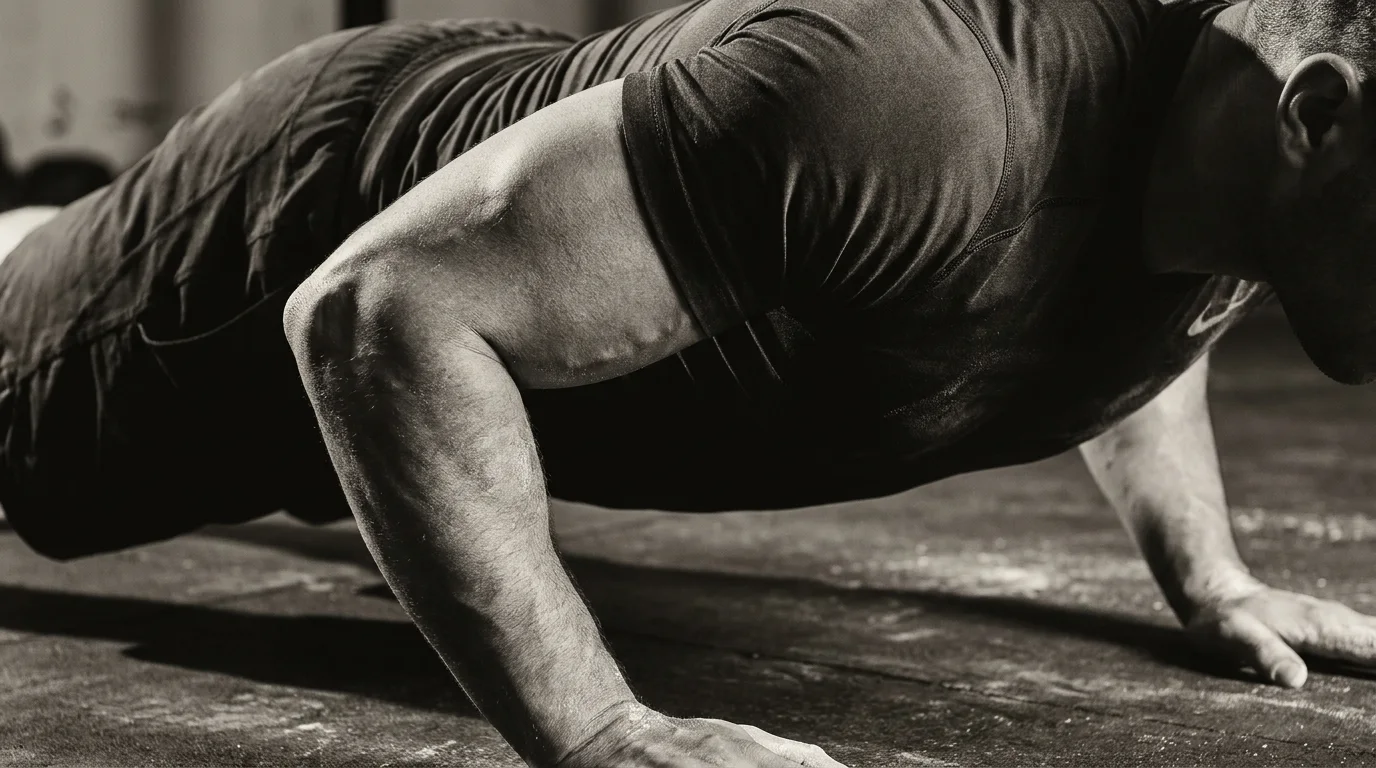
Foundations: Form, ROM, Scapular Control & Bracing for Pushups
Setup and Alignment: Hand Position, Spinal Neutral, and Scapular Retraction
- Hands slightly wider than shoulders, wrists under elbows; fingers forward.
- Squeeze shoulder blades down and together to establish scapular control, then maintain that position as you lower.
- Keep a neutral spine from head to heels; avoid letting the hips sag—this is key to push-up form.
Depth, ROM & Tempo: How Deep to Go and How Slow to Move
- This foundation supports pushups for strength by keeping the torso aligned and the hips from sagging.
- Use a steady tempo, e.g., 3 seconds down, 1–2 up; pause only briefly at bottom if needed.
- If form breaks, regress to incline pushups.
Bracing, Core-Hips Coordination: Stabilizing the Trunk and Pelvis
- Brace the core and tighten glutes to keep the trunk and pelvis stable.
- Breathe: exhale as you press up, inhale as you lower.
- Avoid sagging hips or rib flare to protect shoulder alignment.
Shoulder & Elbow Biomechanics: Safe Cues and Modifications
- Keep elbows about 45 degrees from the torso to support scapular control.
- Track shoulders, avoid shrugging, and maintain a solid push.
- If depth hurts, switch to an incline or knee version temporarily.
Progressions & Variations for Strength: From Beginner to Advanced
Beginner Pathway: Wall Push-Ups → Incline Push-Ups → Floor Push-Ups
- Wall push-ups: hands at chest height on a sturdy wall, feet close, small ROM. 8–12 reps.
- Step feet back to increase load. Move to incline push-ups on a bench/box, elbows ~45°, ROM to touch the raised surface.
- Floor push-ups: full ROM, chest to floor, scapular control and bracing throughout.
Standard to Advanced: Depth, Tempo, and ROM Cues
- Depth grows from incline toward decline as you gain strength; maintain solid scapular control.
- Tempo-based progression: 2 seconds down, 0 hold, 2 seconds up; add 3–4 second eccentric if needed.
- ROM goal: chest nearly touches floor on floor push-ups; incorporate a brief bottom hold if form holds.
Variation-by-Goal: Diamond, Wide, Pike
- Diamond: hands close; emphasis on triceps and stability, shallow ROM if needed.
- Wide: hands wider than shoulders; full ROM with chest focus; keep ribs set.
- Pike: hips high to target shoulders; progress to longer ROM as tolerance improves.
One-Arm Push-Up Progression: Stepwise Build-Up
- Start on an incline with one arm supporting; opposite hand assists lightly.
- Gradually shift weight to the working arm; reduce support.
- Finish with a controlled one-arm push-up on the floor with a stable torso.
Tempo and Isometrics: Eccentric Pauses and Bottom-Hold Strategies
- Eccentric pauses: 3–4 seconds down; 2–3 second bottom hold to bias strength gains.
Prehab & Modifications: Shoulder-Friendly Alternatives and Scaling
- Scapular push-ups, wall slides, and band work; stick with incline or shorter ROM when starting.
Program Design & Real-World Application: 8–12 Week Plan, Bench-Transfer, and Injury Prevention
8–12 Week Roadmap: Milestones by Phase
- Phase 1 (weeks 1–2): incline/wall pushups; 8–12 reps, 3–4 sets.
- Phase 2 (weeks 3–4): standard pushups; 6–10 reps, 3–4 sets.
- Phase 3 (weeks 5–6): diamond push-ups; 4–8 reps; add hip-stability push-ups.
- Phase 4 (weeks 7–9): assisted one-arm progression; 3–5 reps per side.
- Phase 5 (weeks 10–12): full push-ups with depth and tempo; 8–12 reps; bottom iso holds 2–3s.
Load Progression: Surface Elevation, Reps, and Isometric Holds
- Use elevation to dial load: wall, bench, then floor.
- Progress reps toward target; add bottom holds 2–3s as you go.
- Include an isometric hold mid-push or at bottom for stability.
Tempo-Driven Programming: Eccentric, Pause, and Iso Holds
- Eccentric 3–4s; pause bottom 1–2s; concentric controlled.
- Depth and tempo guide how to build strength with pushups.
Push-Ups vs Bench Press: Strength Transfer and Daily-Life Benefits
- For beginners, pushups for strength build functional upper body power; bench press loads differ and patterns don’t perfectly mirror each other.
Injury Prevention
- Maintain scapular control, brace core, and respect pain signals; steady warm-ups.
Deloads and Rehab Considerations
- Deload week: reduce volume 40–60%; revert to incline if needed.
- Rehab: swap to incline or wall pushups; progress slowly with clinician guidance.
Tracking Progress: Metrics, Functional Tests, and Milestones
- Log reps, surface elevation, and bottom-hold duration weekly.
- Reassess with a simple push-up test and note milestones reached.
Frequently asked questions
How should I perform a push-up with proper form?
Keep a straight line from head to heels with ribs braced and hips quiet. Lower with control to about chest distance from the floor, elbows roughly 45 degrees from the torso, then press back up while maintaining scapular control and a braced core.
What muscles do push-ups primarily work for strength?
Push-ups mainly target the chest (pectoralis major), anterior shoulders, and triceps, with core stability provided by bracing and proper scapular control.
What are the best push-up variations for building strength?
Progress from wall to incline to floor push-ups to build strength, emphasizing full range of motion and a steady tempo; add variations like diamond, wide, or Pike to shift emphasis and challenge different muscles as you advance.
How can beginners modify push-ups to build strength safely?
Start with wall push-ups, then incline push-ups on a bench or box before progressing to floor push-ups; keep elbows near 45 degrees, maintain scapular control, and regress if depth or form worsens (use incline if needed).
About the authors

Goran Huskić
Co-founder · Professional basketball player
Goran Huskić is a Serbian professional basketball player — a 6'11" center currently playing for Monbus Obradoiro in Spain's Primera FEB. He won the 2019–20 Basketball Champions League with San Pablo Burgos and has competed professionally across Spain, Germany, Lithuania, Serbia and the United States. He co-founded PUSHapp to bring pro-level training discipline to everyday workouts.
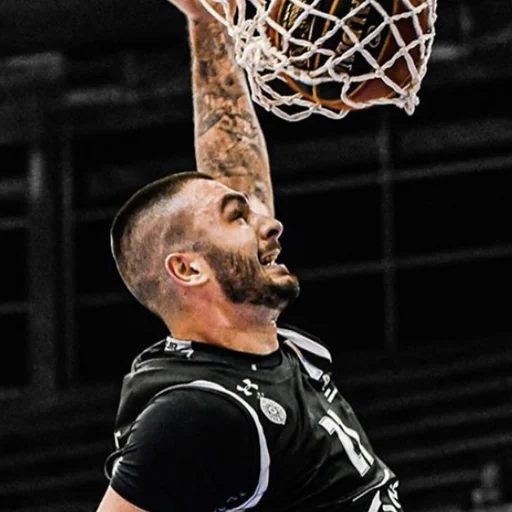
Nikola Janković
Co-founder · Former professional basketball player
Nikola Janković is a former professional basketball player — a 6'9" forward and the 2016–17 ABA League MVP — who played for Partizan, Union Olimpija and Mega, among others. Today he runs a pilates studio and gym focused on strength, mobility and overall wellbeing. He co-founded PUSHapp to make consistent, measurable training simple for everyone.