
Form & Technique
Pushup Reps in Reserve Explained: How to Regulate Load
Pushup reps in reserve explained: learn how RIR-based RPE, Session RPE, and perceptual scales guide safe, effective pushup training and load progression.

Understanding reps in reserve (RIR) for pushups and perceptual scales
What is Reps in Reserve (RIR) and how it translates to pushups
RIR is the number of pushups you could still perform with good form after finishing a set. If you stop with two reps in reserve, you were not at failure. For steady progress, aim for an RIR around 2 to 3 on most days; on tougher days you can target 0 to 1 occasionally.
RIR vs. RPE vs. Session RPE in bodyweight training
RIR looks at how close you are to failure at the end of a set. RPE is how hard that set felt in the moment. Session RPE captures the whole workout's effort after you finish. Use them together: RIR guides load, RPE helps you adjust each set, session RPE shapes plan for the next session.
Using perceptual wellness scales to align pushup load progression
Scan wellness scales before training, noting energy, sleep, and soreness. If scores are low, shorten the set, slow the tempo, or choose a easier variation. If scores are high, nudge the RIR target modestly to progress.
Practical pushup, specific RIR ranges: targeting strength, hypertrophy, and endurance
Use these pushup specific RIR ranges to guide load progression. Tempo, pause reps, and variations shift how hard you're actually loading the chest and shoulders.
Strength-focused RIR targets for pushups (incline/decline variations)
- incline pushups: aim for 0 to 2 RIR with 4 to 12 reps; tempo about two seconds down, one second up.
- standard pushups: 0 to 1 RIR for roughly 5 to 12 reps; steady two down, one up.
- decline pushups: 1 to 3 RIR for about 3 to 8 reps; use two seconds down, one up.
Hypertrophy-focused RIR targets and representative rep schemes
- incline pushups: 2 to 3 RIR, 8 to 15 reps; tempo three seconds down, one second up.
- standard pushups: 2 to 3 RIR, 8 to 12 reps; tempo two down, two up.
- decline pushups: 2 to 3 RIR, 6 to 12 reps; tempo two down, two up.
Endurance-focused RIR targets with higher-rep pushup volumes
- incline pushups: 3 to 5 RIR, 15 to 25+ reps; tempo one down, one up.
- standard pushups: 3 to 5 RIR, 12 to 20 reps.
- decline pushups: 3 to 5 RIR, 8 to 15 reps.
How tempo and pause reps modify RIR targets and load
- slowing tempo increases time under tension and lowers effective RIR by about one point.
- pause reps at the bottom remove bounce and reduce momentum, lowering RIR further and increasing chest load.
- map RIR to RPE and Borg scales: 0 RIR is roughly RPE 9 to 10, Borg near 9. Track pushup reps in reserve explained and adjust incline to hit the target RIR next set. Keep a simple log: track RIR, tempo, incline, and pause reps so you can hit the target RIR session to session.
Auto-Regulated progression for pushups: using RIR, RPE, and session RPE
Auto-regulation uses how you feel to guide pushup load. You blend RIR with RPE and track session RPE to shape daily effort and long-term progress.
Step-by-step framework: baseline assessment, target setting, monitoring, and progression
- Baseline assessment: do a controlled pushup set to near failure, record reps, and note how many more you think you could do with good form (RIR).
- Target setting: pick a working target for RIR or RPE for the week and decide whether you want a harder or easier day.
- Monitoring: after each session, record the set RPEs and the overall session RPE; log a quick wellness read on sleep, fatigue, and mood.
- Progression: if you meet the target easily, reduce RIR by one or add a rep; if it felt tough, hold the line or back off while preserving form.
Athlete-adjusted configurations by level
- Beginner: favor higher RIR, focus on technique, use incline pushups to build tolerance.
- Intermediate: increase volume gradually while maintaining a moderate RIR.
- Advanced: experiment with lower RIR targets occasionally, keeping form pristine.
Borg scale vs RIR in bodyweight exercises: practical notes
RIR aligns with day-to-day load better for pushups. If you use Borg, treat it as a rough guide and translate its sense into a practical RIR cue tomorrow.
Putting it into a weekly pushup plan
Plan three sessions with varied RIR targets and a rest day between. Adjust by wellness and keep the baseline test in sight.
Frequently asked questions
What does reps in reserve (RIR) mean and how is it used to regulate pushup training?
RIR is the number of pushups you could still perform with clean form after finishing a set. It helps regulate training by giving you a margin to stay out of failure and guiding next-set decisions and progression, with typical targets around 2 to 3 on most days and 0 to 1 on tougher days.
How should you determine your RIR during a set of pushups?
Watch for form cues such as hips, elbows and tempo to estimate how many clean reps you have left. Stop when those cues indicate your margin has shrunk, then use that RIR to plan the next set.
How do RIR, RPE, and session RPE differ and work together in pushup training?
RIR estimates proximity to failure at the end of a set, RPE is how hard the set felt in the moment, and session RPE captures the workout's overall effort after finishing. Use them together to guide load per set, adjust pace within sets and plan progression from session to session.
How can perceptual wellness scales influence pushup load progression?
Check wellness scales before training to gauge energy, sleep and soreness. If scores are low, shorten the set or ease variation; if scores are high, you can modestly push toward a smaller margin.
About the authors
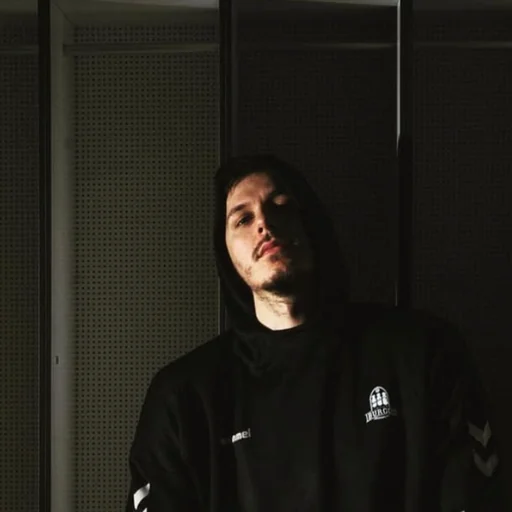
Goran Huskić
Co-founder · Professional basketball player
Goran Huskić is a Serbian professional basketball player — a 6'11" center currently playing for Monbus Obradoiro in Spain's Primera FEB. He won the 2019–20 Basketball Champions League with San Pablo Burgos and has competed professionally across Spain, Germany, Lithuania, Serbia and the United States. He co-founded PUSHapp to bring pro-level training discipline to everyday workouts.
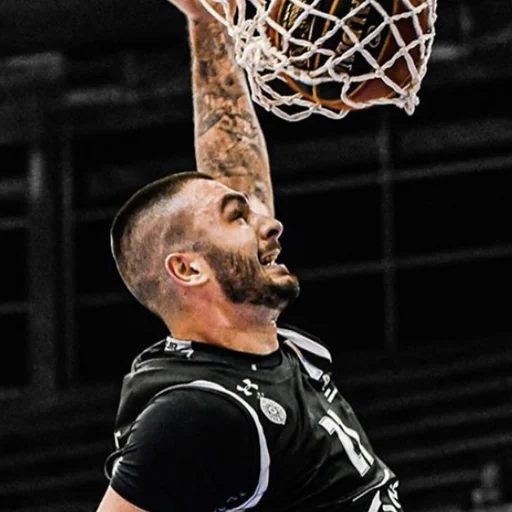
Nikola Janković
Co-founder · Former professional basketball player
Nikola Janković is a former professional basketball player — a 6'9" forward and the 2016–17 ABA League MVP — who played for Partizan, Union Olimpija and Mega, among others. Today he runs a pilates studio and gym focused on strength, mobility and overall wellbeing. He co-founded PUSHapp to make consistent, measurable training simple for everyone.