
Form & Technique
Pushup Foot Width and Stability: Technique Guide
Learn how pushup foot width and stability affect form, performance, and injury prevention with practical technique tips.


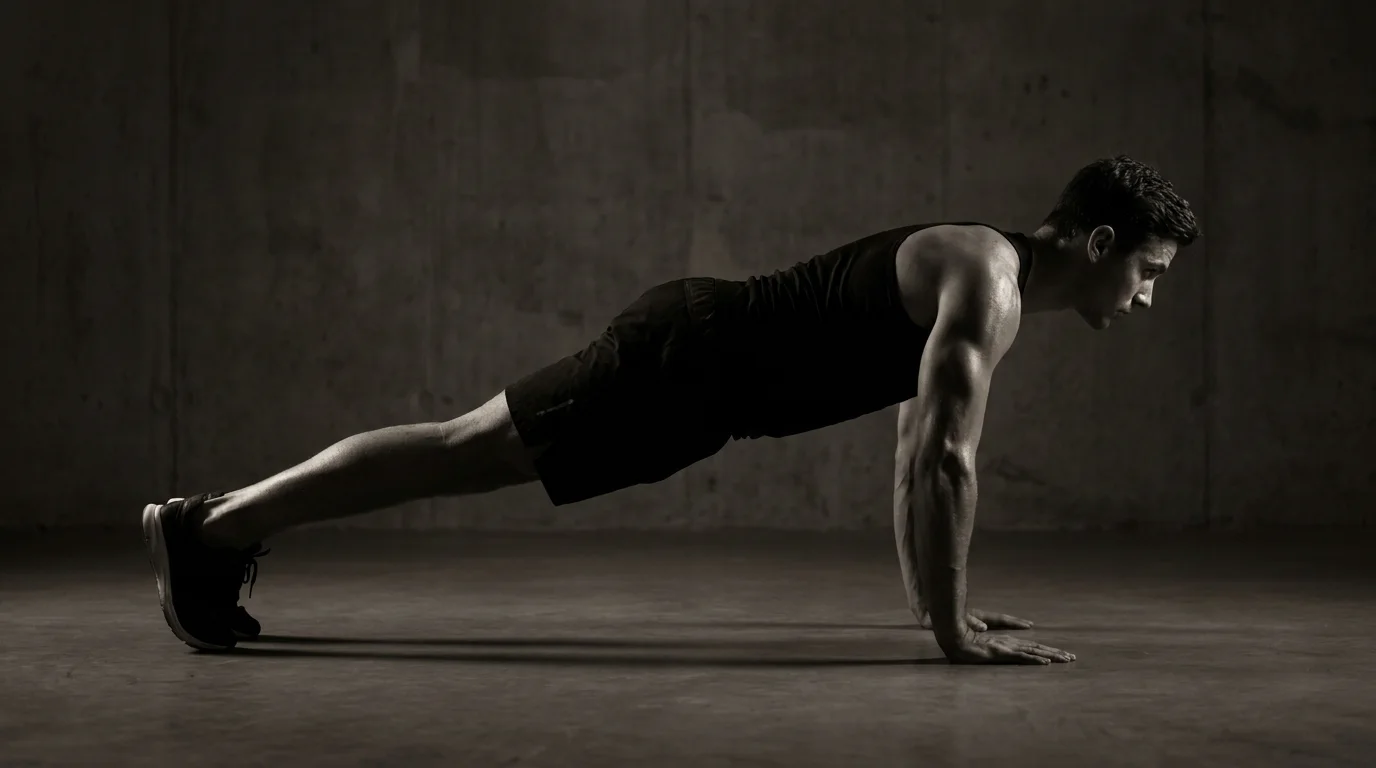
Biomechanics of foot width and push-up stability
Base of support and center of gravity
- A wider foot width increases the base of support side to side, making wobble less likely.
- The center of gravity sits along your torso; a broader stance helps keep weight distribution toward the midline.
Elbow angle and press mechanics
- Hand placement width sets the elbow angle and the line of push.
- A wider foot stance helps keep the hips level, which affects torso angle and the path your chest takes toward the floor.
Core, hips, and trunk engagement
- A stable core prevents the hips from sagging; brace as if lifting your rib cage.
- Wider foot width can demand more glute and thigh engagement to hold a solid line.
Interplay between foot width and hand placement width
- Align foot and hand widths to form a comfortable straight line from head to heels.
- For APFT style sets, pick a width you can maintain with clean form.
What we know and don't: EMG data gaps
- EMG data on foot width and push up muscle activity is limited and not universal.
- Use your own cues and prioritize maintaining form.
Foot width strategies: selecting width, variations, and injury prevention
Choosing a foot width: narrow, standard, and wide
- Narrow: feet close under hips or slightly in front. Load shifts toward shoulders and core. Keep hips level, brace abs.
- Standard: feet hip width. Stable base, comfortable elbow angle.
- Wide: feet wider than hips. Stable base, less forward lean; may heighten shoulder demand if mobility is limited. Keep hips level.
Effects on elbow angle and shoulder load
Elbow angle mainly follows hand width. Foot width moves your center of mass and torso tilt. Narrow can push the elbows closer and raise shoulder effort. Wide can keep the torso more upright but may stress shoulders if mobility is limited.
APFT-focused foot width patterns and scoring implications
APFT push ups favor a standard width for consistent scoring. Using nonstandard widths during the test can affect depth and rep count.
Injury prevention cues tailored to each width
- Narrow: brace core, prevent hip sag; progress with incline knee push ups.
- Wide: limit elbow flare, keep scapular retraction; practice on an incline if needed.
Progressions and regressions by width
- Narrow: incline knee push ups, then full narrow.
- Standard: knee push ups to full.
- Wide: incline wide push ups, then standard.
Technique cues, programming, and progression for stable push-ups
Use these cues to set up, stay aligned, and progress toward stable push-ups at any width.
Setup and alignment cues for stability
- Hands just outside shoulder width, wrists under shoulders.
- Feet hip width, toes forward; brace core and glutes.
- Maintain a straight line head to heels; hips level.
- Squeeze shoulder blades down and keep the gaze neutral.
Common mistakes by width and fixes
- Width too wide, hips wobble. Fix by returning to shoulder width and bracing harder.
- Width too narrow, elbows flare. Fix by widening to shoulder width and keeping elbows about 45 degrees.
- Hips sag or rib flare. Fix by bracing and pausing briefly at the bottom.
Width-specific programming: sample progression plan
- Weeks 1 to 2: shoulder width, tempo 2-0-2, 3 sets of 6-8 reps.
- Weeks 3 to 4: add 2 reps per set or a 1 second bottom pause.
- Weeks 5 to 6: keep width, add a tempo variation or a second set at the same width.
Measuring stability and tracking progress
- Check torso alignment in a mirror or video; hips stay level.
- APFT evaluation: perform a two minute max with strict form and record reps.
Integrating core and hip bracing for stability
- Brace core and hips before each rep; exhale on push.
- Keep pelvis neutral, rib cage quiet, and glutes engaged.
Next steps: experiment with widths in warmups and track reps to see what holds your brace best.
Frequently asked questions
Does foot width affect push-up stability?
Yes. A wider stance increases the base of support and helps balance, but it can raise shoulder demand and make bracing harder if mobility is limited. A narrower stance keeps elbows closer to the body and helps maintain a neutral spine, but it shifts load toward the shoulders and core.
What core and posture cues improve push-up stability?
Brace the core and glutes to hold a straight line from head to heels with hips level and ribs quiet. Squeeze the shoulder blades down and keep the gaze neutral.
What is the proper hand placement for push-ups in an APFT?
Hands just outside shoulder width with wrists under shoulders. For APFT, use a standard width to keep depth and reps consistent, and keep elbows around 45 degrees as you push.
How is the Army APFT push-up evaluated and scored?
APFT push-ups favor a standard width for consistent scoring. Using nonstandard widths during the test can affect depth and rep count.
About the authors

Goran Huskić
Co-founder · Professional basketball player
Goran Huskić is a Serbian professional basketball player — a 6'11" center currently playing for Monbus Obradoiro in Spain's Primera FEB. He won the 2019–20 Basketball Champions League with San Pablo Burgos and has competed professionally across Spain, Germany, Lithuania, Serbia and the United States. He co-founded PUSHapp to bring pro-level training discipline to everyday workouts.

Nikola Janković
Co-founder · Former professional basketball player
Nikola Janković is a former professional basketball player — a 6'9" forward and the 2016–17 ABA League MVP — who played for Partizan, Union Olimpija and Mega, among others. Today he runs a pilates studio and gym focused on strength, mobility and overall wellbeing. He co-founded PUSHapp to make consistent, measurable training simple for everyone.