
Form & Technique
Pike Pushup Form: Mastering the Move
Learn pike pushup form step by step, including setup, movement, and safety tips to strengthen shoulders.


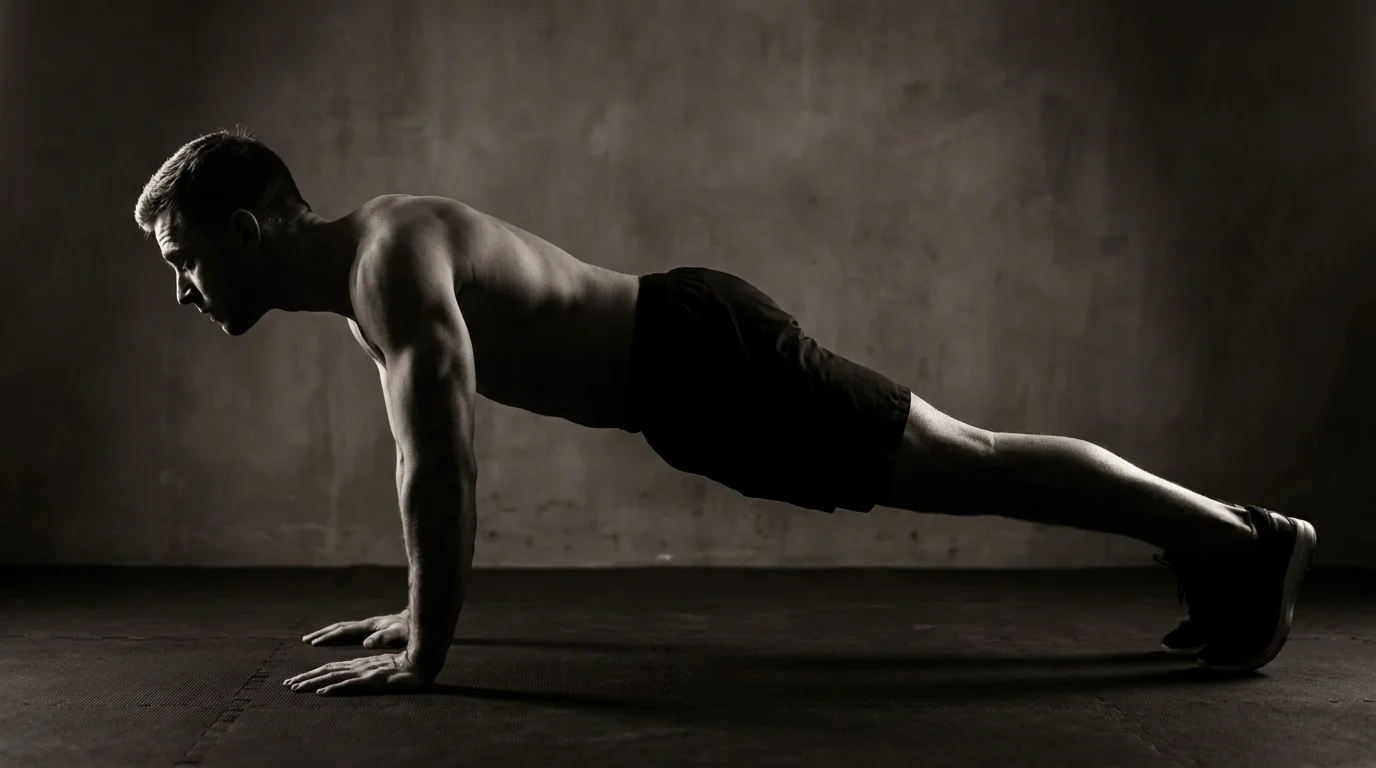
Pike pushup form fundamentals: setup, alignment, and muscles worked
Starting position: hands, feet, and hip height
- Hands slightly wider than shoulder width, fingers spread, wrists under shoulders.
- Feet hip width apart, hips lifted into an inverted V.
- Neck long, gaze between your hands, scapulars set softly down the back.
Shoulder and hip alignment: maintaining the inverted-V
- Hips stay high and in line with wrists; avoid sagging or piking.
- Chest stays forward to brace the shoulders without pinching the ribs.
- Keep a stable scapular position through the descent and press.
Elbow angle and load: target ~45 degrees
- Lower elbows to about 45 degrees from your torso.
- Elbows track toward the floor, not straight out to the sides.
- Press upward using the shoulders and triceps.
Muscles worked: primary and secondary players
- Primary: anterior deltoids, triceps, upper chest.
- Secondary: serratus anterior, core stabilizers, traps.
Tempo and depth: how slow and how deep
- For the pike pushup form, descent is controlled; a slow tempo helps control load.
- descend 3 seconds, press up 1 to 2 seconds.
- Lower until the head nears the floor with your hips still high.
Common mistakes and fixes
- Hips sagging: brace the core and squeeze glutes.
- Elbows flaring: tuck elbows toward the torso at about 45 degrees.
- Neck jutting: keep neck in line with spine, gaze forward.
Tempo, progressions, and home-friendly variations
Step-by-Step progression path: from wall-assist to handstand prep
- Start with wall-assisted pike pushups, feet resting on the wall for support.
- Progress to pike pushups on the floor with the feet on a low surface to reduce load gradually.
- Move to floor pike pushups with a longer range of motion and less wall contact.
- Finish with handstand prep using the wall for support, like wall walks and holds.
Tempo Charts: Strength (4-6 reps) vs Hypertrophy (8-12 reps) with Deload Weeks
- Strength tempo: 3-0-1-0, rest 2-3 minutes, deload every 4-6 weeks with 40-60% fewer sets.
- Hypertrophy tempo: 2-0-2-0, rest 60-90 seconds, deload after 4-6 weeks by cutting volume similarly.
Example sets and reps for each stage
- Stage 1: 3x6 at 3-0-1-0
- Stage 2: 3x6 at 3-0-1-0
- Stage 3: 3x8 at 2-0-2-0
- Stage 4: 3x6 at 2-0-2-0
- Stage 5: 3x4-6 at 2-0-2-0
No-Equipment and minimal-gear variations
- No equipment pike pushups on the floor, mirror the same tempo.
- No equipment pike pushups against a wall or countertop.
- Minimal gear: use a sturdy chair, low bench, or parallettes to adjust angle; compare pike pushup variations to the decline push-up for shoulder loading.
Shoulder safety, biomechanics, and comparisons to related push-ups
Elbow angle and hip alignment: getting the load right
- In pike pushup form, how to perform pike pushup is guided by aiming for about a 45 degree elbow angle as you descend, not flared or tucked too close.
- Keep the hips high and the spine neutral so the load stays through the shoulders rather than the wrists.
Scapular mechanics and serratus anterior activation
- Let the shoulder blades protract as you press, with the serratus anterior waking up to stabilize the scapula.
- Brace the chest and ribs to maintain control through the movement rather than letting the thoracic spine collapse.
Safety cues: pain, impingement signals, and when to stop
- Stop if you feel sharp pain or a pinching sensation in the front of the shoulder.
- Look for impingement signs like limited range or a creeping ache and switch to a gentler variation.
Pike pushup vs decline push-up: shoulder development and mobility
- Pike pushups recruit more shoulder flexion and serratus activation, enhancing overhead pushing readiness.
- Decline push-ups shift some load to the upper chest and front delts and may be easier on scapular control.
Frequently asked questions
How do you perform a pike push-up correctly?
Start in an inverted V with hips high, hands slightly wider than shoulder width, and neck long with your gaze between your hands. Lower your elbows to about 45 degrees while keeping the hips in line and the chest forward, then press up with the shoulders and triceps, using a slow controlled tempo (descend about 3 seconds, press 1 to 2 seconds).
What muscles do pike push-ups work?
Primary: anterior deltoids, triceps, and upper chest. Secondary: serratus anterior, core stabilizers, and traps.
What are common mistakes in pike push-ups and how can I fix them?
Hips sagging: brace the core and squeeze the glutes. Elbows flaring: tuck elbows toward the torso to about 45 degrees. Neck jutting: keep the neck in line with the spine and gaze forward.
How can I modify pike push-ups for beginners?
Begin with wall assisted pike pushups, then move to pike pushups with the feet on a low surface, and finally floor pike pushups with a longer range of motion.
About the authors

Goran Huskić
Co-founder · Professional basketball player
Goran Huskić is a Serbian professional basketball player — a 6'11" center currently playing for Monbus Obradoiro in Spain's Primera FEB. He won the 2019–20 Basketball Champions League with San Pablo Burgos and has competed professionally across Spain, Germany, Lithuania, Serbia and the United States. He co-founded PUSHapp to bring pro-level training discipline to everyday workouts.

Nikola Janković
Co-founder · Former professional basketball player
Nikola Janković is a former professional basketball player — a 6'9" forward and the 2016–17 ABA League MVP — who played for Partizan, Union Olimpija and Mega, among others. Today he runs a pilates studio and gym focused on strength, mobility and overall wellbeing. He co-founded PUSHapp to make consistent, measurable training simple for everyone.