
Form & Technique
Perfect Pushups: Master Form & Variations
Learn perfect pushups with step-by-step form cues, common mistakes to avoid, and variations for all levels.


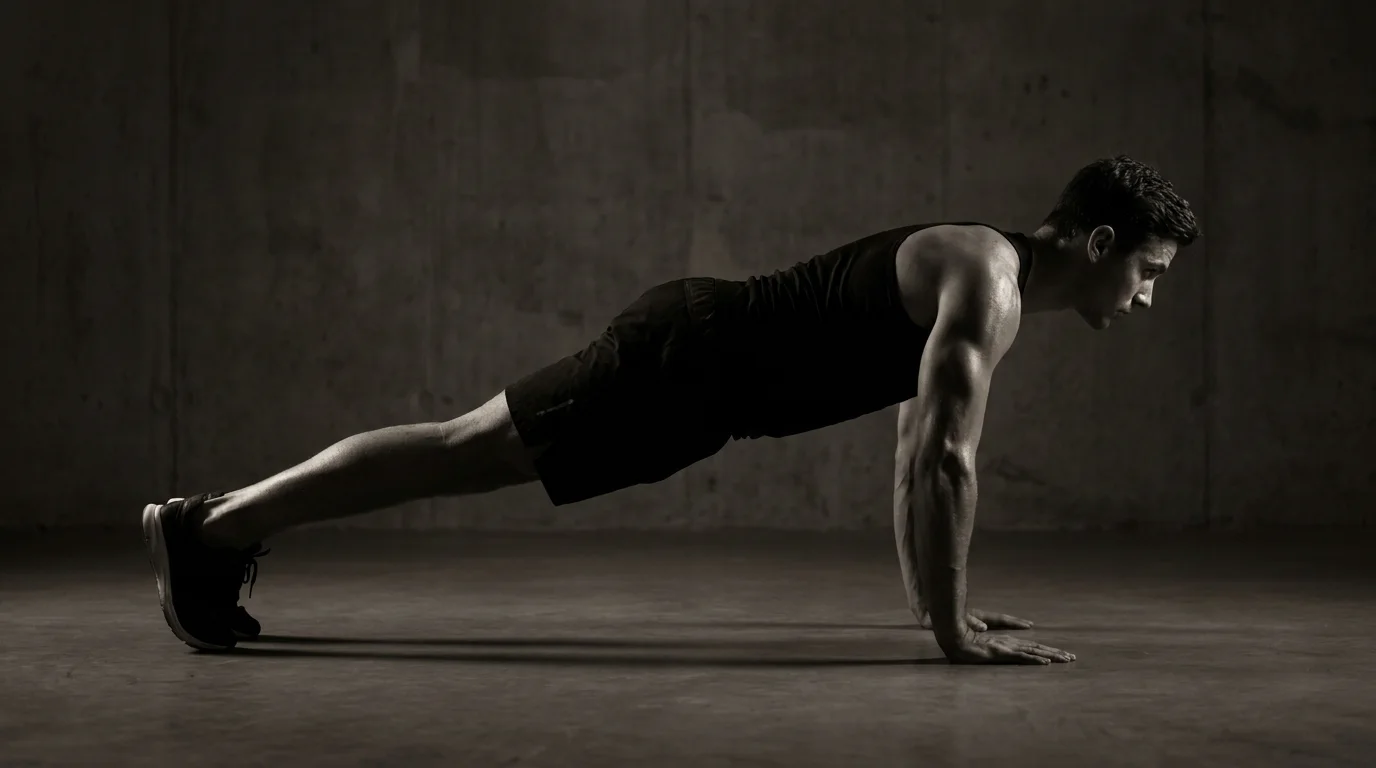
Foundation of perfect pushups: setup, alignment, and core bracing
Hand position and shoulder alignment
Place hands slightly wider than shoulder width with fingers forward. Draw shoulders away from the ears and set the shoulder blades down the back. This helps scapular stability and keeps the movement moving through the chest and triceps.
Spinal neutrality
Keep a straight line from crown to heels. Don't let the hips sag or tilt. A neutral spine supports solid push-up form and protects the lower back.
Rib cage position and scapular control
Keep the rib cage quiet and steady. Let the scapulae stay engaged without shrugging or flaring the elbows too wide.
Tempo, breathing, and bracing
Breathe in on the way down, breathe out on the push. Brace the core as if preparing for a punch, and move with control.
Depth guidelines and common mistakes
Lower until the chest is near the floor or the elbows reach about 90 degrees. Watch for hips rising, shoulders hitching, or elbows flaring, these ruin form and limit strength gains.
Progressions, variations, and tempo: from beginner to advanced
Beginner regressions and safe start
- Wall push-up: stand a comfortable distance from the wall, hands at chest height, body in a straight line. Bend elbows to about 45 degrees and push back. 8-12 reps.
- Incline push-up on a bench or counter: hands on the elevated surface, feet on floor, core tight. Progress to knee push-up when ready.
Push-up variations and when to use them
- Incline push-up for beginners to reduce load and protect shoulders.
- Decline push-up to increase difficulty by elevating the feet.
- Grip choices: wide for chest, standard for balance, close for triceps.
Tempo, reps, and program progressions
- How to do a push-up with proper form begins with a controlled tempo: lower 2-3 seconds, pause 0-1 seconds, rise 1-2 seconds.
- Start with 3 sets of 5-8 on the chosen variation, add reps or a set every week or two as form holds.
- Keep the core braced and body in a straight line.
Choosing variations based on goals and limb length
- For chest activation, use a wider grip and lower incline to reduce range.
- If shoulder comfort is priority, start higher with an incline and shorten the range. Perform one standard push-up with a straight body and tight core.
Advanced form, depth, and corrective drills: stability, alignment, and carryover
Scapular stability and rib cage alignment cues
- Set the shoulder blades down and together, then brace the core as you start the press.
- Keep the rib cage neutral and avoid flaring or twisting the torso.
- Hold a straight line from head to heels and prevent hip or spine rotation.
Depth by limb length and mobility: personalization tips
- If you wonder what is the correct elbow angle for a push-up, aim for roughly 45 degrees from your torso.
- Depth should match limb length and mobility. Longer arms or limited mobility mean a higher bottom. Shorter arms or good mobility can descend closer to the floor.
- Pause at depth while preserving scapular stability and a neutral spine.
Common advanced errors and corrective drills
- Hip sag or pelvis rotation. Drill: hold a neutral pelvis in a plank, then press up.
- Elbows flaring out. Drill: perform slow paused pushups with elbows tucked near 45 degrees.
- Rib cage flaring during descent. Drill: scapular pushups to reinforce neutral rib alignment.
Bench press carryover and functional benefits
- Pushups demand core engagement and rib cage control, which builds shoulder stability and translates to real life pushing tasks.
Frequently asked questions
What is the proper push-up form?
Start with hands under the shoulders, feet hip width, and a straight line from head to heels. Keep the shoulder blades engaged and pinched toward the spine, and avoid letting the chest sag or the elbows flare; lower with control and press up evenly.
How deep should you go in a push-up?
Lower until the chest is near the floor or the elbows reach about 90 degrees. Depth should match your limb length and mobility; longer arms or limited mobility mean a higher bottom, while shorter arms or good mobility allow closer descent.
What should I do if I can't perform a full push-up yet?
Try beginner regressions such as wall push-ups or incline push-ups to reduce load while you build strength. When ready, progress to knee push-ups or higher incline and keep the core braced.
What are common mistakes people make when doing push-ups?
Hips rising or sagging, shoulders hitching, and elbows flaring too wide are common form breakdowns. Keep a straight line from head to heels, set the scapulae, and lower with control.
About the authors

Goran Huskić
Co-founder · Professional basketball player
Goran Huskić is a Serbian professional basketball player — a 6'11" center currently playing for Monbus Obradoiro in Spain's Primera FEB. He won the 2019–20 Basketball Champions League with San Pablo Burgos and has competed professionally across Spain, Germany, Lithuania, Serbia and the United States. He co-founded PUSHapp to bring pro-level training discipline to everyday workouts.

Nikola Janković
Co-founder · Former professional basketball player
Nikola Janković is a former professional basketball player — a 6'9" forward and the 2016–17 ABA League MVP — who played for Partizan, Union Olimpija and Mega, among others. Today he runs a pilates studio and gym focused on strength, mobility and overall wellbeing. He co-founded PUSHapp to make consistent, measurable training simple for everyone.