
Muscles & Benefits
How Many Pushups to Build Muscle: A Guide
Learn how many pushups to build muscle and a practical progression plan to grow chest and upper body strength.


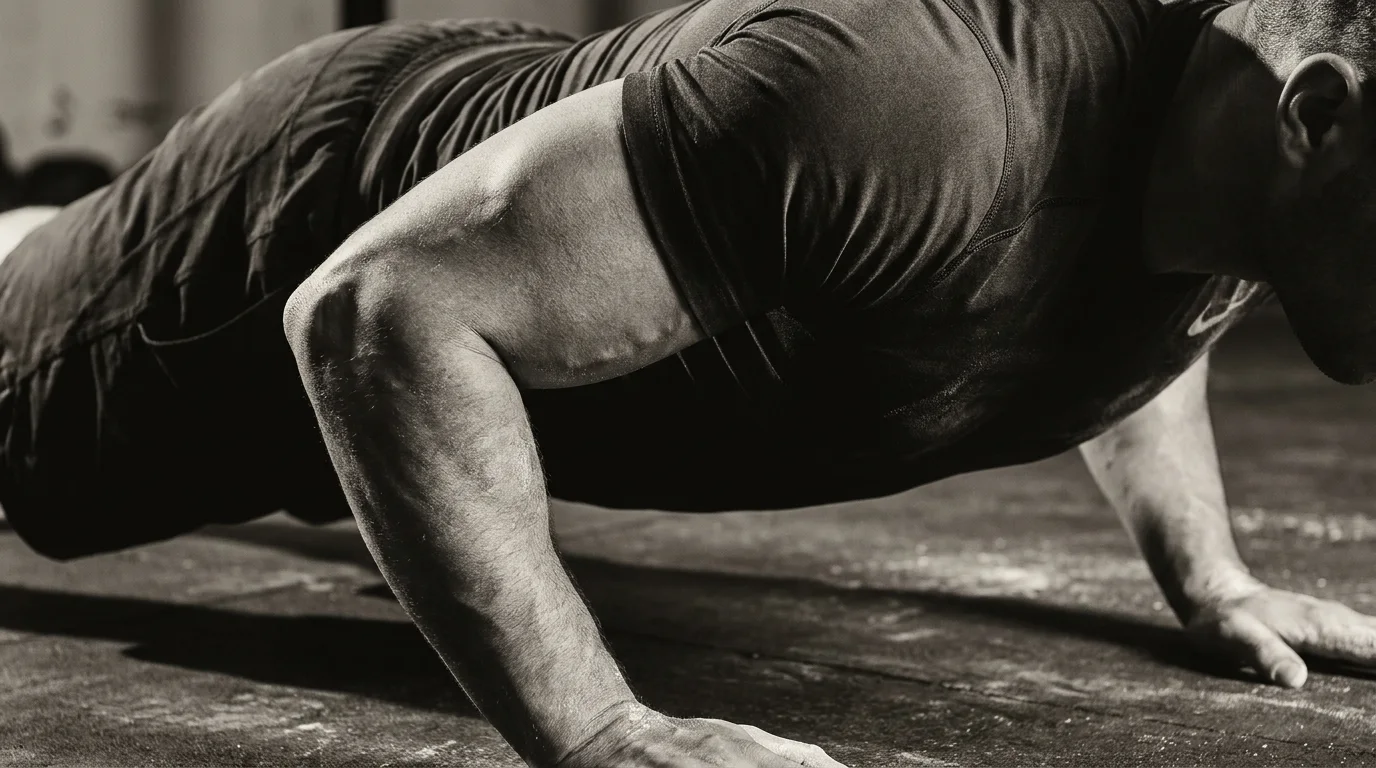
Foundations: How many pushups to build muscle and what actually drives hypertrophy
Hypertrophy with push-ups comes from mechanical tension, time under tension, and progressive overload. Lean into a controlled, full range of motion and your chest muscles will adapt, even with bodyweight.
Tempo, reps, and rest: dialing in time under tension
- Tempo matters: aim a controlled descent (about 2 seconds), a brief pause at the bottom, and an equal or slightly longer press up (1–2 seconds).
- Reps: target 6–12 per set, 3–5 sets per session, approaching technical fatigue.
- Rest: 60–90 seconds between sets to balance effort and recovery.
- Push-up form: keep a stable torso, tucked ribs, and glutes braced; don’t let the chest sag.
Hypertrophy-friendly rep ranges and progressive overload
- Start near 6–12 reps per set; add a set or a rep as you grow stronger.
- Progression: slow tempo, elevate feet, or use a weighted vest once standard push-ups stall.
- Push-up progression: wall → knee → standard → decline; vary hand position to stress the chest differently.
Beyond reps: measuring progress with strength tests and circumferences
- Track strength: a max reps to failure test at a fixed tempo every 4–6 weeks.
- Measure progress: chest and upper-arm circumferences with a consistent tape placement.
- Use these cues alongside push-up form and progression to gauge hypertrophy.
Push-up progressions and resistance strategies to maximize chest muscle growth
From knee push-ups to advanced chest-focused variations
- Start with knee push-up: brace core, keep hips in line, press with full range—an essential push-up progression.
- Progress to incline push-ups (hands on a bench), then standard push-ups; finish with decline push-ups (feet on a bench) to stress the upper chest. These are push-ups for chest muscles.
- Adjust grip width: wide for outer chest, narrow for inner chest. Shoot for 8–12 reps with solid form.
Tempo, angle, and range-of-motion variations
- Use tempo variations: 3-second descent, pause 1–2 seconds at bottom, then press up; tempo variations keep tension.
- Vary range of motion: full ROM when able; add partial reps to address sticking points.
- Elevating or declining angles shift emphasis in this bodyweight chest workout: elevating the feet increases upper-chest load; lowering height emphasizes mid/lower chest.
Introducing external resistance: weighted vests, bands, and elevated loads
- When you can complete 12–15 reps, add resistance. Yes, you can build muscle with pushups alone with steady progression.
- A light weighted vest (5–10% bodyweight) or bands provide progressive overload.
- Use bands for top-range resistance; a backpack with weights is a practical alternative.
Structured plan, tracking, and injury prevention: 4–6 weeks to real gains
Milestones and metrics: reps, RIR, and circumference changes
Start with a baseline: 1–2 solid sets to failure, record reps. Use reps-in-reserve (RIR) to guide effort: weeks 1–2 target RIR 2; weeks 3–4 target RIR 1; weeks 5–6 push some sets with RIR 0–1. Expect gradual rep increases: roughly 6–10 reps per set in weeks 1–2, 8–12 in weeks 3–4, 10–14 by weeks 5–6. Track progress push-ups (max reps over a fixed set, and consistency week to week) and circumference changes around chest and arms every two weeks. This fuller picture helps answer how many pushups to build muscle fast and how many pushups to build upper body strength.
Mobility and shoulder health prerequisites for push-ups
Prioritize scapular control and thoracic mobility. Include 5 minutes of warm-up: wall slides, band pull-aparts, overhead reach, and controlled push-up reps with full range. Keep pain-free form.
When and how to add external resistance: vest, bands, and incline/decline tweaks
Plateaus after solid neuromuscular adaptation: add load gradually. Vest or bands start at ~5–10% bodyweight; switch between incline/decline to adjust lever length. Use this only when RIR targets can be met consistently.
Frequently asked questions
How many pushups should I do to build muscle?
Aim for 6–12 reps per set, 3–5 sets per session, with 60–90 seconds of rest. Use a controlled tempo and progressive overload ( tempo, elevating feet, or weighted variants ) as you get stronger.
Do pushups build muscle or do you need weights?
Yes—bodyweight push-ups can build meaningful muscle when trained with hypertrophy-focused pacing and progressive overload; if standard push-ups stall, add resistance like a weighted vest or bands.
What is the proper push-up form?
Maintain a stable torso with a braced core, tucked ribs, and glutes; keep full range of motion and avoid letting the chest sag.
How long does it take to build muscle with pushups?
You can see meaningful gains in about 4–6 weeks with consistent practice and progressive overload, guided by tracking reps, effort (RIR), and circumferences.
About the authors

Goran Huskić
Co-founder · Professional basketball player
Goran Huskić is a Serbian professional basketball player — a 6'11" center currently playing for Monbus Obradoiro in Spain's Primera FEB. He won the 2019–20 Basketball Champions League with San Pablo Burgos and has competed professionally across Spain, Germany, Lithuania, Serbia and the United States. He co-founded PUSHapp to bring pro-level training discipline to everyday workouts.

Nikola Janković
Co-founder · Former professional basketball player
Nikola Janković is a former professional basketball player — a 6'9" forward and the 2016–17 ABA League MVP — who played for Partizan, Union Olimpija and Mega, among others. Today he runs a pilates studio and gym focused on strength, mobility and overall wellbeing. He co-founded PUSHapp to make consistent, measurable training simple for everyone.