
Comparisons
Hindu pushups vs regular pushups: A quick comparison
Hindu pushups vs regular pushups: learn the key differences in technique, muscles worked, and workout roles to decide which to add to your routine.


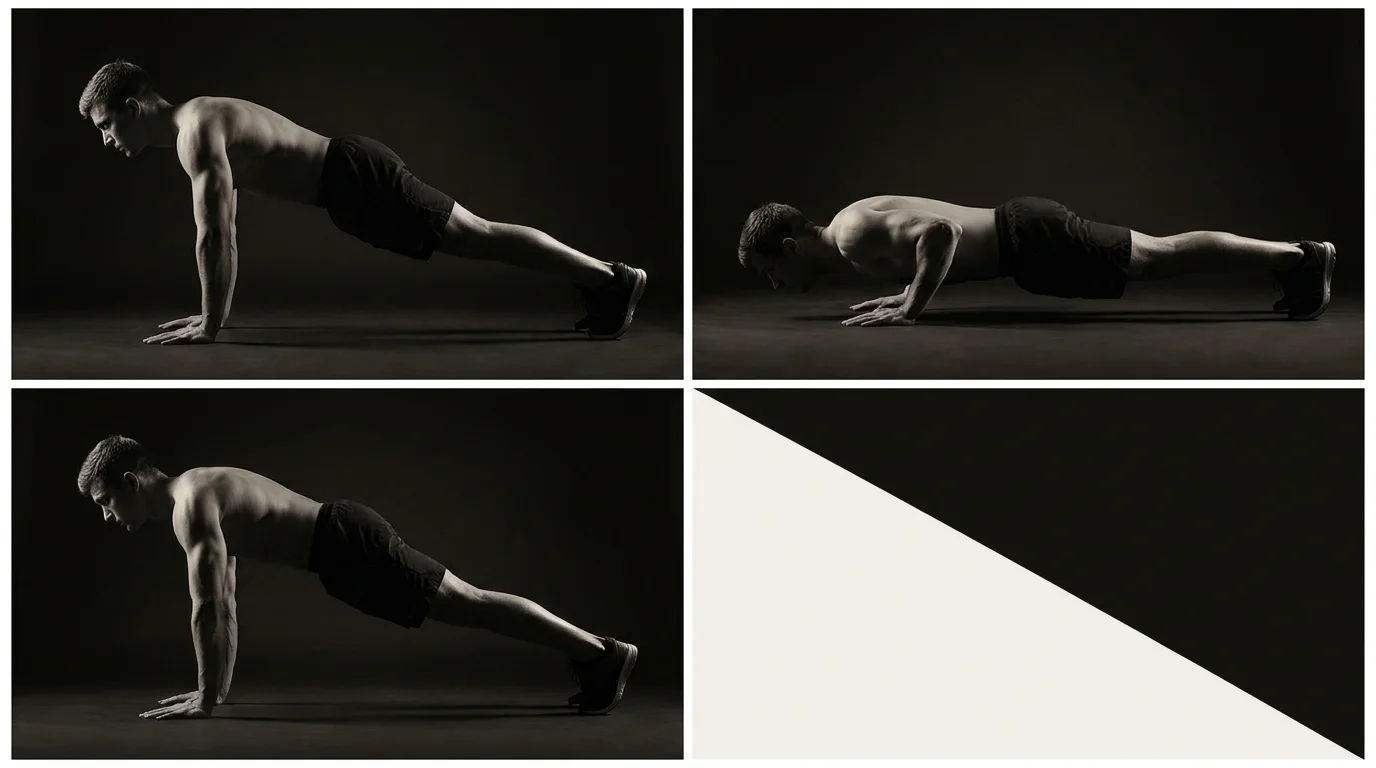
What Hindu pushups are: definitions, names, and context
Definition and common names
- Hindu pushups are a flowing bodyweight drill used in many conditioning programs.
- The movement links a back bend with a forward press in a sweeping arc, usually starting in a down dog like position and finishing in a crouch.
- They are commonly called Hindu pushups, Indian pushups, Dands or Dand push-up, and Diver bomber push-up.
- In yoga, Chaturanga dandasana is a related pose, but Hindu pushups form a distinct sequence.
Movement pattern and muscles involved
- The sequence works the shoulders, chest, triceps, and core.
- It uses a forward press and a controlled backbend, with the hips guiding the flow from start to finish.
- Expect midline control and shoulder stability as you move through the arc.
Historical and cross-discipline context (yoga and wrestling)
- Historically, Dands are used in Indian wrestling as conditioning for upper body strength.
- In yoga, Chaturanga dandasana appears as a push sequence in sun salutations.
- Diver bomber push-up is another name found in fitness circles.
Technique, safety, and coaching cues for Hindu vs regular pushups
Key mechanics and tempo
- Hindu pushups begin in a down dog, hips high, hands under shoulders. Flow forward along a curved arc, chest moving ahead of the hands, elbows soft at the sides, then press up into a cobra-like finish and push hips back to start.
- Regular push-up starts in a straight plank. Lower with elbows about 45 degrees until the chest brushes the floor, then press back up with the hips level.
- Breathing and tempo: inhale through the arc and lowering phase, exhale as you rise. Keep a steady tempo rather than rushing.
- Scapular stability and core engagement: keep shoulders away from the ears, pin the shoulder blades, and brace the core to protect the spine.
- Hamstrings and lower back safety: lightly engage the hamstrings and glutes; if the back rounds, reduce range or revert to a regression.
Common form flaws and how to fix them
- Hips sag or pike in Hindu pushups: brace the core and glutes, shorten the arc.
- Elbows flaring beyond 45 degrees: cue elbows tucked, slow the tempo.
- Neck misalignment: look one or two steps ahead to keep the spine in line.
Cues to protect the spine and hips
- Maintain neutral spine and hips square to the floor. For reference, use a Chaturanga dandasana style cue: lower with elbows close to the ribs and keep the core braced.
Progressions, programming, and practical alternatives
This section maps programming Hindu pushups progression from standard pushups to Hindu pushups, with tempo, reps, sets, and rests to suit different starting points.
From standard to Hindu pushups: step-by-step progression
- standard pushups with tempo two down, one up; 3 sets of 6-8; rest 60-90 seconds.
- incline pushups to build strength with less load; 3-4 sets of 6-12; tempo two down, one up; rest 60 seconds.
- dive bomber push-ups as a bridge; 4-6 reps per set; 3-4 sets; rest 90 seconds.
- Hindu pushups as the goal; 3-4 sets of 4-6 reps; move with control. Hindu pushups compare to regular pushups in that they recruit the same muscles but with a longer arc that can demand more shoulder mobility and core control.
Tempo, breathing, and rests for progression
- inhale on the descent, exhale on the push; keep a moderate pace.
- between sets, rest 60-90 seconds; as control improves, shorten the rests gradually.
- think of the tempo as a guide more than a rule.
Beginner-friendly options and alternatives
- incline pushups and dive bomber push-ups serve as bridges.
- when needed, start with wall or counter pushups and progress.
- put the four week progression into your calendar and complete four workouts, ending with Hindu pushups in solid form.
Frequently asked questions
What exactly is a Hindu pushup and how does it differ from a regular pushup?
Hindu pushups are a flowing movement that starts with the hips up and moves in an arc through a chest down to a low cobra, then reverses. Regular pushups are a straight line press from a solid plank with the spine and hips in one plane. The Hindu pushup emphasizes mobility and multi joint control, while the regular pushup builds a steadier vertical press.
Do Hindu pushups work the same muscle groups as standard pushups, or are they different?
They both target the shoulders, chest, triceps and core. Hindu pushups add mobility and control through the arc, while standard pushups emphasize a steadier vertical press.
What is the proper step-by-step method to perform a Hindu pushup?
Start in down dog with hips high and hands under the shoulders. Flow forward along a curved arc so the chest moves ahead of the hands, finish in a cobra-like position, then press back to start. Breathe in during the arc and lowering, exhale as you rise, keep the core braced and the elbows softly tucked at your sides.
Can Hindu pushups replace regular pushups in a workout, or should they be used as a supplementary exercise?
They can fit as a supplementary drill to improve mobility and control, not as a full replacement for every workout. Start with a shallow arc on an elevated surface to build comfort, then add depth as you control your spine and hips.
About the authors

Goran Huskić
Co-founder · Professional basketball player
Goran Huskić is a Serbian professional basketball player — a 6'11" center currently playing for Monbus Obradoiro in Spain's Primera FEB. He won the 2019–20 Basketball Champions League with San Pablo Burgos and has competed professionally across Spain, Germany, Lithuania, Serbia and the United States. He co-founded PUSHapp to bring pro-level training discipline to everyday workouts.

Nikola Janković
Co-founder · Former professional basketball player
Nikola Janković is a former professional basketball player — a 6'9" forward and the 2016–17 ABA League MVP — who played for Partizan, Union Olimpija and Mega, among others. Today he runs a pilates studio and gym focused on strength, mobility and overall wellbeing. He co-founded PUSHapp to make consistent, measurable training simple for everyone.