
Muscles & Benefits
Do Pushups Work Biceps? Muscles & Tips
Do pushups work biceps? Learn which muscles are involved and how to tailor push-up variations to boost biceps engagement.


Do Pushups Work the Biceps? What EMG and Anatomy Reveal
EMG findings across standard push-ups
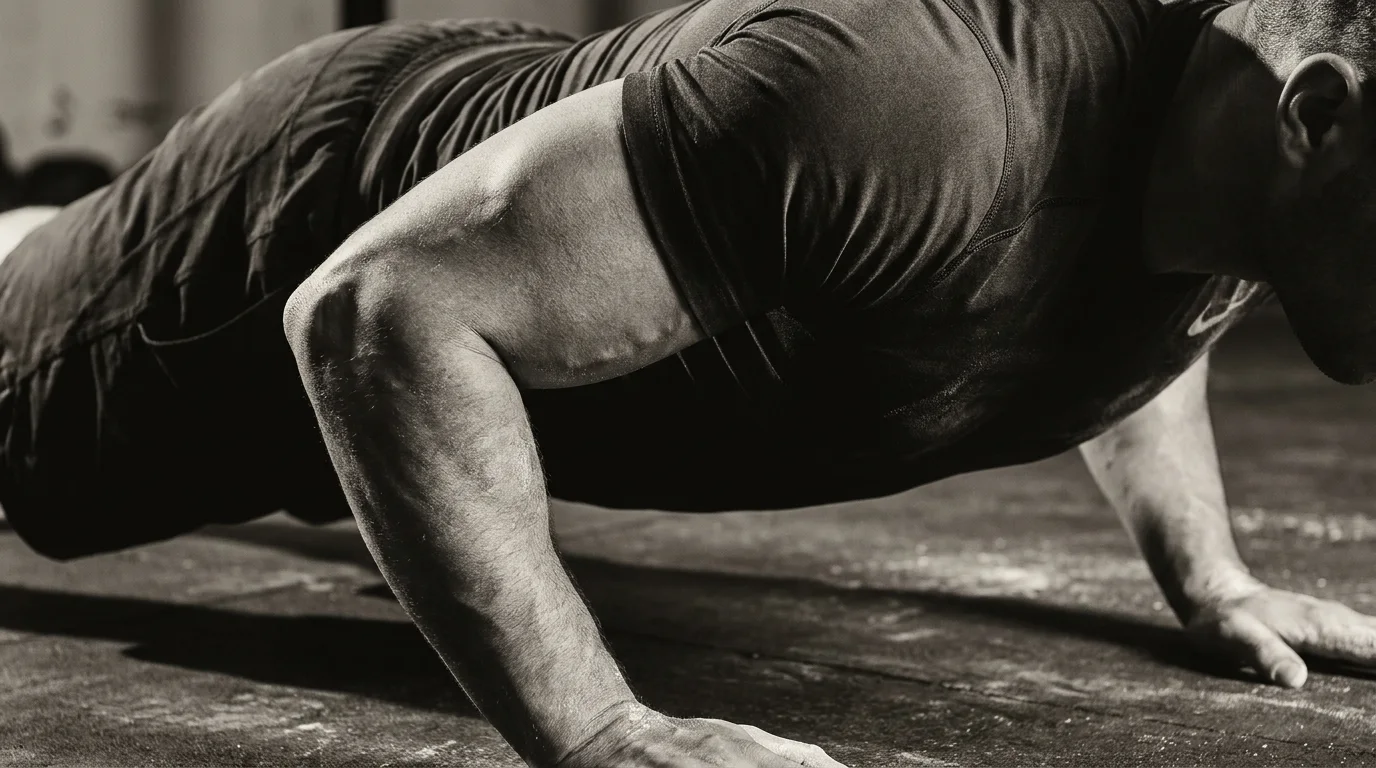
EMG data show the biceps engagement during a standard push-up is low, with the chest and triceps carrying most of the load. The biceps mainly act as stabilizers for the elbow and shoulder, not as a primary mover. Changes in hand width, tempo, or scapular control can nudge the signal, but do pushups engage the biceps significantly? Not as a primary driver.
Biceps involvement in incline and decline push-ups
If you're asking which muscles do pushups work besides chest, the main work goes to the anterior deltoids, triceps, serratus anterior, and the core for stability. Incline push-ups reduce overall load and tend to lower biceps engagement, while decline push-ups increase upper-body demand but still keep the biceps as a secondary stabilizer rather than a primary mover. If you use a very narrow grip or pause at the bottom, you may see a small bump in biceps EMG, but the muscles worked push-ups beyond the chest remain the anterior deltoids, triceps, serratus anterior, and the core for stability.
Push-Up Variations and Mechanics That Drive Biceps Involvement
Your biceps aren’t the primary movers in a push-up, but you can nudge them to work harder with small form tweaks. Elbow position, grip width, incline/decline, and tempo all shape biceps recruitment while protecting shoulder health.
Elbow angle and grip width: what boosts biceps activity
- Tuck your elbows in toward your sides (about 30–60 degrees from the body) to increase elbow flexion demand and lift biceps involvement.
- Use a narrower grip (hands under or just inside the shoulders) to bias toward the arms without overloading the shoulders.
- Keep forearms vertical and wrists aligned; avoid flaring elbows outward.
Tempo and time-under-tension in biceps recruitment
- Slow descent (about 3 seconds) with a brief bottom pause raises time-under-tension and nudges the biceps to work more.
- Press up smoothly and with control to maintain consistent tension.
Which push-up variation targets the biceps most (standard, incline, decline, knee)
- Standard push-up with a closer grip and steady tempo tends to recruit the biceps more than incline variants.
- Incline push-up reduces biceps loading; knee push-ups lower overall demand; decline push-ups increase arm effort but don’t necessarily maximize biceps engagement.
Programming, Myths, and Pairings to Maximize Biceps Involvement with Push-Ups
You can nudge biceps engagement without turning push-ups into isolation work. Use proper push-up form—elbows tucked at about 45 degrees, core braced, hips level—and choose knee or incline variations if needed to protect the shoulders. Progress gradually and avoid elbow flare.
Myth-busting: push-ups vs biceps isolation exercises
- Do pushups work biceps? They engage the biceps as stabilizers, but curls isolate the muscle and typically drive more biceps growth.
- Do incline pushups work the biceps more than standard pushups? Some feel more elbow flexion with incline, but the difference is modest; push-ups still load chest and triceps.
- If the goal is bigger biceps, include curls or isometric holds on most days, rather than relying on push-ups alone.
Sample programming: 4-week plan to boost biceps involvement
- Weeks 1–2: 3 sessions/week. Standard push-ups 8–12 reps (tempo 2-0-2) + 2 sets incline push-ups (8–12).
- Weeks 3–4: add a paused bottom rep and one extra set; finish with 2–3 sets curls or isometric holds.
Pairing sequences: push-ups plus curls or isometric biceps holds
- After the push block, 8–12 curls or 30–45s isometric hold.
Frequently asked questions
Do push-ups work the biceps, or are they mainly chest and triceps?
Push-ups primarily target the chest and triceps, with the biceps acting mainly as stabilizers rather than primary movers. You can nudge biceps engagement a bit by using a narrower grip, tucking the elbows, and slowing tempo, but they won't be the main driver.
What muscles do push-ups work the most?
The chest and triceps do most of the work, with the anterior deltoids, serratus anterior, and core providing stability throughout the movement.
What are the best push-up variations to target the biceps or upper body?
A standard push-up with a closer grip and steady tempo tends to recruit the biceps more than incline variants; incline push-ups reduce biceps loading, while decline push-ups increase overall arm demand but keep the biceps as a secondary stabilizer.
How can beginners modify push-ups to start safely?
Begin with knee or incline push-ups to reduce load, keep elbows tucked toward the torso (about 30–60 degrees), brace the core, and progress gradually in depth and tempo to protect the shoulders.
About the authors

Goran Huskić
Co-founder · Professional basketball player
Goran Huskić is a Serbian professional basketball player — a 6'11" center currently playing for Monbus Obradoiro in Spain's Primera FEB. He won the 2019–20 Basketball Champions League with San Pablo Burgos and has competed professionally across Spain, Germany, Lithuania, Serbia and the United States. He co-founded PUSHapp to bring pro-level training discipline to everyday workouts.

Nikola Janković
Co-founder · Former professional basketball player
Nikola Janković is a former professional basketball player — a 6'9" forward and the 2016–17 ABA League MVP — who played for Partizan, Union Olimpija and Mega, among others. Today he runs a pilates studio and gym focused on strength, mobility and overall wellbeing. He co-founded PUSHapp to make consistent, measurable training simple for everyone.