
troubleshooting
Why One Arm Works Harder During Pushups
Explore why one arm works harder during pushups and how to balance load through grip, form, and unilateral training for symmetry.


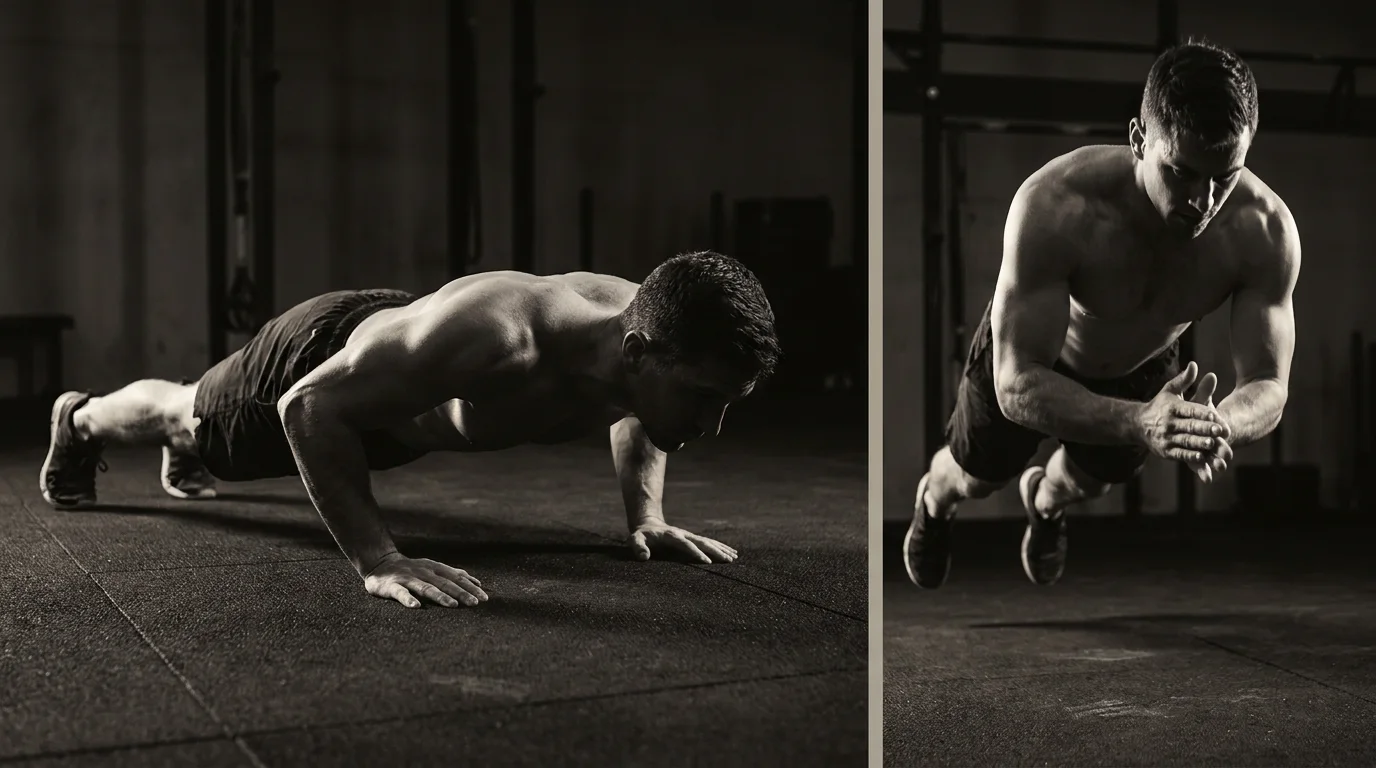
Understanding load distribution: what makes one arm work harder in pushups
Pushups recruit both arms, but load distribution shifts with elbow angle, torso alignment, and hand position. Dominance can also play a role, explaining imbalanced pushups where one arm feels harder.
Elbow angle
A wider elbow angle tends to load the chest and front shoulder more, while a tighter angle shifts some work toward the triceps.
Small shifts in elbow position can move load from one arm to the other, so notice which shoulder bears more weight during a set.
torso alignment and load shift
Keep hips and spine in a straight line. Any sag or twist concentrates load on one shoulder.
If a shoulder dips or a hip tilts, the other arm has to compensate, creating asymmetry.
At the bottom, check that weight sits evenly through both hands.
Dominant vs. non-dominant arm: how it changes effort
The dominant arm often initiates the push, so it can carry more load as fatigue rises.
To equalize, focus on symmetric elbow angle and even weight through both hands during each rep.
The role of scapular stability, core, and muscle mechanics in symmetry
Stable shoulder blades set the stage for even pushups. Keep the shoulder blades gently anchored to the rib cage as you descend. Engage the rotator cuff by rotating the upper arm slightly inward to keep the head of the humerus centered. Move with even scapular travel along the rib cage to avoid one side lifting first.
Scapular and rotator cuff contributions to stability
Stable shoulder blades set the stage for even pushups. Keep the shoulder blades gently anchored to the rib cage as you descend. Engage the rotator cuff by rotating the upper arm slightly inward to keep the head of the humerus centered. Move with even scapular travel along the rib cage to avoid one side lifting first.
Tempo, pause, and isometric loading for balance
Tempo pushups help you feel both sides work evenly. Try a 3-1-3 cadence.
Pause pushups at the bottom for a 2 second hold to check stability and scapular position.
Isometric holds at mid or bottom position train even load and reduce sway.
Assessment tools: video analysis, scapular drills, and strength tests
Video analysis from the side shows how the scapula moves through each rep.
Scapular drills such as wall slides and resisted scapular retractions improve control without stressing the arms.
Strength tests compare both sides on a standard pushup and in a unilateral variation to reveal imbalanced pushups.
From assessment to action: progressive, safe unilateral training to balance pushups
Assessment for symmetry: what to measure
Visual checks: shoulder height, hip square, elbow path, and notes on how to assess pushup form for symmetry.
Depth, tempo, and load balance between arms.
Note which arm is stronger and why.
Unilateral progressions: from incline to one-arm
Start with incline pushups where both hands rest on a bench.
Then work with the working arm on the bench and the other on the floor.
Progress to knee pushups with the working arm on the floor; the other arm stays behind the back.
Finish with floor pushups on one arm when form is solid.
Tempo, pauses, and isometric holds as balancing tools
Slow tempo with a brief pause at the bottom.
Isometric holds at mid position to build stability.
Pushup variations for symmetry and core engagement
Use incline and decline variations, tempo pushups, and standard pushups with strict form cues for symmetry.
Track symmetry weekly and adjust the progression by one notch.
Frequently asked questions
Why does one arm do more work than the other during a pushup?
Load in a pushup shifts with torso alignment and hip position. If the hips twist or the spine shifts, the nearer arm bears more load.
How can I balance workload between my arms in pushups?
Balance by using easier variations to feel even pressure and adding unilateral work on the weaker side. During a regular pushup pause near the floor and push with equal drive from both hands, and alternate which arm leads each set.
What are the best progressions to fix pushup imbalances?
Start with incline pushups, then progress to unilateral where the working arm is on a bench or the floor while the other stays off, and finish with floor pushups on one arm when form is solid. Use tempo pauses and isometric holds to train balance.
How do grip width and elbow position affect load distribution in pushups?
Elbow angle affects which muscles are loaded. A wider elbow angle tends to load the chest and front shoulder more, while a tighter angle shifts some work toward the triceps, and hand position also influences load sharing.
About the authors

Goran Huskić
Co-founder · Professional basketball player
Goran Huskić is a Serbian professional basketball player — a 6'11" center currently playing for Monbus Obradoiro in Spain's Primera FEB. He won the 2019–20 Basketball Champions League with San Pablo Burgos and has competed professionally across Spain, Germany, Lithuania, Serbia and the United States. He co-founded PUSHapp to bring pro-level training discipline to everyday workouts.
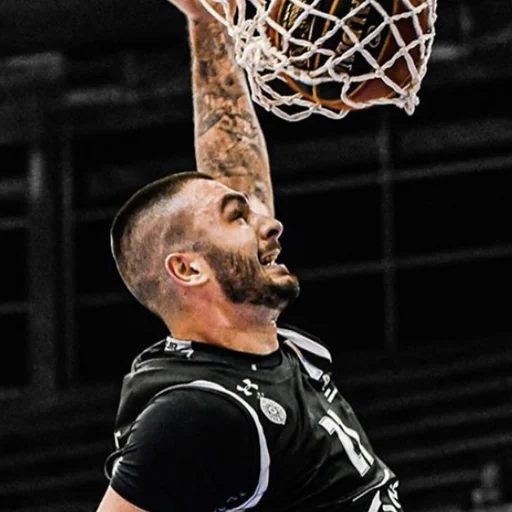
Nikola Janković
Co-founder · Former professional basketball player
Nikola Janković is a former professional basketball player — a 6'9" forward and the 2016–17 ABA League MVP — who played for Partizan, Union Olimpija and Mega, among others. Today he runs a pilates studio and gym focused on strength, mobility and overall wellbeing. He co-founded PUSHapp to make consistent, measurable training simple for everyone.