
troubleshooting
Pushups Hurt Lower Back? Fixes That Keep Your Core Safe
Discover why pushups hurt lower back and learn safe form, modifications, and cues to protect your spine while building strength.


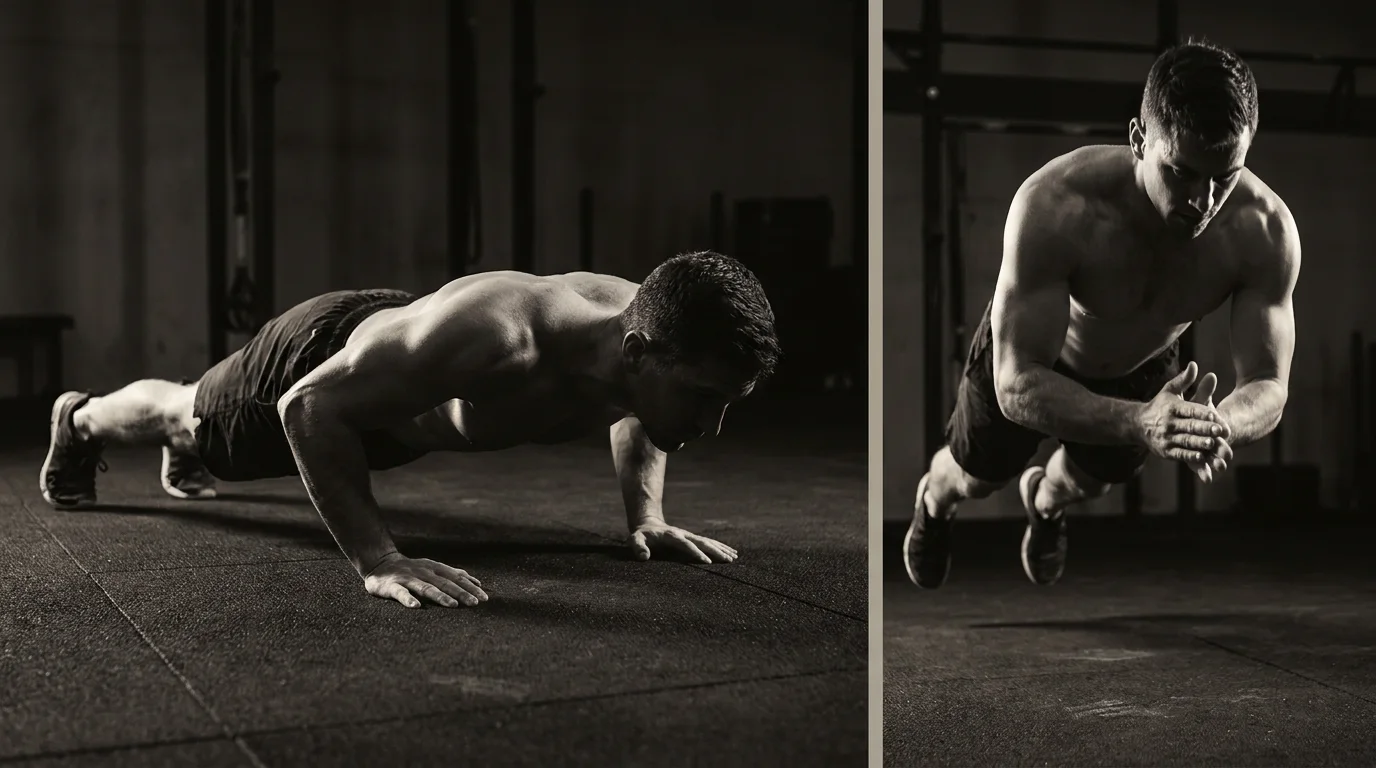
Understanding Why Pushups Hurt the Lower Back (Foundational Mechanics)
Hip alignment and posterior chain engagement
Keep hips level with shoulders and heels; avoid sagging or hiking. This prevents the lower back from overloading. Squeeze the glutes, lightly brace the core, and aim for a neutral pelvis. A simple cue: imagine bellybutton staying toward the spine as you press.
Neutral spine, bracing, and breathing
Maintain the natural spine curves instead of letting the back flatten or arch excessively. Brace as if resisting a punch, then exhale on the press to help lock in stability. Avoid rib flare or collapsing mid‑back during the movement.
Elbow angle and scapular stability
Elbows should land roughly 45–60 degrees from your sides to share load with chest and arms. Keep the shoulder blades stable—no shrugging or winging—as you move.
Scapular control cues for safe push-ups
Set the shoulder blades down and together, then press through the palms. Keep chest up and ribs in; if pain returns, try incline push-ups to reduce spine load.
Progression and Modifications for Back-Safe Push-Ups (Beginner to Advanced)
If you're asking why do pushups hurt my lower back, or how to modify push-ups for lower back pain, this progression builds core strength and hip control safely over time.
Beginner milestones: knee push-ups for back pain
- Setup: hands under shoulders, knees under hips.
- Hips level; brace the core.
- Reps: 2–3x6–10, 2–3 days. Progress to incline push-ups when you can maintain form.
Cues for hip alignment during progression
- Hips stacked over knees.
- Brace belly; avoid sag.
- No twisting; keep hips from hiking up.
Incline push-ups for back pain: setup and when to use
- Use bench or table; higher surface reduces load.
- Neutral spine; core engaged.
- Use when knee push-ups feel hard or form slips.
Transition to standard push-ups: neutral spine and scapular control
- Lower incline gradually toward floor; spine stays neutral.
- Scapular control: slight retractions, not forced.
- Core braced; hips stay level.
Advanced back-safe variations and progressive overload
- Decline or tempo push-ups.
- Pause at bottom; controlled ascent.
- Timeline: about 6–12 weeks from knee to standard push-ups.
Troubleshooting, Safety Guidelines, and Red Flags (When to Stop or Seek Help)
Red flags and safe stopping points
- Sharp or escalating back pain, numbness/tingling in legs, or new weakness.
- Pain that lasts beyond a couple of workouts or wakes you at night.
- Pain worsened by coughing, sneezing, or bending; hips can’t stay level.
- If these occur, stop, reassess form, and seek medical advice as needed.
Elbow angle and lumbar load: 45-degree cues
- Elbows at about 45 degrees from the torso to reduce lumbar load.
- If the low back arches or collapses, shorten the range or switch to incline push-ups.
- Use these 45-degree cues to protect the spine during variations.
Maintaining neutral spine across variations
- Focus on how to maintain neutral spine during push-ups across variations: keep ribs down, hips level, and neck in line with spine.
- How to engage core during push-ups to protect back: brace the midsection, draw the navel toward the spine, and keep the pelvis stable.
Decision tree: modify, stop, or seek medical advice
- Pain is mild and confined to muscle? Modify (incline/tempo) and reassess in 48 hours.
- Pain persists or worsens? Stop and consult a clinician.
- Red flags appear? Seek medical advice promptly.
Frequently asked questions
Why do push-ups hurt my lower back?
The pain usually happens when the spine, hips, and core aren’t braced as a unit, so the lower back takes the load if the midsection softens or the hips sag. Keep hips level, ribcage linked to pelvis, and brace your core to protect the back.
How can I do push-ups without hurting my back?
Brace your core, maintain a neutral spine, and keep hips level; progress only when you can hold alignment through a full set. If you’re not there yet, start with incline push-ups on a bench or wall before progressing.
What modifications can I use if my back hurts during push-ups?
Use incline push-ups on a bench or wall to reduce load, then move to knee push-ups, only advancing when you can maintain neutral spine and level hips.
Are incline or knee push-ups better for preventing back pain?
Yes—incline push-ups reduce spinal load and are a safe starting point; knee push-ups can follow as you build core and hip control, with standard push-ups reserved for when alignment is solid.
About the authors

Goran Huskić
Co-founder · Professional basketball player
Goran Huskić is a Serbian professional basketball player — a 6'11" center currently playing for Monbus Obradoiro in Spain's Primera FEB. He won the 2019–20 Basketball Champions League with San Pablo Burgos and has competed professionally across Spain, Germany, Lithuania, Serbia and the United States. He co-founded PUSHapp to bring pro-level training discipline to everyday workouts.

Nikola Janković
Co-founder · Former professional basketball player
Nikola Janković is a former professional basketball player — a 6'9" forward and the 2016–17 ABA League MVP — who played for Partizan, Union Olimpija and Mega, among others. Today he runs a pilates studio and gym focused on strength, mobility and overall wellbeing. He co-founded PUSHapp to make consistent, measurable training simple for everyone.