
troubleshooting
Hips Rising First During Pushups: Fix Your Form
Discover why hips rising first during pushups happens and how to correct form for a straight line from head to heels.


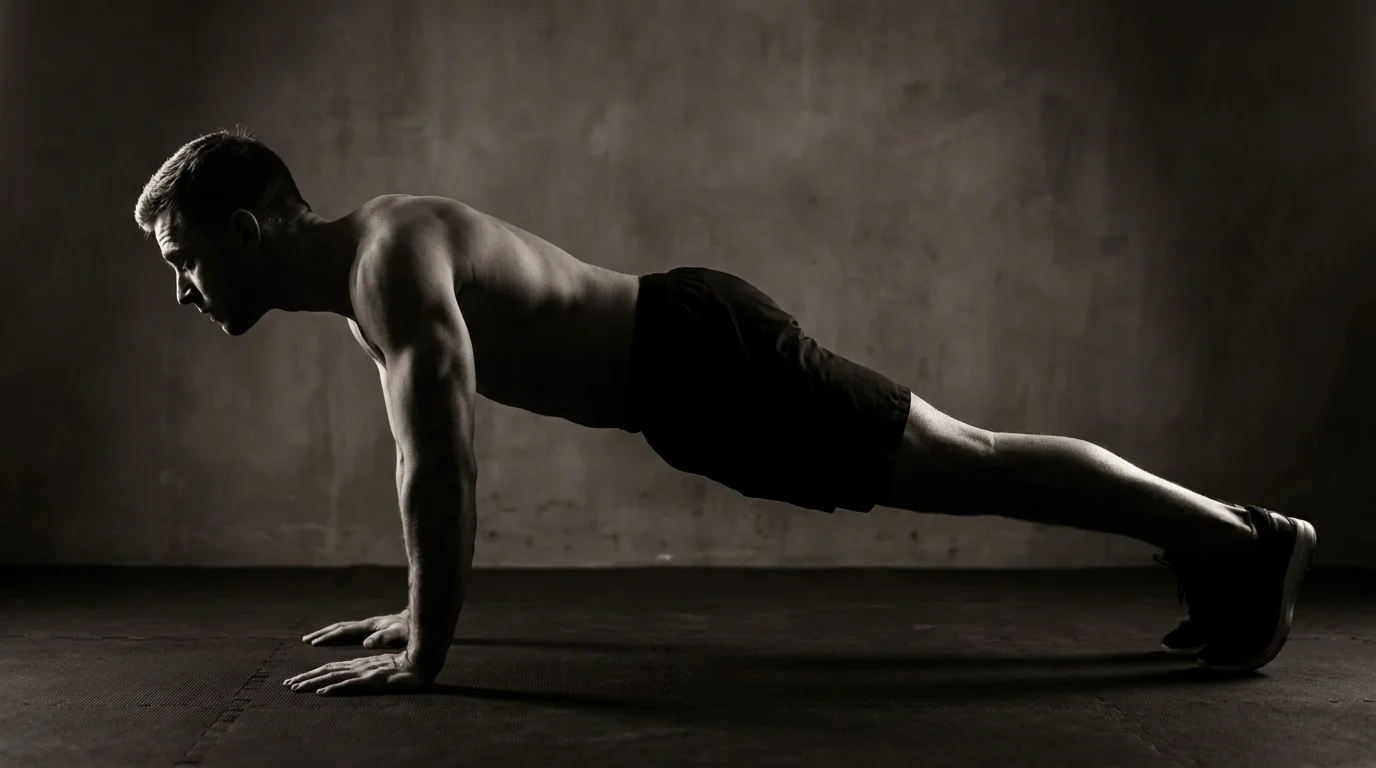
Understanding why hips rise first: mechanics, faults, and impact on depth
what your hips are doing vs your torso
In a neutral spine push-up, hips and torso descend as a single aligned unit. When hips rise first, the pelvis tilts and the torso folds ahead of the hips, creating a dip in the midsection. This is the hip sag push-up pattern you might hear about.
The difference is hips movement versus torso movement. A proper push-up moves the chest toward the floor while the hips stay level and braced.
Common causes include weak glutes and abs, poor core bracing, and limited rib control. Cue and fix: brace the core, squeeze the glutes, and imagine keeping the hips level.
why this fault reduces depth and stability
When the hips rise first the bottom of the rep becomes shallower and the elbow angle may stay around 60 degrees rather than 45 degrees, limiting depth.
A sagging midsection shifts load and makes the movement wobblier, which undermines stability.
Keeping a neutral spine means hips and ribcage stay aligned; if you see hip sag, reset and re brace before the next rep.
Fix your form: cues, alignment principles, and 3-point contact to stop hips from leading
cues that reset alignment
- 3-point contact: stay on two hands and your toes the whole descent. If hips begin to rise, press into the floor with both hands and brace your core.
- hand placement push-up: position hands slightly wider than shoulder width, wrists under your shoulders, fingers spread. Push the floor away to keep the chest moving straight down.
- torso-brace: tighten the abdominals, squeeze the glutes, and draw the shoulder blades softly down. Keep the rib cage from flaring.
elbow angle, hand placement, and torso-brace
- elbow angle about 45 degrees: keep elbows close to the body as you descend and press up.
- avoid flaring: let the arms track at about 45 degrees from the torso.
- neutral spine push-up: imagine a straight line from heels to crown and maintain that line as you move.
depth cues and camera cues for verification
- depth verification: descend until your chest is within a fist's distance of the floor, then press back up.
- camera cues for verification: use a side view and a marker at chest height or a tape line to judge depth frame by frame.
Progressions and verification: from fix to fluency across skill levels
beginner to advanced path
- start with knee or incline push-ups to keep hips level and a neutral spine. focus on hand placement under the shoulders and engaging the core.
- move to standard push-ups on the floor as you can hold a neutral spine with hips not lifting. use a visible depth limit like a 90 degree elbow bend as a cue.
- progress to full range push-ups with chest reaching toward the floor while maintaining a straight line from head to heels.
- finally add controlled variations only after the hinge is solid, ensuring hips never lead the movement.
depth targets and visual markers
- how deep should a push-up be depends on skill. beginners should stop at a depth where the hips stay level and the core stays braced.
- use a camera to verify depth on video. side view should show a straight line from head to heels and the chest approaching the floor.
- mark cues on the video or screen: floor line at chest level, hip line to confirm alignment, and hand position under the shoulders.
common questions and misconceptions (with visuals)
- if hips rise, pause depth and rebuild the brace before lowering further. visuals: front and side clips showing hips, ribs, and pelvis aligned.
- keep hand placement push-up and ensure neutral spine before advancing. use a two-camera setup to compare front and side angles.
- verify depth on video and refer to the marked cues to stay in range. Prepare three practiced reps from the side, then review the footage before the next cycle.
Frequently asked questions
Why do my hips rise first during a push-up?
Because your hips and torso aren't staying in a single rigid line from head to heels, so the pelvis tilts and the torso dips forward, creating hip sag. Weak glutes or abs or poor core bracing can contribute; fix by bracing the core, squeezing the glutes, and keeping the hips level.
How can I fix hips rising or sagging during push-ups?
Start with wall or incline push-ups to train the brace and hip position, then move to knee push-ups, and finally to full push-ups. Keep a straight line by bracing the core, squeezing the glutes, and using cues like pressing into the floor with both hands.
What is the correct elbow position in a push-up?
Keep your elbows around 45 degrees from your torso and close to your body while you descend and press up, avoiding flare.
How deep should the chest go in a push-up?
Descend until your chest is within a fist's distance of the floor, then push back up.
About the authors

Goran Huskić
Co-founder · Professional basketball player
Goran Huskić is a Serbian professional basketball player — a 6'11" center currently playing for Monbus Obradoiro in Spain's Primera FEB. He won the 2019–20 Basketball Champions League with San Pablo Burgos and has competed professionally across Spain, Germany, Lithuania, Serbia and the United States. He co-founded PUSHapp to bring pro-level training discipline to everyday workouts.

Nikola Janković
Co-founder · Former professional basketball player
Nikola Janković is a former professional basketball player — a 6'9" forward and the 2016–17 ABA League MVP — who played for Partizan, Union Olimpija and Mega, among others. Today he runs a pilates studio and gym focused on strength, mobility and overall wellbeing. He co-founded PUSHapp to make consistent, measurable training simple for everyone.