
Form & Technique
Pushup Technique: Master Proper Form Fast
Master pushup technique with step-by-step cues, common mistakes, and progressions for all levels. Build depth and control for consistent results.


Foundations of Pushup Setup: Alignment, Positioning, and Cues
Hand and Foot Placement
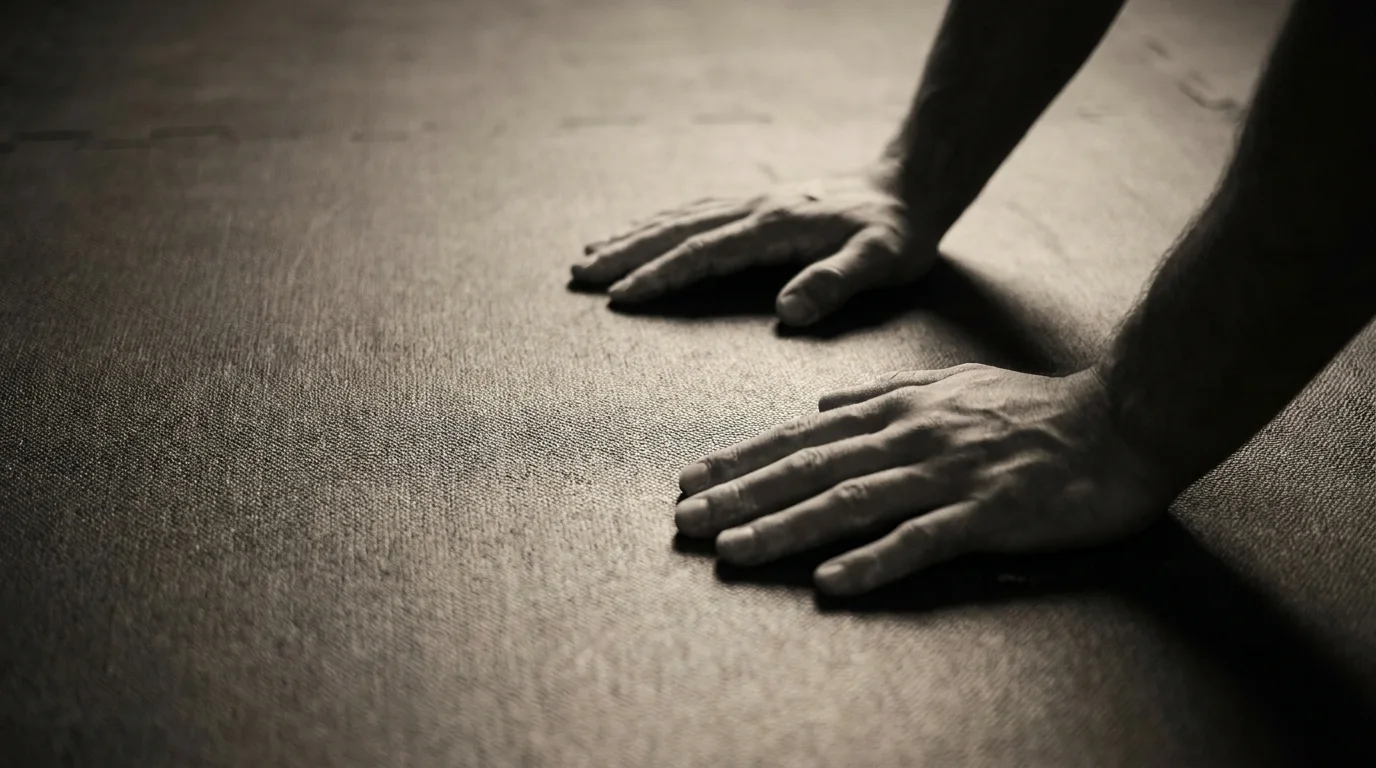
- Place hands slightly wider than shoulder width with fingers spread and wrists neutral; this setup supports proper push-up technique.
- Keep feet hip-width apart with toes tucked for a solid, brace-ready base.
- Distribute weight evenly and pull shoulder blades down for scapular control.
Spinal Alignment
- Maintain spine neutrality: ears over shoulders, ribs over pelvis.
- Gaze a few inches ahead to keep the neck in line.
- Hips stay level to support hip alignment during push-up; avoid sagging or piking.
Core Bracing
- Brace core as if resisting a punch; tighten abs and glutes to create a stable pillar.
- This core brace push-up cue helps keep a long, steady spine through every rep.
Elbow Angle
- Target an elbow angle 45 degrees to your torso.
- Keep elbows tucked and the arms tracking diagonally rather than flaring out.
- Hands stay under shoulders; press evenly through the palms.
Printable Checklist
- Spine neutral and hips level.
- Hands under shoulders; elbows ~45°.
- Scapular control: shoulder blades down and back.
- Core braced; glutes engaged.
- Feet hip-width; weight evenly distributed.
- Head aligned with spine; gaze forward.
- Wrist stacked under shoulders; steady breathing.
ROM, Tempo, and Breathing: Getting the Mechanics Right
Depth and Tempo by Skill Level
- Beginner: use an incline or knee push-ups to limit ROM. ROM cues: chest toward the bench, elbows about 45 degrees; spine in neutral, hips level. Tempo: eccentric 3–4 s, bottom pause 0–1 s, concentric 1–2 s.
- Intermediate: progress to full push-up with controlled depth. Maintain scapular control and a braced core. Tempo: 2–3 s down, 0–1 s pause, 1–2 s up.
- Advanced: full-depth with a brief bottom pause. Keep spine neutral and hips steady. Tempo: eccentric 3–4 s, pause 0.5–1 s, concentric 1–2 s.
Breathing Patterns Across Phases
- Eccentric (lowering): inhale.
- Isometric bottom: steady diaphragmatic breath, avoid breath-holding.
- Concentric (pushing up): exhale; brace the core to maintain spine neutrality.
Common ROM Mistakes and Fixes
- Elbows flaring: tuck to about 45 degrees; keep scapulae depressed.
- Hips sagging: brace glutes and core; align hips with shoulders.
- Shallow depth: progress from incline to mid-depth to full push-up gradually.
Variations, Progressions, and Bench-Press Comparisons
Progression Milestones: Easy to Hard
- Start with incline or knee push-ups, then move to full push-ups as you can maintain form.
- Progress through decline, then wide/narrow hand placements, then pike, diamond, and finally one-arm push-ups.
- Milestones: clean reps with a straight spine, controlled tempo, and a steady ribcage.
Muscle Activation Across Variations
- Incline and knee push-ups emphasize chest and triceps with less core load.
- Decline, diamond, and pike shift emphasis to upper chest and shoulders; wide vs narrow changes elbow angle.
- Full push-up vs knee push-up shows greater core and trunk engagement; one-arm push-up is a challenging unilateral milestone.
Bench Press vs Push-Up: Evidence-Based Rationale
- Both recruit pecs, delts, and triceps, but push-ups require core bracing and shoulder-stabilizer work without a bench.
- Load distribution and stabilization lead to different activation patterns and carryover for functional pushing.
Resources: Checklists and Demos
- Printable checklist and progression plan: Printable Push-Up Checklist
- Video demonstrations: Push-Up Variations Demos
Frequently asked questions
How do you perform a push-up with proper form?
Place hands under shoulders with fingers spread and a neutral spine; brace the core and glutes to stay in a straight line, elbows at about 45 degrees and chest open; inhale on descent, exhale as you press through the floor.
What is the proper depth for a push-up?
Depth should match your skill level: beginners use incline or knee push-ups to limit ROM; intermediates progress to full-depth push-ups; advanced performers use full-depth with a brief bottom pause. Maintain a braced core and neutral spine.
How can I progress from knee push-ups to a full push-up?
Start with knee push-ups on a firm surface or an incline (bench/box); when reps feel controlled, lower the elevation gradually while keeping the same cues; train 2–3 times per week and progressively increase reps and depth.
What are the best push-up variations for beginners?
Begin with incline or knee push-ups to build strength, then move to a full push-up as form holds; to ease progression, start on a bench or box and gradually lower the surface as you gain control.
About the authors

Goran Huskić
Co-founder · Professional basketball player
Goran Huskić is a Serbian professional basketball player — a 6'11" center currently playing for Monbus Obradoiro in Spain's Primera FEB. He won the 2019–20 Basketball Champions League with San Pablo Burgos and has competed professionally across Spain, Germany, Lithuania, Serbia and the United States. He co-founded PUSHapp to bring pro-level training discipline to everyday workouts.

Nikola Janković
Co-founder · Former professional basketball player
Nikola Janković is a former professional basketball player — a 6'9" forward and the 2016–17 ABA League MVP — who played for Partizan, Union Olimpija and Mega, among others. Today he runs a pilates studio and gym focused on strength, mobility and overall wellbeing. He co-founded PUSHapp to make consistent, measurable training simple for everyone.