
How Many & Who
We Watched 148,000 Push-Ups: What Real Sets Look Like
Aggregate data from 148,000 AI camera-counted push-ups: the median real set is 15 reps, 8.3% of attempted reps are too shallow to count, and more real-world stats.


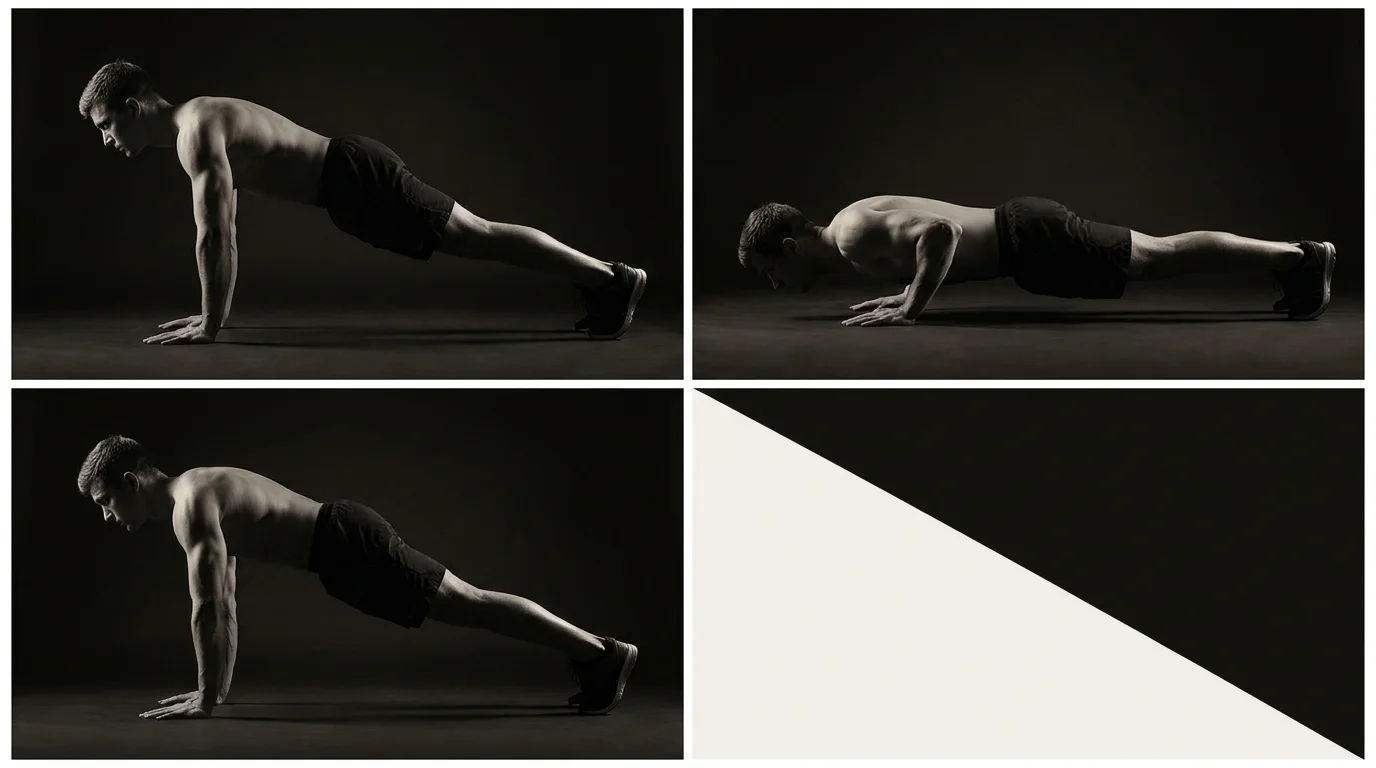
The median real set is 15 push-ups
Half of all sets end at 15 reps or fewer. The mean is higher (21.3) because a small number of very large sets pulls it up, but the typical, honest, depth-verified set is in the mid-teens.
The distribution:
| Percentile | Reps in the set |
|---|---|
| 50th (median) | 15 |
| 75th | 29 |
| 90th | 50 |
| 99th | 102 |
| Largest verified set | 501 |
Two ways to read that table. If you can do 29+ clean push-ups, you're already ahead of three-quarters of sets done by people motivated enough to train with a counting app. And 15.9% of sets reach 36+ — the bar that published norms call "excellent" for men in their twenties.
1 in 12 reps doesn't count
8.3% of all attempted reps were rejected for insufficient depth. That's the single most interesting number in the dataset, because it's a direct measurement of the gap between counted and performed.
If you've ever been told "do 20 push-ups" and squeezed out the last three with shrinking range of motion — that's the gap. It also means self-reported push-up numbers (including most of the folklore averages) are inflated by roughly one rep in twelve, and more at the end of hard sets, where range of motion collapses exactly when the counting gets most optimistic.
A real rep takes 3.0 seconds
Full sets average about 3.0 seconds per rep — a controlled descent, real depth, and a full lockout take time. A "60 push-ups in a minute" pace leaves either depth or lockout on the floor.
Push-ups are an evening sport
The busiest counting hour is 8–9 pm UTC. Morning-routine content dominates fitness feeds, but the data says most people actually drop and count after work.
Where does your set land?
Do one honest max set, then check two things:
- The push-up test calculator rates your number against published age/sex fitness norms.
- The percentile table above tells you where you'd land among counted sets.
And if you want the number to be beyond argument — let the camera count it. Half-reps won't make the cut, which is exactly the point.
Citation policy: feel free to reference these statistics with a link to this page. Figures are anonymous aggregates; we'll refresh them periodically as the dataset grows.
Frequently asked questions
Where does this push-up data come from?
Anonymous aggregate statistics from 6,942 training sets counted by PUSHapp's AI camera between late May 2026 and August 19, 2026. The counter uses on-device pose detection and only counts reps that reach sufficient depth. No individual user data is included.
Is the median of 15 push-ups per set representative of everyone?
It represents people who train push-ups with a counting app — likely fitter than the general population, which makes the number more striking, not less. Published fitness norms rate 15 reps as roughly 'average' for a man in his twenties; our data shows real, depth-verified sets cluster exactly there.
Why do so many reps get rejected?
The counter requires each rep to reach sufficient elbow bend before it counts. Fatigue shortens range of motion — most rejected reps happen late in a set, when people would normally keep counting shallow reps as if they were full ones.
How can I see where my set ranks?
Do a max set and check the push-up test calculator — it rates your number against published age and sex norms. If you want the number verified, let the camera count the set.
About the authors

Goran Huskić
Co-founder · Professional basketball player
Goran Huskić is a Serbian professional basketball player — a 6'11" center currently playing for Monbus Obradoiro in Spain's Primera FEB. He won the 2019–20 Basketball Champions League with San Pablo Burgos and has competed professionally across Spain, Germany, Lithuania, Serbia and the United States. He co-founded PUSHapp to bring pro-level training discipline to everyday workouts.

Nikola Janković
Co-founder · Former professional basketball player
Nikola Janković is a former professional basketball player — a 6'9" forward and the 2016–17 ABA League MVP — who played for Partizan, Union Olimpija and Mega, among others. Today he runs a pilates studio and gym focused on strength, mobility and overall wellbeing. He co-founded PUSHapp to make consistent, measurable training simple for everyone.