
How Many & Who
Army pushup standards in the AFT: events & scoring
Explore army pushup standards within the Army Fitness Test (AFT), including measurement, scoring rules, and MOS requirements.


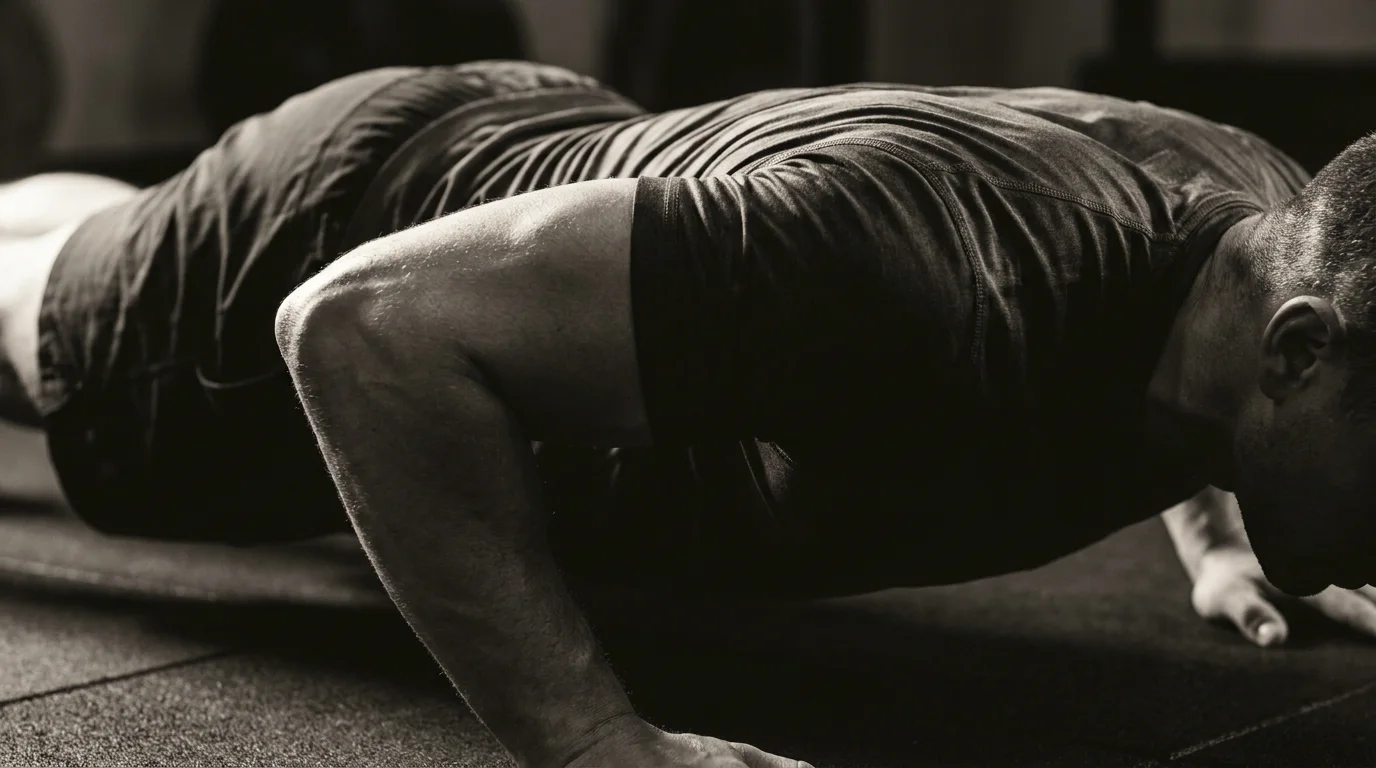
AFT events, measurements, and MOS mapping: how army pushups fit into the scoring system
AFT overview: the five-event lineup and their purposes
- The AFT uses five events to measure different fitness elements in one test.
- Each event is scored separately, and those scores add up to a total.
- You should aim for a minimum of 60 points per event and a 350 total to pass.
Push-up measurement criteria: technique, range of motion, and fail conditions
- Push-ups are measured with strict form.
- Keep a solid plank, lower to a defined depth, and press back to full arm extension.
- The hand-release push-up arm extension option requires lifting the hands briefly between reps to reset the motion.
- Fail conditions include incomplete depth, insufficient range, or stopping short of full extension.
Scoring rules: minimums, per-event targets, and total thresholds
- Each event has a scoring target based on performance.
- The minimum is 60 points per event.
- The overall score must reach 350 to pass, and the push-up event contributes to that total.
MOS classifications in practice: combat vs enabling and impact on scoring
- Some MOS use combat standards, others enabling standards.
- Meeting the standard for the push-up event earns points toward the event total, with the applicable standard guiding the measurement.
Mapping events to MOS: how to identify which standards apply to a given MOS
- Check your MOS to identify which standard applies to the push-up event.
- If your MOS changes, review which standard is in effect for scoring.
Phase-in dates and MOS rollout: 2025 to 2027 timeline and policy governance
The AFT will phase in the new push-up standards over three years, starting June 1, 2025. This approach lets units adjust measurement, record keeping, and medical screening without sudden shifts in workflow.
Timeline of launch: June 1, 2025 and subsequent milestones
- June 1, 2025: Phase-in begins. All personnel take the AFT under the new framework, and data is captured for baseline.
- 2025 to early 2026: Data collection and training across units, with adjustments to reporting templates as needed.
Active-duty MOS-specific rollout: 2026 effective standards
- In 2026, active duty soldiers must meet MOS-specific push-up requirements that align with their primary occupation.
Reserve and National Guard rollout: 2026 to 2027 timelines
- Reserve and National Guard units implement MOS-specific standards over 2026 and 2027.
Policy governance, medical profiling, and accountability mechanisms
- Policy governance sets the standards and oversees implementation, with medical profiles considered where appropriate. Units will be held accountable through periodic reviews and updated SOPs.
What this means for unit readiness and administrative processes
- Admin teams will update training calendars, medical screening, and record-keeping to reflect the phased rollout.
Context, policy implications, and practical scoring: history, RAND analysis, and implementation considerations
historical context
- The AFT history sits between the APFT and the ACFT, guiding how fitness numbers translate to readiness for both combat and enabling MOS.
RAND analysis and policy implications for practice
- RAND analysis explored how age-normed and sex-neutral scoring affect fairness and unit administration.
- DoD fitness policy aims for objective performance while minimizing bias in scoring and rollout.
scoring in practice: achieving minimums (60 per event) and 350 total
- To meet the floor, train with steady progress, practice form, and simulate test conditions in cycles.
- Track each event, ensure 60 points per event and push toward a 350 total.
combat vs enabling in practice: sex-neutral and age-normed considerations
- Combat standards tend toward uniform expectations, enabling standards may use age-normed adjustments.
- Build unit plans that meet the minimums without sacrificing safety or form.
crosswalk: how ACFT, APFT, and AFT decisions shaped current standards
- The moves from APFT to ACFT and now AFT shape current scoring curves and minimums.
Frequently asked questions
What is the Army Fitness Test (AFT)?
The AFT is a five-event fitness assessment. Each event is scored separately and the scores add up to a total; you need at least 60 points per event and 350 overall to pass.
What are the AFT events and how is push-up measured (hand-release push-up arm extension)?
The AFT uses five events to measure different fitness elements. Push-ups must be performed with strict form and the standard depth and extension; the hand-release option requires lifting the hands briefly between reps to reset, and failures include incomplete depth or stopping short of full extension.
What is the difference between combat-standard and enabling-standard scoring?
Some MOS use combat standards and others enabling standards; the applicable standard determines how the push-up is measured and how points are awarded for that MOS.
When did the AFT become the official test and what is the timeline for full implementation?
Phase-in begins June 1, 2025, with MOS-specific requirements taking effect in 2026 and Reserve and National Guard rollout through 2027.
About the authors

Goran Huskić
Co-founder · Professional basketball player
Goran Huskić is a Serbian professional basketball player — a 6'11" center currently playing for Monbus Obradoiro in Spain's Primera FEB. He won the 2019–20 Basketball Champions League with San Pablo Burgos and has competed professionally across Spain, Germany, Lithuania, Serbia and the United States. He co-founded PUSHapp to bring pro-level training discipline to everyday workouts.
Nikola Janković
Co-founder · Former professional basketball player
Nikola Janković is a former professional basketball player — a 6'9" forward and the 2016–17 ABA League MVP — who played for Partizan, Union Olimpija and Mega, among others. Today he runs a pilates studio and gym focused on strength, mobility and overall wellbeing. He co-founded PUSHapp to make consistent, measurable training simple for everyone.