
How Many & Who
How Many Pushups Should a Woman Do? Guidelines
Learn how many pushups should a woman do across ages and fitness levels, with test norms, safety, and progression tips.


Push-Up Benchmarks for Women: Age, Fitness Level, ACSM Norms, and Transgender/Gender-Diverse Considerations
Push-up benchmarks for women vary by age, fitness level, and testing method. ACSM norms give percentile targets to gauge progress. If you're asking how many pushups should a woman do, start with your age group and activity level, then compare to the norms.
What counts as a standard push-up test?
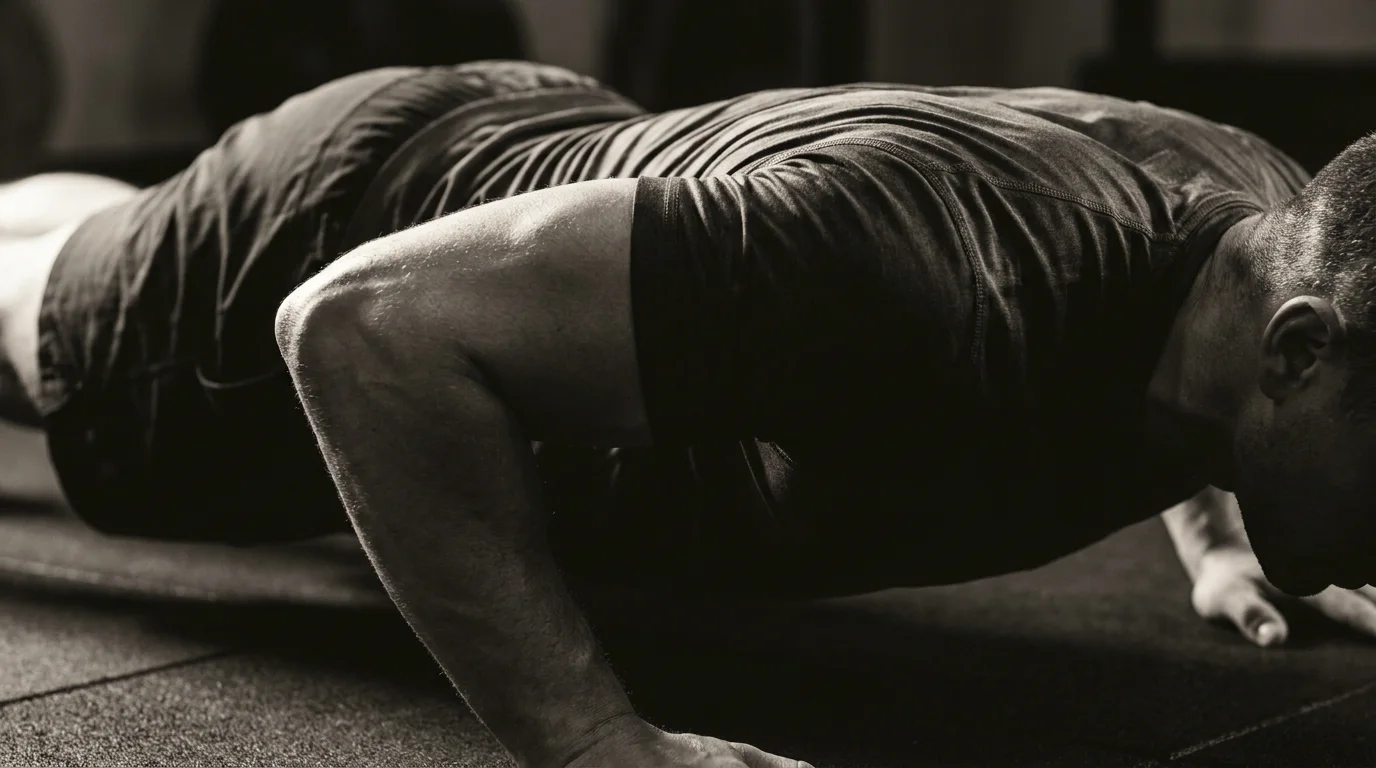
- Straight line head to heels; hands under shoulders; core braced.
- Lower chest to the floor; press up with a controlled tempo.
Protocols and variations
- Common formats: reps to fatigue or fixed-rep sets.
- Tempo matters: slow descent, steady ascent.
Normative data by age and fitness level
- ACSM norms separate age bands and fitness levels to show how many pushups by age.
- Younger, more active groups usually reach higher reps.
Bodyweight considerations
- Push-ups depend on bodyweight; more weight can reduce reps.
- Progressions: incline, knee, then standard.
Transgender/Gender-Diverse considerations
- Follow the same test, with options for comfort and consent.
- Track progress using your chosen norm and inclusive language.
Progression, Safety, and Regression: Using FITT and Modified Push-Ups to Build Capacity
FITT-based progression for push-ups
- Frequency: 2–3 days per week, with 48 hours between sessions.
- Intensity: start with modified push-ups (modified push-ups norms) and progress when you can complete prescribed reps with solid form.
- Time: use 2–3 sets of 5–8 reps, then add reps or an extra set as you grow stronger; consider tempo to increase time under tension.
- Type: move through a clear ladder—wall/standing → incline → knee → standard push-ups; sprinkle in pauses or negative reps before advancing.
- Reference point: ACSM push-up norms can guide goals, but use them as a flexible baseline, not a rigid rule.
Safety, contraindications, and common regressions
- Safety: warm up shoulders, chest, and wrists; maintain a neutral spine; stop if sharp pain or joint instability appears.
- Contraindications: acute injuries or uncontrolled pain in the shoulder, elbow, or wrist; consult a clinician before resuming load-bearing push-ups.
- Regression progression: use wall or incline variants, then knee push-ups; add tempo or isometric holds, and only progress to standard push-ups when form stays clean. If needed, regress and rebuild before advancing again.
Real-World Application: Adherence, Cultural/Demographic Differences, and Benchmarking Against Other Upper-Body Tests
Practical programs and adherence strategies
- Start with your baseline: consider how many pushups should a woman do for your age, then aim toward percentile norms strength women when available.
- Schedule 2–3 short sessions per week, and stack them with existing routines to boost adherence.
- Use scalable progressions: wall or incline push-ups, knee push-ups, then standard; run 3–5 sets with brief rest, using a steady tempo (2 seconds down, 1 up).
- Track progress with quick checks, and rotate in other upper-body tests to gauge transfer to daily tasks and activities.
Interpreting benchmarks across demographics and in relation to other tests
- Bench press comparison: push-ups offer a bodyweight–relative strength and endurance view, but aren’t a direct substitute; use both for a fuller picture.
- Demographics matter: how many pushups by age and upper-body strength norms women by age vary, and percentile norms strength women can help contextualize results.
- Note cultural and racial/ethnic differences in strength benchmarks and the limited data for transgender and gender-diverse data in strength norms; use benchmarks as context, not absolutes.
Frequently asked questions
What is a good number of pushups for a woman by age group?
ACSM norms provide age-group and fitness-level percentile targets you can use to gauge progress. Start with your age and activity level, then compare your reps to those norms to set a realistic goal.
How do push-up numbers vary with fitness level for women?
Push-up reps reflect overall upper-body strength and conditioning; younger, more active groups typically perform more reps, while those with less training start with modified variations.
What are the benchmarks for push-ups in normative data for women?
Norms come from ACSM and are broken into age bands and fitness levels; use percentile targets to interpret your performance.
How can a woman improve her push-up ability quickly?
Use a form-first baseline and progress through wall/standing, incline, knee, then standard push-ups; perform 2–3 sets of 5–8 reps with a controlled tempo, 2–3 days per week.
About the authors

Goran Huskić
Co-founder · Professional basketball player
Goran Huskić is a Serbian professional basketball player — a 6'11" center currently playing for Monbus Obradoiro in Spain's Primera FEB. He won the 2019–20 Basketball Champions League with San Pablo Burgos and has competed professionally across Spain, Germany, Lithuania, Serbia and the United States. He co-founded PUSHapp to bring pro-level training discipline to everyday workouts.

Nikola Janković
Co-founder · Former professional basketball player
Nikola Janković is a former professional basketball player — a 6'9" forward and the 2016–17 ABA League MVP — who played for Partizan, Union Olimpija and Mega, among others. Today he runs a pilates studio and gym focused on strength, mobility and overall wellbeing. He co-founded PUSHapp to make consistent, measurable training simple for everyone.