
Form & Technique
Pushup Breathing: Master Your Breath For Power
Learn pushup breathing for safer, stronger pushups. Master when to exhale, diaphragmatic breathing, and core bracing to boost performance.


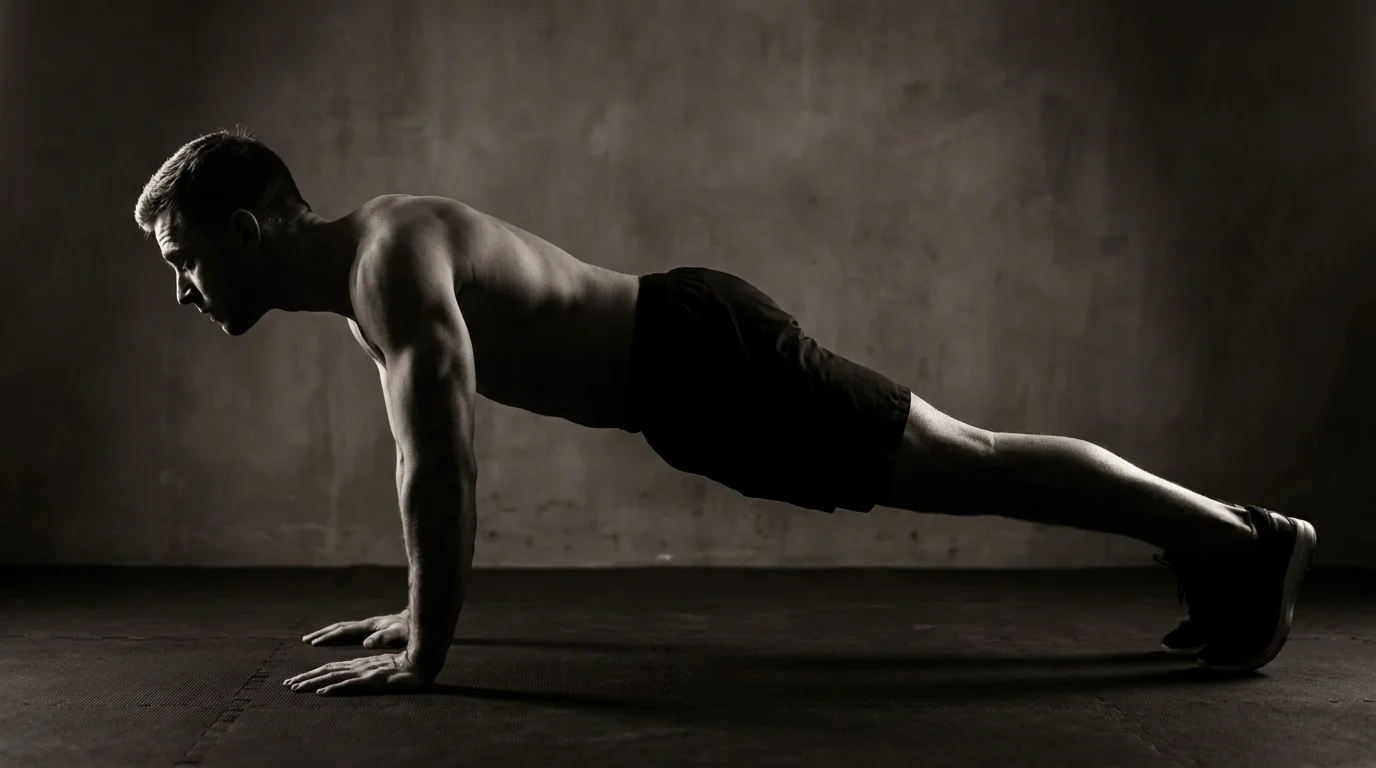
Foundations: Diaphragmatic Breathing and Core Bracing for Pushups
Diaphragmatic Breathing Basics
Breathe with the belly first. Place one hand on your belly, the other on your chest. Inhale through the nose, letting the belly rise while the chest stays mostly still. The lungs work with your tempo: inhale on descent, exhale on exertion.
Inhale on Descent
Lower toward the floor while you inhale. Feel the belly expand and the lower ribs widen—this is diaphragmatic breathing fueling your core.
Exhale on Exertion
Press back up and exhale steadily. Let the exhale help tighten the torso so the spine stays braced during the effort.
Bracing vs. Diaphragmatic Breathing for Stability
Diaphragmatic breathing feeds a braced core. Pair a full inhale with a controlled exhale on exertion to stabilize the torso through each rep.
Tactile Cues and Feedback (hands on lower ribs, belly rise)
Feel rib expansion with your hands on the lower ribs; the belly should rise first, not just the chest. Use this cue every rep.
Breath Timing Across Pushup Variations and Tempo
Tempo and Phase-Driven Breathing
- Inhale on the descent to fill the diaphragm; keep spine neutral.
- Exhale on the ascent to brace and stabilize the core.
- For tempo or paused reps, breathe diaphragmatically through the descent, brace through the pause, then exhale on the push.
Pushup Variations and Breath Strategies
- Standard: inhale lowering, exhale pushing up; maintain brace at top.
- Incline: same pattern, gentler load, stay controlled.
- Decline: harder; emphasize longer exhale on ascent, maintain brace across reps.
- Paused/Tempo: plan a brief inhale at the bottom, brace, then exhale during the push.
Cues and Tactile Feedback
- Hands on belly to feel diaphragmatic breath; ribs stay steady.
- Exhale with effort, not a cough; aim for a calm, controlled sound.
- If you feel spine shift, reset range or drop tempo.
Common Mistakes and Fixes
- Holding breath: count 3-in, 3-out between reps.
- Shallow chest breathing: cue belly expansion.
- No brace: add a two-second brace after inhale.
- Exhale late: move the exhale to the exertion phase.
Progression, Training Protocols and Measurable Outcomes
From Diaphragmatic to Braced Breathing
- Start with diaphragmatic breathing in the pushup position: inhale to expand the belly and ribs, exhale smoothly as you descend. Maintain neutral spine and steady shoulders.
- Move to braced breathing: on the inhale, brace your core; on the exhale, sustain tension through the midsection and hips. Cue: “brace and press.” Think of how lungs work during pushups—oxygen fuels effort, so aim for a steady, controlled rhythm rather than a rush.
Breath Training Protocols
- Paced breathing: try 4-4 or 3-3-3-3 counts—inhale during the descent, exhale during the ascent with a calm, even tempo.
- Respiratory muscle training: add short sessions of resisted inhalations or gentle respiratory drills a few days per week to strengthen breath support.
Measuring Progress and Troubleshooting
- Milestones: hold braced breathing through sets of 5, then 8–10 reps with controlled exhale; track perceived effort and form stability.
- Cues to monitor: breath remains even, core stays tight, hips and shoulders move as a unit.
- If technique falters, reduce reps or tempo and reset with 3–5 focused breaths.
Frequently asked questions
How should I breathe when performing a push-up?
Breathe in as you descend, filling the belly and expanding the lower ribs; then exhale steadily as you press up, using the exhale to tighten the torso and brace the spine. Keep a neutral spine and pause briefly at the bottom to reinforce bracing.
Should I exhale on the push or on the way down?
Exhale on exertion—the push up—and inhale on the descent. If tempo requires it, brace through the pause and exhale during the push.
What is diaphragmatic breathing and how does it help during push-ups?
Diaphragmatic breathing is belly-first breathing that expands the belly (and lower ribs) on inhale while the chest stays relatively still. It fuels the core for push-ups and supports a controlled, braced exhale during the press.
How can I train my breathing for more push-up reps?
Start with diaphragmatic breathing during the set: inhale to expand the belly on the descent, then exhale on the push. Progress to braced breathing and tempo work (e.g., 4-4 or 3-3-3-3), pairing breaths with each phase. A simple progression is Week 1 diaphragmatic on descent, Week 2 add a controlled exhale at the bottom, Week 3 brace and push for a smooth, forceful press.
About the authors

Goran Huskić
Co-founder · Professional basketball player
Goran Huskić is a Serbian professional basketball player — a 6'11" center currently playing for Monbus Obradoiro in Spain's Primera FEB. He won the 2019–20 Basketball Champions League with San Pablo Burgos and has competed professionally across Spain, Germany, Lithuania, Serbia and the United States. He co-founded PUSHapp to bring pro-level training discipline to everyday workouts.

Nikola Janković
Co-founder · Former professional basketball player
Nikola Janković is a former professional basketball player — a 6'9" forward and the 2016–17 ABA League MVP — who played for Partizan, Union Olimpija and Mega, among others. Today he runs a pilates studio and gym focused on strength, mobility and overall wellbeing. He co-founded PUSHapp to make consistent, measurable training simple for everyone.