
Form & Technique
Push Up Routine for Beginners: Simple Guide
Discover a push up routine for beginners with step-by-step form, safe progressions, and at-home variations to build strength.


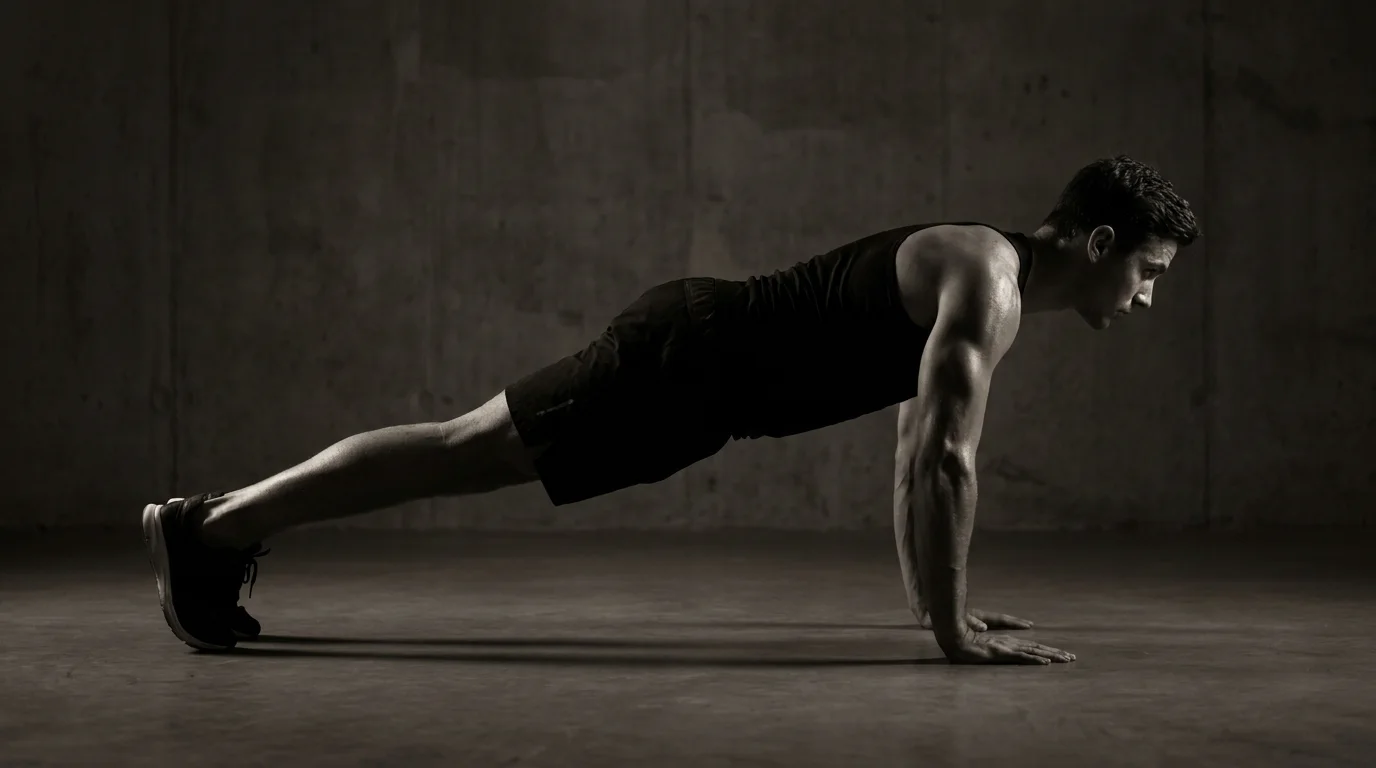
Push-Up Form Fundamentals and Shoulder Health
Setup and bracing cues
- Hands slightly wider than shoulders; core and glutes engaged to keep a straight line.
- Elbows at about 45 degrees; shoulders pressed down away from ears.
- Scapulae stable; avoid hip sag or tucking the hips.
- Begin with beginner options as needed: wall push-up, incline push-up, or knee push-up to protect shoulders.
Optimal range of motion and tempo
- Lower with control until chest is 2–3 inches from the floor (or as far as form allows); pause briefly.
- Tempo: 2 seconds down, 1 second pause, 1 second up; avoid bouncing.
Scapular control and shoulder health warm-ups
- Quick scapular warm-up: wall slides or scapular push-ups, 8–10 reps.
- Shoulder circles and light band pull-aparts if available.
Common mistakes and how to fix them
- Elbow flare, hip sag, or head tilt: reset stance, brace, recheck alignment.
- Hip sag fix: tighten glutes; shorten ROM with wall or knee push-ups first.
- How to do knee push-ups correctly: from hands and knees, keep a straight line; lower until elbows are about 90 degrees. Progress to incline or standard push-ups as you gain strength. For a push-up variations for beginners guide, start with wall push-up, incline push-up, and knee push-up.
A Weekly, Progression-Based Plan for Beginners (No-Equipment Friendly)
4-week starter progression (no equipment)
- Week 1 — Wall push-ups: 3 sets of 8-12 reps. Tempo: 2-0-2-0. Rest: 60–90 seconds. This is a no-equipment push-up routine for beginners, starting with the simplest variation.
- Week 2 — Incline push-ups on a sturdy surface: 3x10-12. Tempo: 2-0-2-0. Rest: 60–90 seconds.
- Week 3 — Knee push-ups: 3x6-12. Tempo: 2-0-2-0. Rest: 60–90 seconds. Cue a straight line from head to hips; keep core braced.
- Week 4 — Full push-ups or continue knee push-ups as needed: 3x4-8 full push-ups (or 3x6 knee push-ups). Tempo: 2-0-2-0. Rest: 90 seconds. Aim for a clean, controlled rep.
Tempo, sets, and rest guidelines
- Use a steady 2 seconds down, 0 pause, 2 seconds up. Pause briefly at the bottom if stable.
- Do 3 sets, 2–3 sessions per week. Rest 60–90 seconds between sets.
Weekly progression milestones
- End Week 2: stable incline reps, ready for knee progressions.
- End Week 3: capable knee push-ups with hips aligned.
- End Week 4: first no-equipment full push-ups, or near form with knee push-ups.
Tracking progress and adjusting the plan
- Log reps, sets, and how hard each set felt. If you stall, repeat Week 3 instead of advancing, or add a fourth session with the Week 2 variation. Watch for common push-up mistakes—sagging hips or flared elbows—and fix by bracing the core and tucking elbows 45 degrees. This plan covers safe, progressive no-equipment push-up progressions for beginners and serves as a practical guide to starting a push up routine for beginners.
Modify, Troubleshoot, and Track Your Progress (Variations, Injury Adaptations, and Milestones)
Wrist and shoulder safety strategies
- Injury history adaptations: start with incline or knee push-ups, then progress as tolerated. Safe alternatives for wrists/shoulders: push-up handles or fists to keep wrists neutral, or elevate hands on a bench or wall.
- If you're wondering how to do knee push-ups correctly, keep hands under shoulders, knees on the floor, hips in line, core braced, and a straight spine as you lower and press.
- This approach fits the push-up variations for beginners guide and helps you move safely toward more demanding versions.
Elbow flare control and hip alignment
- Elbows stay about 45 degrees from the torso; brace the core and glutes so hips stay level with shoulders.
Troubleshooting common form errors
- Common push-up mistakes and fixes: hip sag, elbow flare, ROM gaps.
- Hip sag: tighten abs and glutes; reduce range until alignment holds.
- Elbow flare: adjust grip or tuck elbows closer.
- ROM gaps: start with an incline and progress ROM gradually.
Measuring outcomes and setting milestones
- Track reps, variation, and ROM weekly. Milestones: Week 1—6 knee push-ups; Week 2—8 knee or 6 incline; Week 4—5 standard push-ups with clean form.
Frequently asked questions
How do I start a push-up routine for beginners and progress safely?
Begin with the easiest variations (wall push-ups, then incline, then knee push-ups) to protect shoulders and learn the drill. Use a steady tempo (2 seconds down, 2 seconds up) and progress over about 4 weeks to full push-ups, keeping your core braced and hips level between sets.
What is the easiest push-up variation for beginners?
Wall push-ups are the easiest, followed by incline push-ups and then knee push-ups. Start with the option that lets you maintain a straight line and proper brace.
How many push-ups should a beginner be able to do, and how should I progress?
Focus on form over rep count; follow the 4-week progression (wall → incline → knee → full) and only advance once you can complete reps with clean technique. If you stall, repeat the previous week until you can perform it consistently.
Should I warm up before doing push-ups, and what warm-up is best?
Yes—warm up before every session with scapular work (wall slides or scapular push-ups) and shoulder mobility (circles and light band pull-aparts) to protect shoulders.
About the authors

Goran Huskić
Co-founder · Professional basketball player
Goran Huskić is a Serbian professional basketball player — a 6'11" center currently playing for Monbus Obradoiro in Spain's Primera FEB. He won the 2019–20 Basketball Champions League with San Pablo Burgos and has competed professionally across Spain, Germany, Lithuania, Serbia and the United States. He co-founded PUSHapp to bring pro-level training discipline to everyday workouts.

Nikola Janković
Co-founder · Former professional basketball player
Nikola Janković is a former professional basketball player — a 6'9" forward and the 2016–17 ABA League MVP — who played for Partizan, Union Olimpija and Mega, among others. Today he runs a pilates studio and gym focused on strength, mobility and overall wellbeing. He co-founded PUSHapp to make consistent, measurable training simple for everyone.