
Form & Technique
How to Improve Pushups: Perfect Form & Variations
Learn how to improve pushups with proper form, cues, and proven variations for all levels to boost chest, triceps, and core strength.


Master Push-Up Form: Cues, Tempo, and Stability
Setup and alignment basics
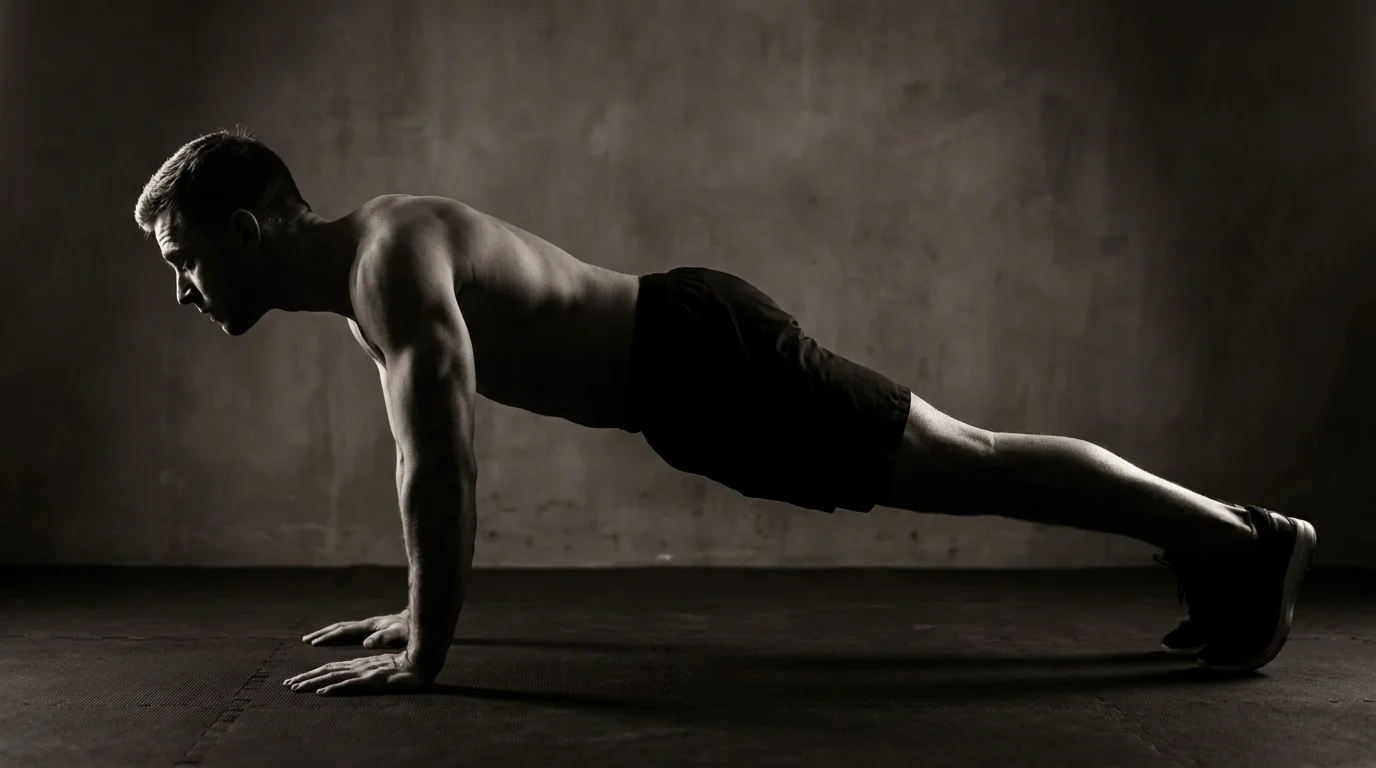
Position hands under shoulders, feet hip-width, and toes tucked. Keep a straight line from head to heels. Engage the core and glutes to support pelvic stability. Gently depress and retract the shoulder blades to cue scapular engagement. Maintain a neutral neck with eyes forward.
Descent and ascent tempo cues
Adopt a tempo-based approach: lower for 2–3 seconds, pause 0–1 second at chest height if needed, then press up for 1–2 seconds. Exhale on the effort phase, inhale on the way down. Hold a steady ribcage and keep hips level throughout.
Scapular engagement and pelvic stability
Keep scapular engagement throughout the rep. Brace the core and glutes to prevent pelvic rocking. Imagine pulling the shoulder blades toward the hips as you push.
Common form pitfalls to avoid
Hips sag or rise, elbows flare beyond 45 degrees, head sinks, or hands sit too far forward. Avoid rushing reps; stay controlled and consistent.
Structured Progressions & Variations: From Knee to Advanced Push-Ups
Beginner path: knee push-ups and incline progressions
Start on your knees with hands under shoulders and a tight core. Progress to incline push-ups (hands on a bench or step) to ease load while you sharpen form. When you can do 8–12 controlled reps with solid alignment, transition to standard push-ups on the floor.
Tempo-based sets and negatives
Use a steady tempo: 3 seconds down, 1 second pause, 2 seconds up (or 4-0-2-0). Do 3–4 sets of 4–6 reps with a brief pause at the bottom. For negatives, start at the top and lower slowly for 3–5 seconds, then reset. These tempo-focused sets are a practical way to improve pushups and build control before adding reps.
Choosing variations by goal and strength level
Incline push-ups build confidence and chest strength; diamond push-ups emphasize triceps; pike push-ups challenge the shoulders. Move to standard push-ups when you can maintain form through 8–12 reps, then mix in variations for best push-up progressions and upper-body strength.
Programming for Consistent Gains: Reps, Sets, Tempo, Rest, and Shoulder Health
4- to 6-week progression blueprint
- Week 1–2: 3×5–8 reps; tempo 3-0-1-0; rest 90 sec; start on incline or wall push-ups. If you’re wondering how to perform push-ups correctly for beginners, this is the path.
- Week 3–4: 4×6–9; tempo 4-0-2-0; add 1 slow negative after the last rep.
- Week 5–6: 5×6–10; tempo 3-0-2-0; include 2 negative reps after failure; rest 2 minutes. For home, substitute knee or elevated push-ups as needed.
Tempo guidelines and negative-rep sets
- Negatives and tempo-based sets are core to steady progress. Use a steady tempo for every rep; common scheme: 3 seconds down, 0 pause, 2 seconds up, 0 pause.
- After near-failure, add 2 slow negative reps (3–4 seconds descent) to reinforce gains.
Shoulder health strategies and mobility work
- Elbow ~45-degree angle; neck neutral; brace core and glutes; scapular control throughout.
- Mobility: doorway chest stretch and thoracic extensions; include 5–8 minutes of warm-up/prehab daily.
Frequently asked questions
How do you perform a proper push-up?
Position hands under shoulders, feet hip-width apart, and a straight line from head to heels. Brace your core and glutes, depress and retract the shoulder blades, and maintain a neutral neck. Lower for 2–3 seconds with control, pause briefly if needed, then press up for 1–2 seconds, exhaling on the effort.
What are the best push-up variations to build strength?
Start with incline or knee push-ups to build technique, then move to standard push-ups on the floor for strength. Use tempo-based or paused reps to increase time under tension, and add variations like diamond (triceps) or pike (shoulders) to target different muscles.
How can I modify push-ups to be easier or harder?
Easier: use incline push-ups or knee push-ups with a tight core and proper alignment. Harder: progress to standard push-ups, add paused reps at the bottom, or perform slow negatives to increase difficulty.
How do I progress from incline to standard push-ups?
Aim for 8–12 controlled incline reps with solid form, then transition to standard push-ups on the floor. Gradually decrease the incline height while maintaining tempo and full range of motion.
About the authors

Goran Huskić
Co-founder · Professional basketball player
Goran Huskić is a Serbian professional basketball player — a 6'11" center currently playing for Monbus Obradoiro in Spain's Primera FEB. He won the 2019–20 Basketball Champions League with San Pablo Burgos and has competed professionally across Spain, Germany, Lithuania, Serbia and the United States. He co-founded PUSHapp to bring pro-level training discipline to everyday workouts.

Nikola Janković
Co-founder · Former professional basketball player
Nikola Janković is a former professional basketball player — a 6'9" forward and the 2016–17 ABA League MVP — who played for Partizan, Union Olimpija and Mega, among others. Today he runs a pilates studio and gym focused on strength, mobility and overall wellbeing. He co-founded PUSHapp to make consistent, measurable training simple for everyone.