
Form & Technique
How to do pushups at home: proper form
Learn how to do pushups at home with proper form, beginner progressions, and safe variations for core and upper-body strength.


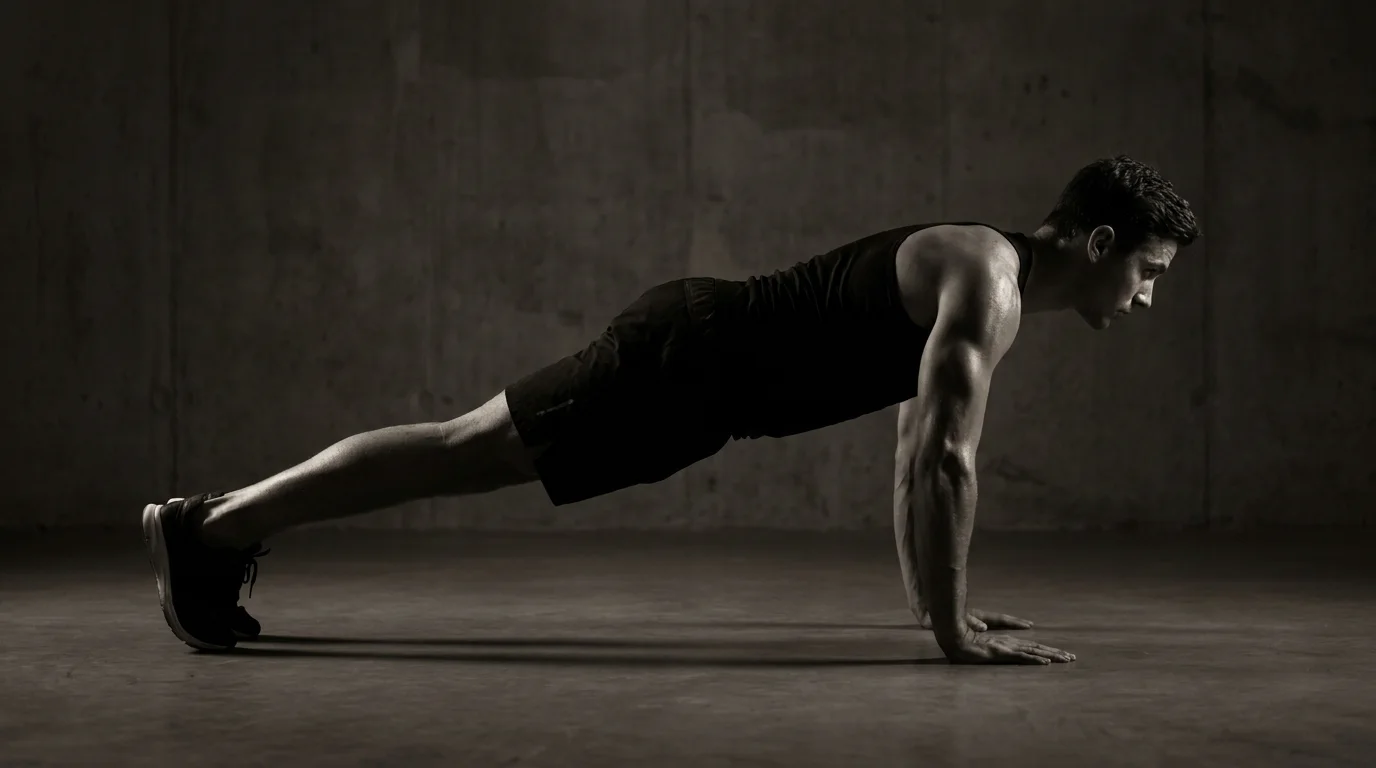
Foundations of proper push-up form: setup, scapular stability, and mobility
A. Setup and alignment
- Start in a straight line from heels to head; eyes forward; neck neutral.
- Hands under shoulders, elbows near the torso; pinch shoulder blades together then let them settle.
- Engage core and glutes; avoid sagging hips or piking. This builds scapular stabilization.
- For beginner push-up practice, use a wall or countertop incline or knee push-ups to learn the line.
B. Breathing and tempo cues
- Inhale as you prepare and lower; exhale as you push back up.
- Descend for 2–3 seconds; press back up in 1–2 seconds; avoid rushing.
- Keep scapulae stable through the movement; don’t let shoulders shrug.
C. Mobility and warm-up for thoracic spine and shoulders
- Do a 5-minute mobility sequence: thoracic extensions (seated or standing), wall slides, and thread-the-needle. This supports proper push-up technique and how to do pushups at home with proper form.
- Include cat-cow to warm the spine and shoulder blades.
- Finish with a few scapular push-ups on a wall or elevated surface to activate stabilizers.
Beginner progression and structured home programming
A. Beginner variants and setup
Use an incline you can hold a straight body. This is a classic beginner push-up setup and a solid beginner pushups at home progression. Self-assessment cues: hips in line, ribs braced, elbows near the torso; if the spine sags or shoulders hike, stop and reset. Pre-push-up mobility: 1–2 minutes of shoulder and thoracic spine moves plus light wrist prep.
B. Tempo, reps, rest, and progression
Tempo-based rep schemes guide control and show you how to do pushups at home with proper form. Try 3-0-1-0 for 6–8 reps, with 60–90 seconds rest. When form holds, add a rep or lower the incline. Progress from knee push-ups toward full push-ups as you gain strength. Use a structured progressive programming for home workouts to track progress.
C. 4-week home program (weeks 1-4)
Week 1: incline push-ups, 3x6–8, tempo 3-0-1-0. Week 2: lower incline or add knee push-ups, 4x6–8, tempo 3-0-1-0. Week 3: mix incline and knee push-ups, 3–4x6–8, tempo 3-0-1-0. Week 4: full floor push-ups, 3–4x5–8, tempo 3-0-1-0.
Push-up variations, shoulder health, and advanced cues
A. Variation map: from incline to diamond for beginners
These are among the best push-up variations for beginners at home.
- Incline push-up (hands on a bench/table): 8–12 reps. Keep a straight line; chest leads.
- Standard push-up: 6–12 reps. Control tempo; avoid hip sag.
- Knee diamond push-up: hands in a diamond on the floor; knees down. 6–8 reps. Elbows tucked.
- Full diamond push-up: toes down; 4–6 reps. If needed, regress to knee version.
B. Shoulder health, serratus, and core cues
- Activate the serratus anterior by protracting the shoulder blades at the top.
- Elbows ~45° to the torso to protect the rotator cuff.
- Brace the core; maintain a straight line from head to heels.
C. Sample week with variations and frequency
- Mon: incline push-ups 3x8–12; knee diamond push-ups 3x6–8
- Wed: standard push-ups 3x8–12; scapular push-ups 2x12
- Fri: knee diamond push-ups 3x6–8; full diamond push-ups 2x4–6
Frequently asked questions
How do you do a push-up correctly for proper form?
Align your body in a straight line from heels to head, with hands under shoulders and elbows close to your torso; brace your core and glutes. Breathe in as you lower and exhale as you push up, descending slowly (about 2–3 seconds) and pushing back up in 1–2 seconds, keeping scapulae stable.
What muscles are worked by a standard push-up?
Push-ups recruit the chest and shoulders while requiring the serratus anterior and a braced core to maintain a straight line; keep elbows around 45° to protect the rotator cuff.
What are the best push-up variations for beginners?
Begin with incline push-ups on a bench or wall push-ups to learn alignment. Progress to knee push-ups and then to full floor push-ups as you gain strength.
How many push-ups should I do at home to see progress?
Follow the 4‑week progression: Week 1 incline push-ups 3x6–8; Week 2 lower incline or add knee push-ups; Week 3 mix variations; Week 4 full floor push-ups 3–4x5–8, using a steady tempo and increasing reps as form holds.
About the authors

Goran Huskić
Co-founder · Professional basketball player
Goran Huskić is a Serbian professional basketball player — a 6'11" center currently playing for Monbus Obradoiro in Spain's Primera FEB. He won the 2019–20 Basketball Champions League with San Pablo Burgos and has competed professionally across Spain, Germany, Lithuania, Serbia and the United States. He co-founded PUSHapp to bring pro-level training discipline to everyday workouts.

Nikola Janković
Co-founder · Former professional basketball player
Nikola Janković is a former professional basketball player — a 6'9" forward and the 2016–17 ABA League MVP — who played for Partizan, Union Olimpija and Mega, among others. Today he runs a pilates studio and gym focused on strength, mobility and overall wellbeing. He co-founded PUSHapp to make consistent, measurable training simple for everyone.